Balsamic Peach Pork Chops with Blue Cheese
Introduction
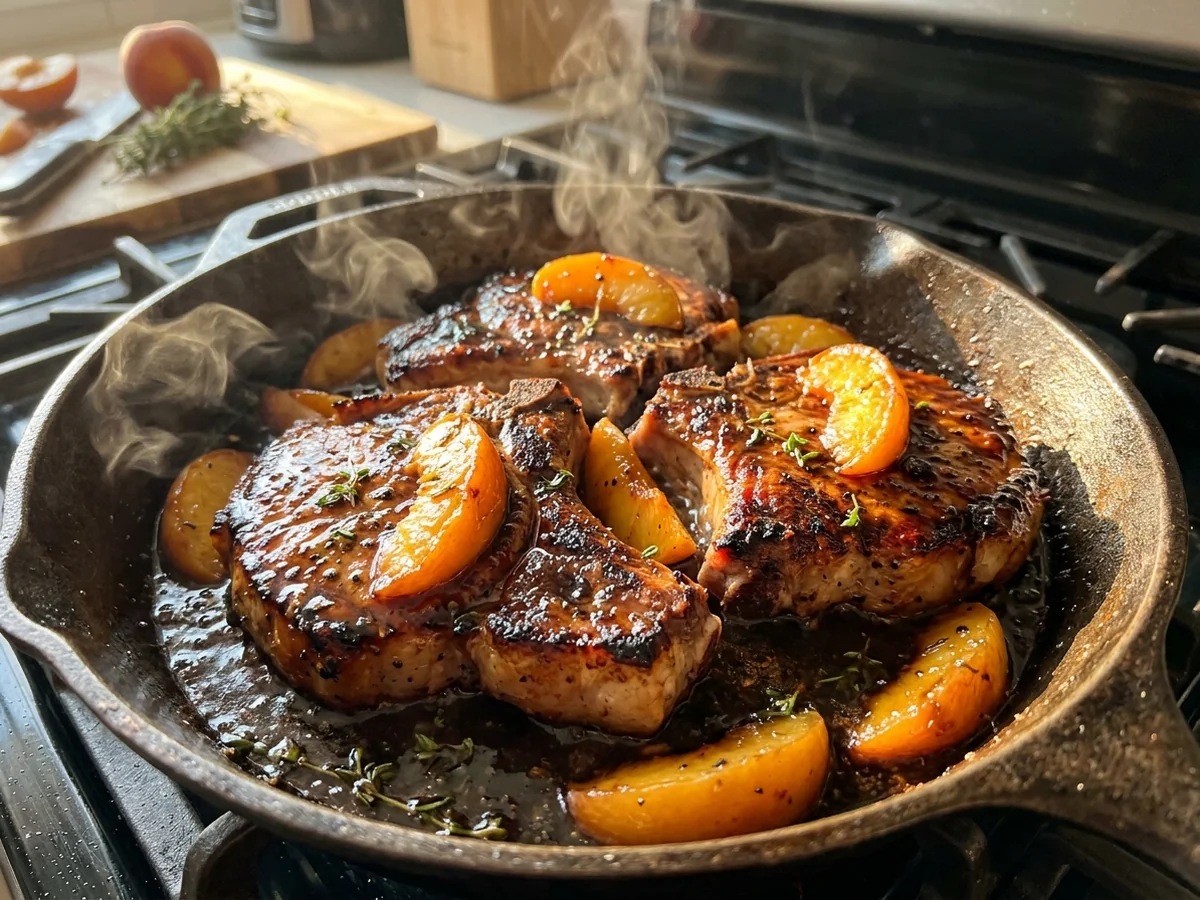
balsamic peach pork chops bring a summer sweet‑savory punch that’s hard to ignore. In just 30 minutes you can serve a dish where the caramelized glaze meets the tang of blue cheese, creating a flavor profile that feels both gourmet and approachable.
We’ll walk you through picking ripe peaches, look for a slight give and a fragrant aroma, so they stay firm during the pan sear. You’ll learn how a cast‑iron skillet creates the perfect Maillard crust while a quick deglaze with balsamic vinegar, honey, and garlic forms a glossy sauce. The recipe also covers using a 1‑inch thick pork chop, cooking it to an internal temperature of 145°F, and finishing with crumbled gorgonzola for a creamy contrast.
By the end, you’ll know how to balance the bold blue cheese, avoid dry meat, and pair the dish with simple sides that let the glaze shine. Ready to impress?
Choosing Pork Cut
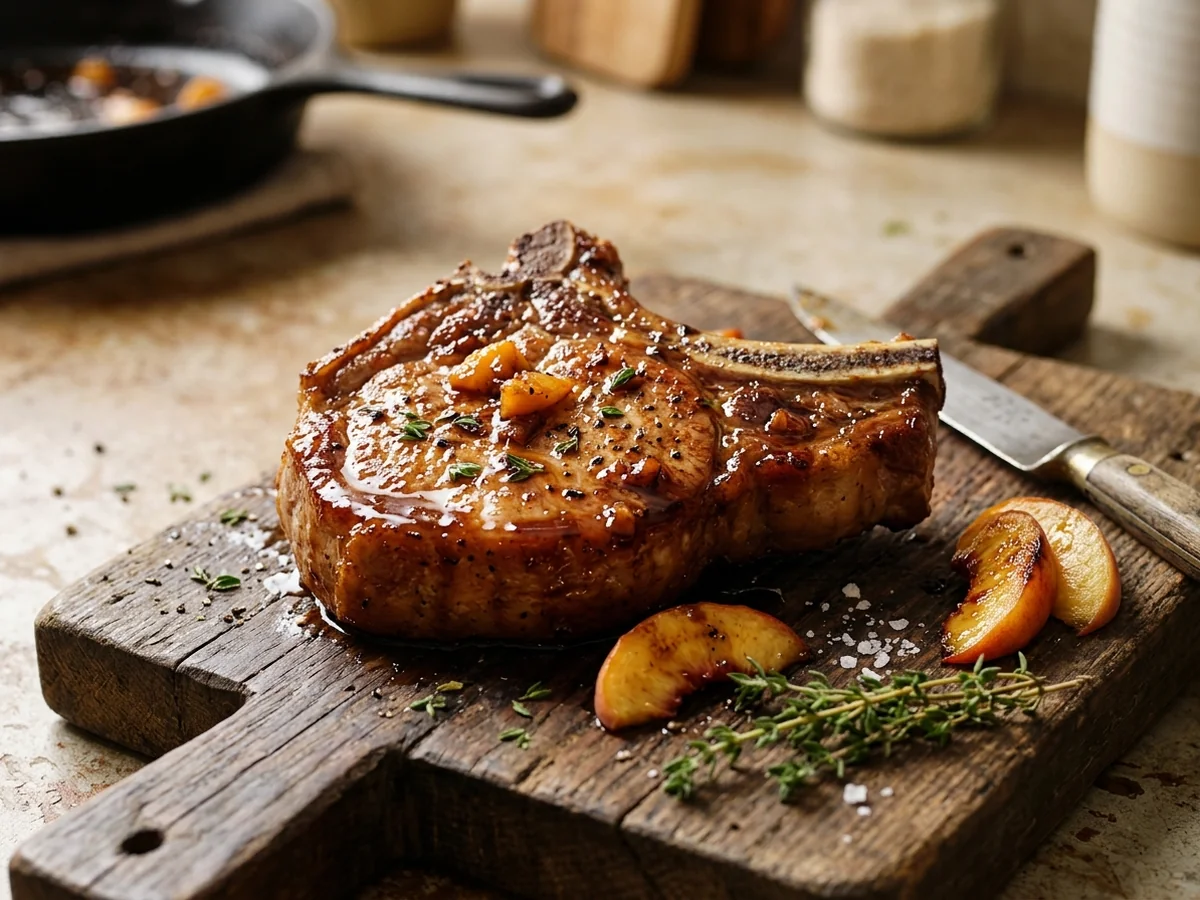
When you reach for the meat aisle, pick a pork chop that will stay juicy under the sweet‑tart glaze. A thick‑cut, bone‑in rib chop about 1½ inches wide works best for balsamic peach pork chops. The bone helps retain moisture, and the extra thickness gives you room to sear without overcooking.
In my kitchen, I’ve found a center‑cut loin chop around $4.99 per pound to be a reliable choice. It has a fine grain that absorbs the glaze while still delivering a tender bite. Avoid thin, lean “loin‑only” chops that are less than an inch thick; they tend to dry out once the pan reaches the Maillard reaction stage.
Another solid option is a pork shoulder chop, which carries a bit more marbling. The extra fat creates a richer mouthfeel that balances the sharp bite of blue cheese and the honey‑drizzled peaches. Just watch the internal temperature, pull the meat at 145°F and let it rest for three minutes before slicing.
- Bone‑in rib chop, 1½‑inch thick, $4.99/lb
- Center‑cut loin chop, 1‑inch thick, $5.49/lb
- Pork shoulder chop, 1¾‑inch thick, $4.29/lb
For a skillet version, the rib chop’s sturdy shape holds up well in a cast iron skillet, letting you create a pan sauce reduction with balsamic vinegar, garlic, and a splash of dijon mustard. If you prefer the air fryer route, the shoulder chop’s extra fat renders nicely, giving you that caramelized crust without the need for added oil.
Remember, the goal is a juicy pork core that can stand up to the sweet and savory glaze. Choose a cut with enough thickness, a bone for flavor, and a touch of marbling for moisture. That way, every bite of your gourmet pork chop dinner stays moist, flavorful, and perfectly paired with the tang of blue cheese and the summer sweetness of fresh peaches.
Selecting Perfect Peaches
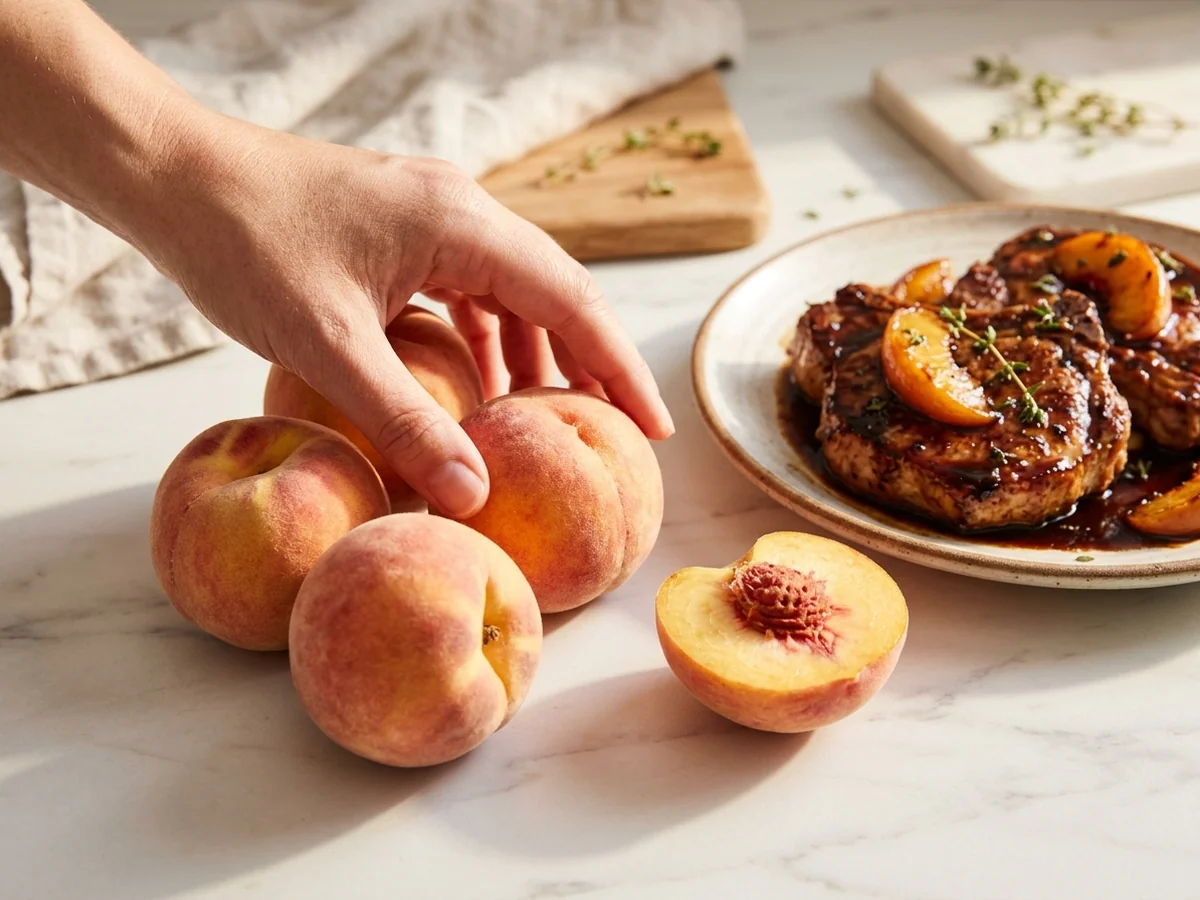
Do you know how to pick peaches that will keep your balsamic peach pork chops from turning mushy?
Source: halfbakedharvest.com
Look for fruit that yields gently to pressure near the stem. A slight give means the flesh is ripe but still firm enough to hold its shape when seared. If the peach feels hard, it will stay crisp during the skillet reduction; if it’s too soft, the glaze will turn watery and the pork may end up soggy.
- Color cue: Choose peaches with a deep golden hue and a blush of red. The richer the color, the higher the natural sugar content, which balances the tang of balsamic vinegar and the bite of blue cheese.
- Smell cue: A sweet, fragrant aroma signals ripeness. Give the peach a quick sniff, if you catch a honey‑like scent, you’ve found a good candidate for the glaze.
- Size cue: Aim for peaches about 2½ inches in diameter. This size yields roughly ½ cup of sliced fruit per chop, enough to create a glossy glaze without overwhelming the pork.
When you’re shopping in summer, the farmers’ market often offers the freshest picks for under $3 each. If you’re buying at a grocery store, check the “ready to eat” section; those peaches are usually harvested a day or two early and may need a few hours at room temperature to finish ripening.
For a reliable texture, slice the peach into ¼‑inch wedges before adding it to the pan. The thin slices caramelize quickly, creating that coveted Maillard reaction while preserving a bite that complements the pork’s internal temperature of 145°F.
Should fresh fruit be out of season, frozen peach halves can work, but thaw them fully and pat dry. Frozen pieces release extra moisture, which can dilute the balsamic glaze and make the pan sauce thin.
By selecting peaches that are fragrant, slightly yielding, and the right size, you set the stage for a glaze that shines alongside the pork chops, the garlic‑rosemary aromatics, and the sharp tang of blue cheese.
Making Balsamic Peach Glaze
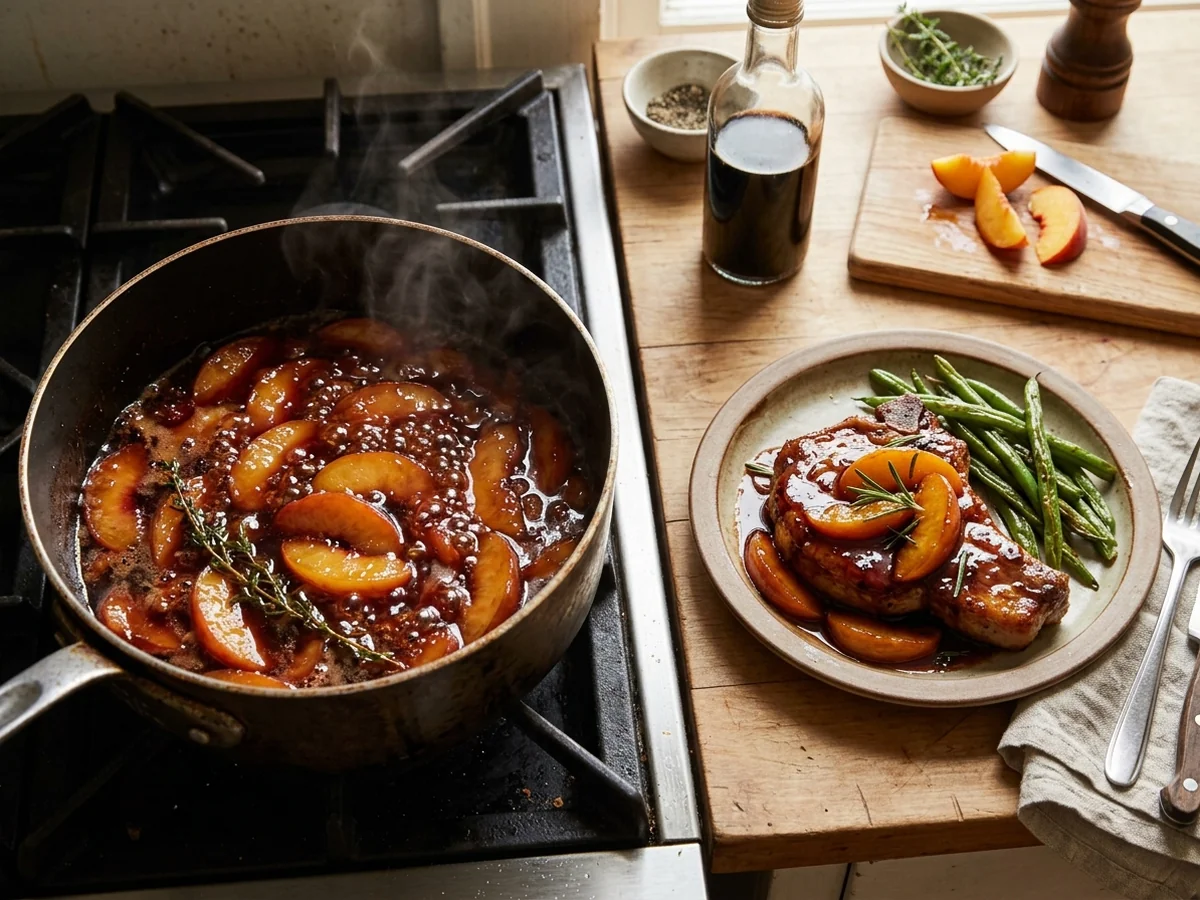
Myth: A glaze needs a lot of sugar to taste sweet. Reality: Fresh peaches and a splash of honey give enough natural sweetness without weighing down the sauce. Start by slicing two ripe peaches about ½‑inch thick; a peach that gives slightly when pressed is perfect and won’t turn mushy.
Source: recipes.heart.org
Heat a cast iron skillet over medium‑high heat, then add 1 tablespoon olive oil. Toss the peach slices with a pinch of salt and let them brown for 2 minutes per side. The caramelization creates the Maillard reaction that adds depth to the balsamic peach pork chops flavor profile.
Deglaze the pan with ¼ cup balsamic vinegar, scraping up the brown bits with a wooden spoon. Add 1 tablespoon honey, 1 teaspoon Dijon mustard, and a minced garlic clove. Stir until the mixture simmers, then reduce the heat to low and let it thicken for about 5 minutes. If you prefer a smoother glaze, blend the sauce with an immersion blender; the texture should coat the back of a spoon.
- Season with a pinch of fresh rosemary and a few leaves of thyme for an herbaceous lift.
- For extra tang, crumble a tablespoon of gorgonzola into the reduction just before removing it from the heat. The blue cheese balances the sweet peach notes without overpowering the pork.
- Check consistency: the glaze should drizzle slowly, not pool.
When the pork chops are seared in the same skillet, pour the glaze over them and let it bubble for 1 minute. This quick pan sauce reduction locks in moisture, keeping the chops juicy at an internal temperature of 145°F. If you’re using an air fryer, brush the glaze on during the last 3 minutes of cooking for a glossy finish.
Blue Cheese Topping
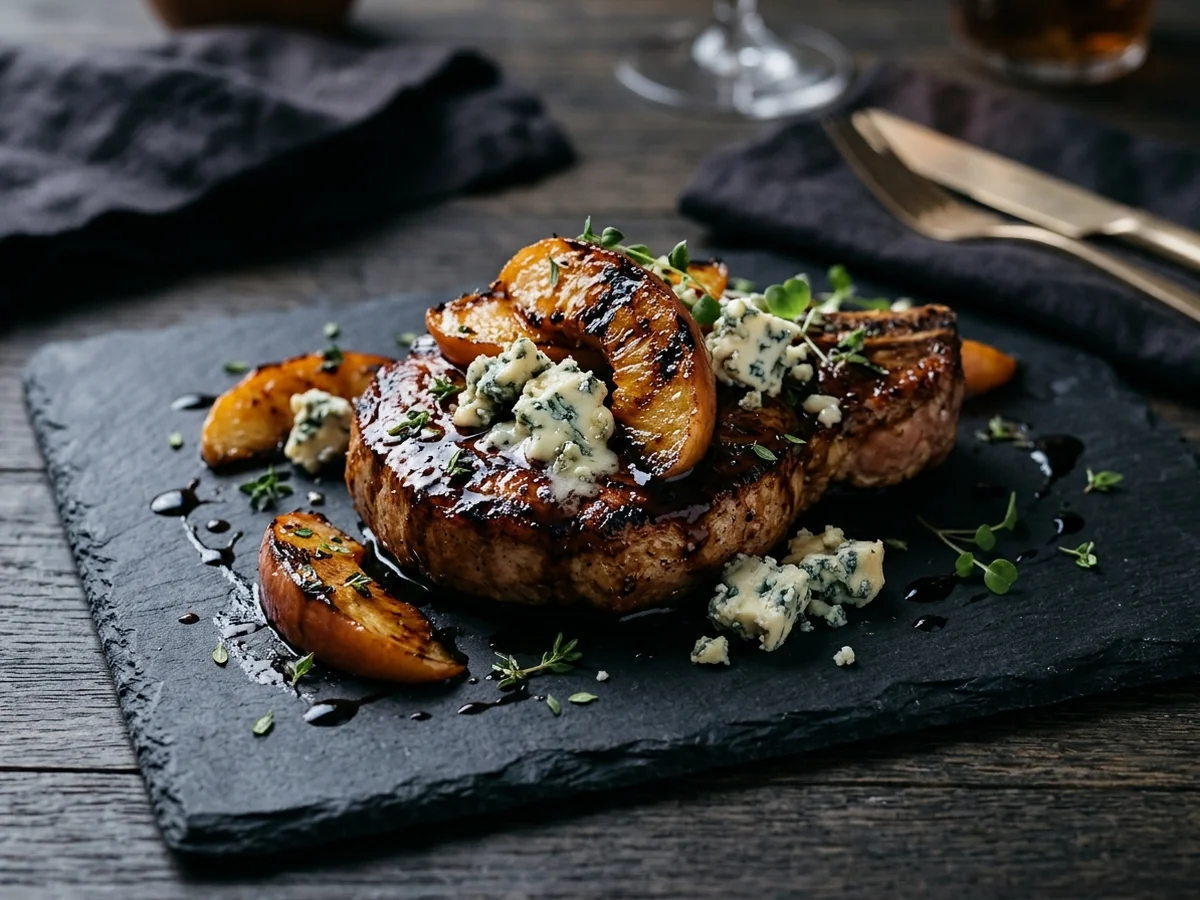
I love how a crumble of blue cheese can turn a simple pork dinner into a restaurant‑level experience. For the balsamic peach pork chops, the topping adds a salty punch that balances the sweet glaze without overwhelming it.
Start with 2 ounces of high‑quality blue cheese, such as Gorgonzola, and let it sit at room temperature for five minutes. This softens the crumb, making it easier to spread over the hot chops. While the pork rests after searing, whisk together the cheese with 1 tablespoon of Dijon mustard, 1 teaspoon of honey, and a minced garlic clove. The mustard lifts the tang, the honey mirrors the peach’s natural sugar, and the garlic adds depth without stealing the spotlight.
When you drizzle the balsamic‑peach glaze over the chops, spoon the cheese mixture on top while the meat is still sizzling. The residual heat melts the cheese just enough to create a glossy, velvety coat. If you prefer a firmer bite, let the topping sit for a minute before serving; the cheese will firm up slightly, giving a pleasant contrast to the tender pork.
- Use a cast‑iron skillet for the best Maillard reaction; the browned bits help the sauce cling to the cheese.
- Season the cheese blend with a pinch of fresh thyme; the herb’s earthy note ties the rosemary used on the pork to the overall flavor profile.
- For a lighter version, swap half of the blue cheese for crumbled feta; the milder dairy still offers that salty edge but with less intensity.
One tip I’ve learned: keep the internal temperature of the pork at 145°F. Once the chops hit that mark, remove them from the pan, add the topping, and let the residual heat finish the melt. This prevents the meat from drying out while still giving the blue cheese enough time to soften.
Serve the topped chops with a simple arugula salad tossed in olive oil and lemon. The peppery greens cut through the richness, making the whole plate feel bright and balanced. A quick drizzle of extra balsamic glaze right before plating adds a glossy finish and reinforces the sweet‑savory theme.
Skillet Balsamic Peach Pork Chops
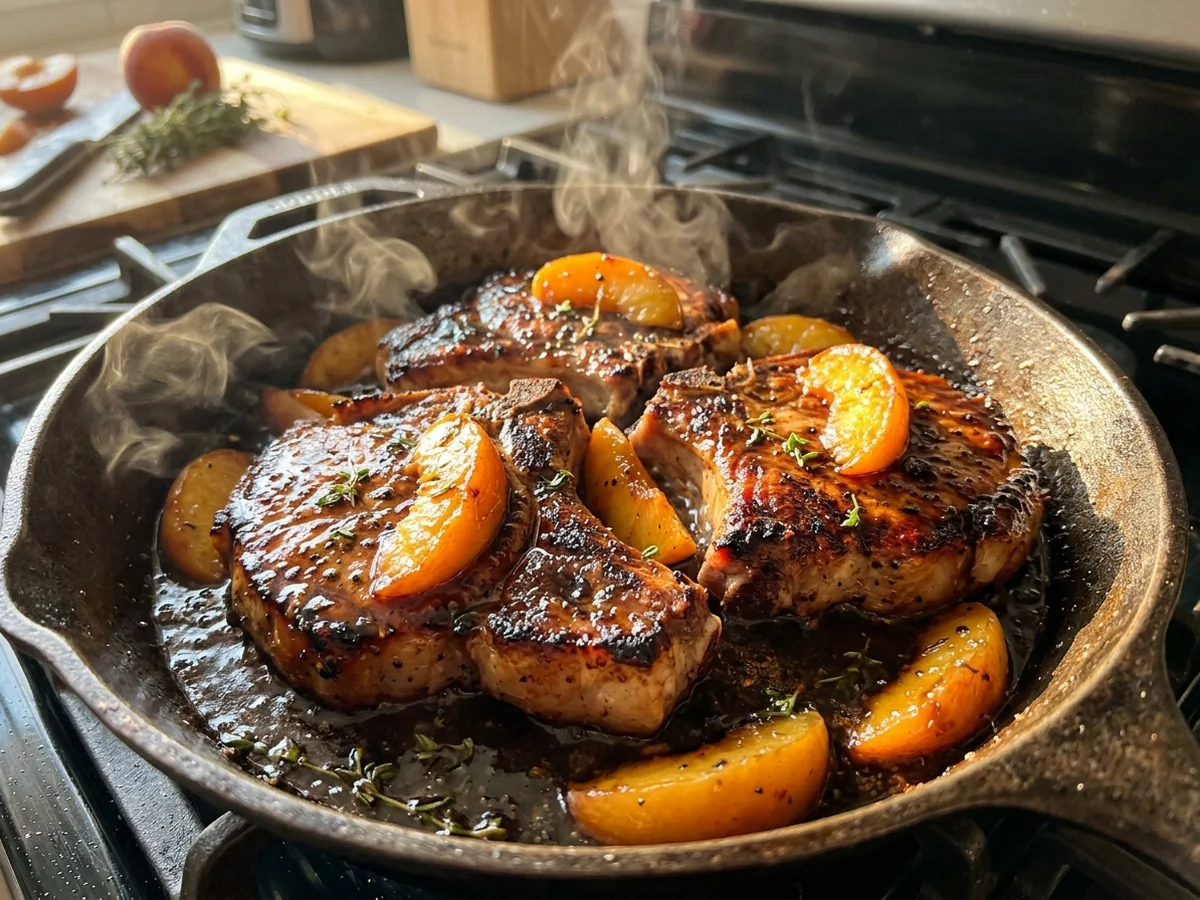
Tip: Pat the pork chops dry before they hit the pan , a dry surface gives a quick, golden crust and locks in juice.
Start with bone‑in pork chops that are about 1‑inch thick; they stay moist while the skillet creates a rich Maillard crust. Heat a cast iron skillet over medium‑high heat, add 1 tablespoon of olive oil, and sear each side for 3‑4 minutes until deep brown. Remove the chops and set them aside while you build the glaze.
In the same pan, melt 2 teaspoons of butter, then stir in 1 minced garlic clove and ½ teaspoon of Dijon mustard. Add ¼ cup of balsamic vinegar and let it simmer for 30 seconds , this concentrates the acidity without turning bitter. Toss in ½ cup of diced fresh peaches (choose fruit that gives a little give when pressed) and a drizzle of honey, about 1 tablespoon, to balance the tang. Let the mixture reduce for 2‑3 minutes until it thickens slightly.
Return the pork chops to the skillet, spoon the glaze over them, and lower the heat to medium. Cook for another 5 minutes, turning once, until the internal temperature hits 145°F. While the meat finishes, crumble 2 tablespoons of blue cheese (or a milder gorgonzola) over the top; the cheese will melt into the glaze, creating a sweet‑and‑savory sauce that isn’t overpowering.
- For extra aroma, add a sprig of rosemary and a pinch of thyme during the last minute.
- If fresh peaches aren’t in season, thaw frozen slices quickly and pat dry , the flavor stays bright.
- Serve with a simple arugula salad tossed in lemon juice to cut the richness, or a side of roasted baby potatoes.
This method avoids overcooking by searing first and finishing in the sauce, so the pork stays juicy. The combination of balsamic vinegar, honey, and blue cheese creates a balanced sweet‑salty profile that makes these skillet balsamic peach pork chops a standout summer pork chop recipe.
Air Fryer Balsamic Peach Pork Chops
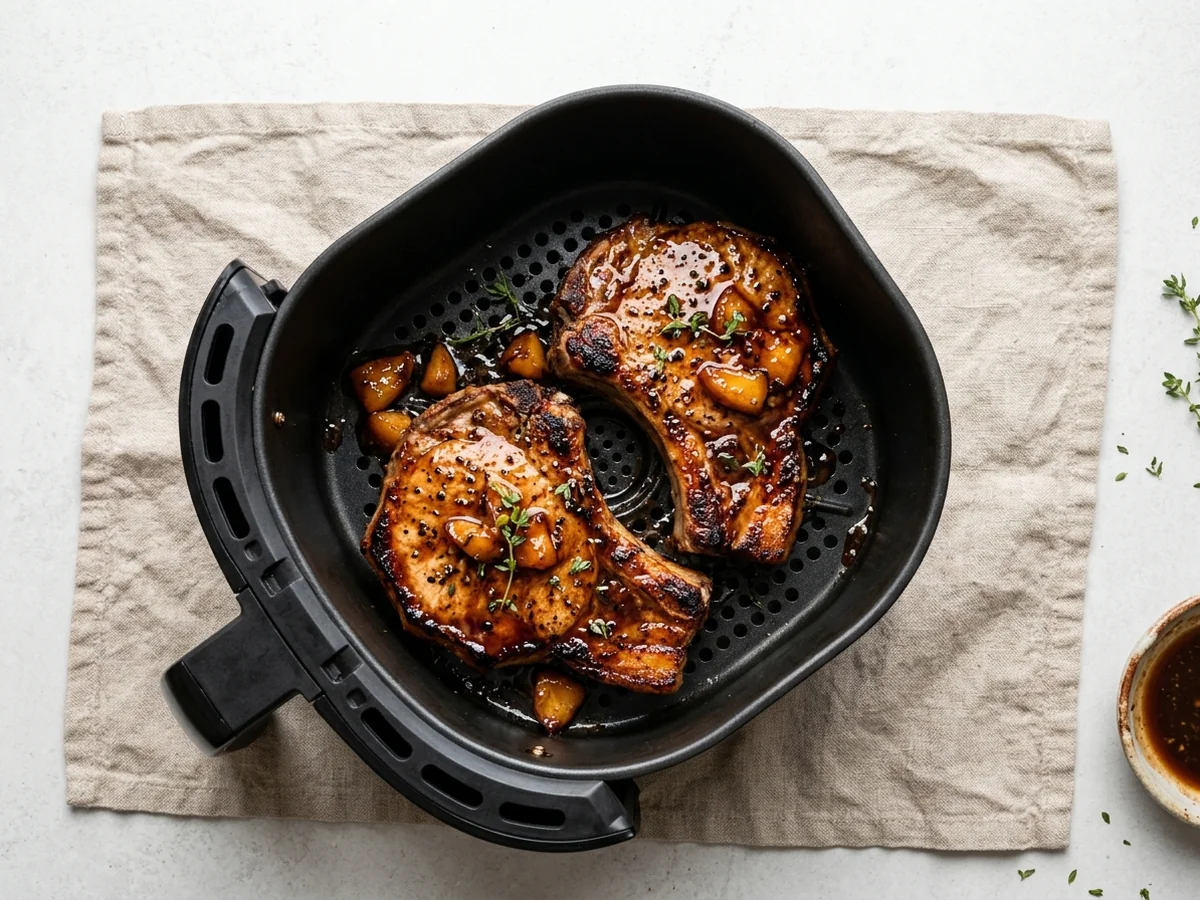
For a quick summer dinner, toss thick‑cut pork chops in a sweet‑savory glaze and let the air fryer do the work. The hot air creates a perfect Maillard crust while the interior stays juicy, so you get restaurant‑level flavor without a skillet.
Start with 1‑inch‑thick pork chops; they cook evenly and stay tender. Pat them dry, then season both sides with salt, pepper, and a pinch of rosemary. In a small bowl, whisk together 3 Tbsp balsamic vinegar, 2 Tbsp honey, 1 tsp Dijon mustard, 1 minced garlic clove, and the juice of half a fresh peach. Air fryer balsamic peach pork chops need a glaze that sticks, so coat the meat and let it sit for 10 minutes.
Preheat the air fryer to 380°F. Arrange the chops in a single layer, making sure they don’t touch. Cook for 8 minutes, then flip, brush with another spoonful of glaze, and add thin peach slices on top of each chop. Continue for another 6‑7 minutes, or until a meat thermometer reads 145°F at the thickest point. The peach slices caramelize, adding a bright pop that balances the tangy blue cheese you’ll sprinkle later.
While the pork rests, melt 2 oz crumbled gorgonzola (or feta for a milder bite) in a saucepan. Add the pan drippings, a splash of balsamic vinegar, and a few torn basil leaves; simmer 2 minutes until the sauce thickens. Drizzle this over the chops and finish with the caramelized peach pieces.
- Use ripe but firm peaches; they hold shape and won’t turn mushy.
- If fresh fruit isn’t available, thaw frozen peach halves, dry them well before glazing.
- Pair with roasted asparagus tossed in olive oil and a squeeze of lemon for a fresh side.
- For extra crispness, spray the chops lightly with cooking oil before air frying.
That simple technique gives you a gourmet pork chop dinner in under 30 minutes, perfect for impressing guests or treating yourself to a summer‑seasonal treat.
Avoiding Overcooked Pork
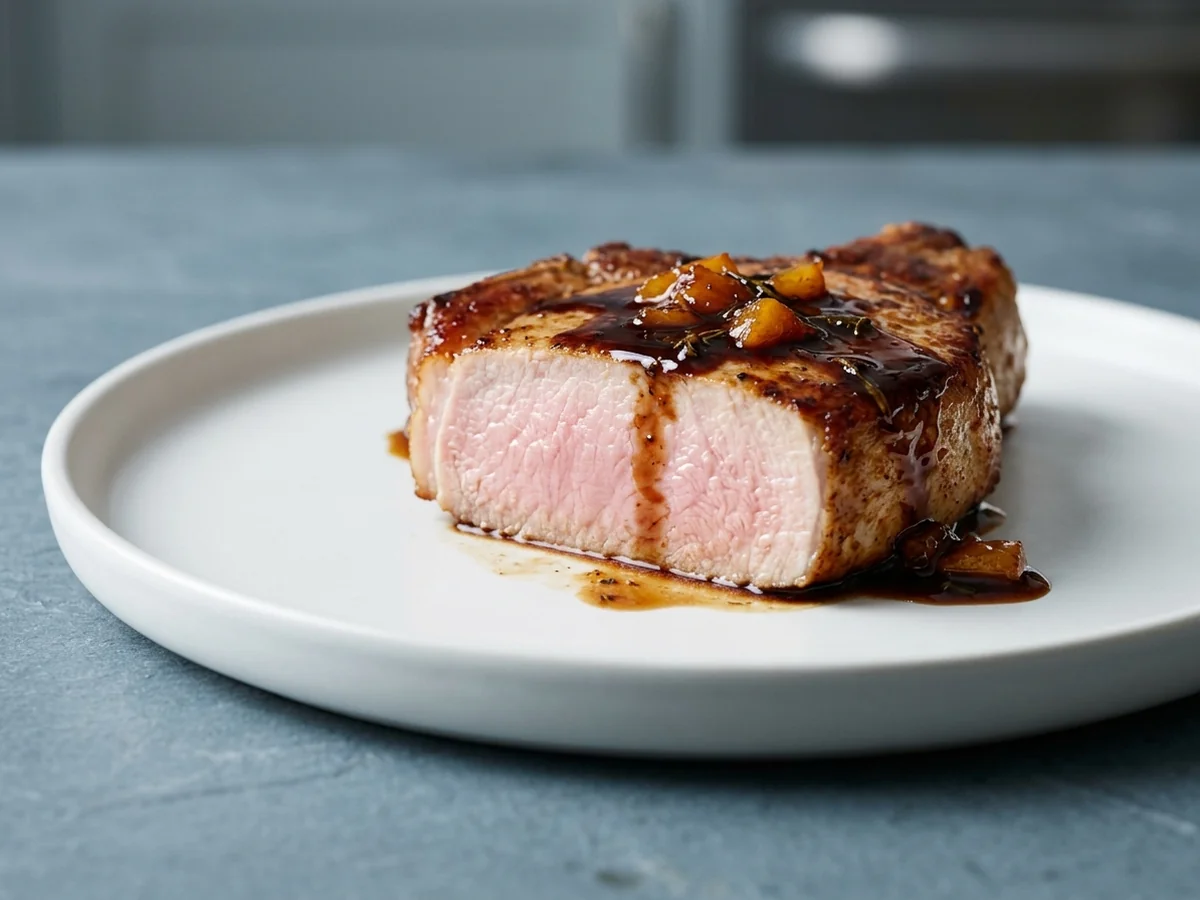
Buying a $12 thick-cut pork chop and ending up with a dry, rubbery piece costs more in disappointment than a $6 boneless cut that stays juicy. To keep your balsamic peach pork chops tender, start by choosing a 1‑inch thick center‑cut chop; this thickness lets the meat sear without losing moisture.
First, pat the pork dry and season with salt, pepper, and a pinch of rosemary. The dry surface encourages a good Maillard reaction in the cast iron skillet, creating that golden crust that locks juices inside. Let the chops rest at room temperature for 15 minutes, cold meat drops the pan temperature and forces you to overcook.
- Use a meat thermometer. Aim for an internal temperature of 145°F; the meat will rise a few degrees while resting, delivering perfect doneness without guessing.
- Cook on high heat for 2, 3 minutes per side, then lower to medium and add the balsamic vinegar, honey, and diced fresh peaches. The quick sear forms a crust, while the reduced glaze finishes the chop without prolonged exposure to heat.
- If you prefer an air fryer, set it to 375°F and cook for 8 minutes, flipping halfway. The circulating air gives a crisp exterior similar to a skillet but reduces the risk of over‑cooking.
- After removing the chops, deglaze the pan with a splash of dry white wine, scraping up browned bits. This pan sauce reduction adds depth without needing extra cooking time for the pork.
Remember, the sweet‑savory balance of the glaze can mask a dry chop, so trust the thermometer over visual cues. If you notice the glaze thickening too quickly, lower the heat and add a tablespoon of water; this prevents the pork from steaming in its own juices.
Finally, let the chops rest for 5 minutes under foil before serving. Resting redistributes the juices, giving every bite of your pork chops with balsamic peach glaze a moist, flavorful bite that pairs beautifully with the tang of blue cheese.
Balancing Sweetness in Pork Chops
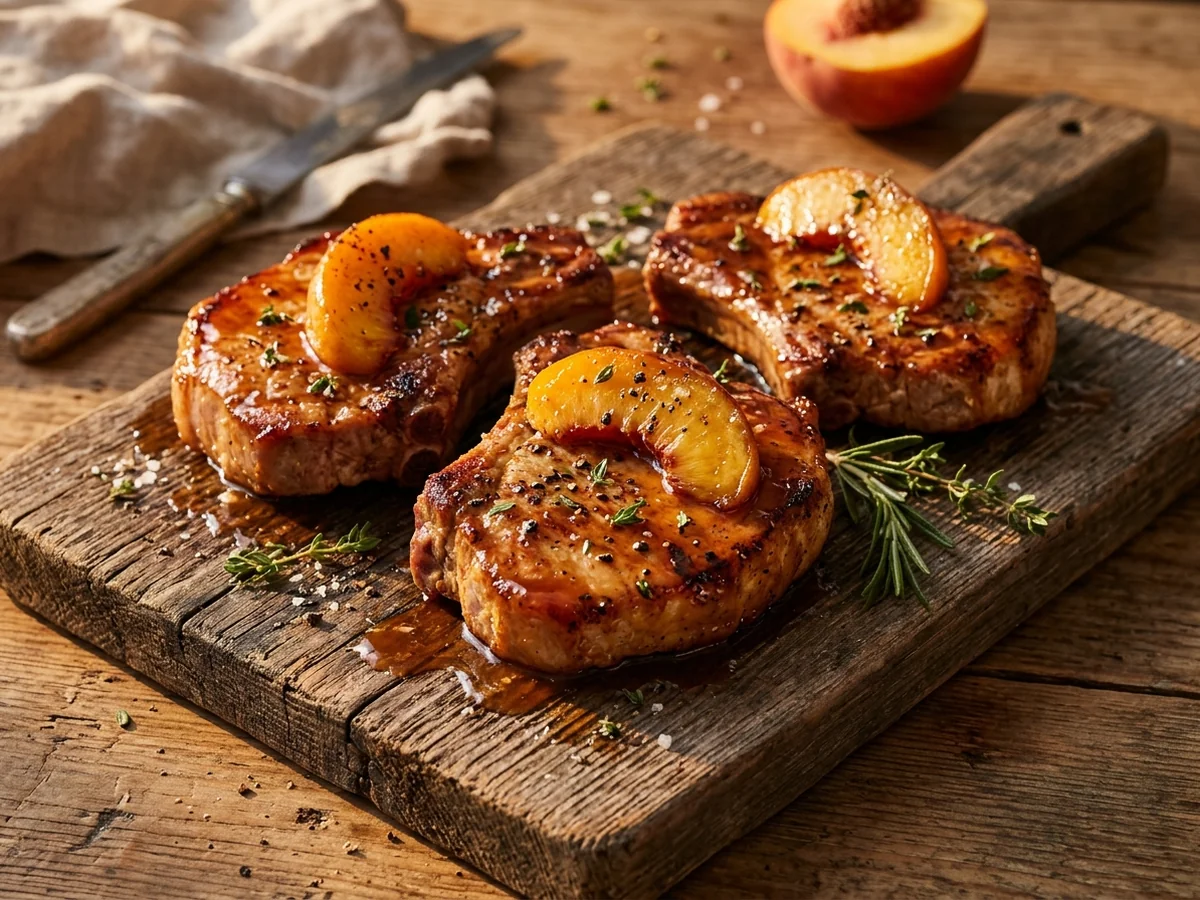
Did you know a single ripe peach can hold up to 12 grams of natural sugar? That burst of sugar is what makes the glaze on balsamic peach pork chops sing, but it can also overpower the pork if you’re not careful.
Start by choosing peaches that are just ripe, soft to the touch but still firm enough to hold their shape when sliced. A half‑inch slice will caramelize without turning to mush, giving you a gentle sweetness that pairs with the pork’s savory depth.
Mix the glaze with equal parts balsamic vinegar and honey; a tablespoon of each creates a balanced tang that cuts through the fruit’s sugar. Add a teaspoon of Dijon mustard for a subtle bite, then whisk in a pinch of rosemary. This combination creates a sweet‑and‑salty flavor profile that stays bright even after the Maillard reaction locks in a crust on the pork.
When you sear the chops in a cast‑iron skillet, keep the heat medium‑high. A 1‑inch thick pork chop will reach the safe internal temperature of 145 °F in about six minutes per side. As soon as the meat hits that mark, remove it, let it rest, and deglaze the pan with a splash of balsamic vinegar. Scrape up the browned bits, stir in the peach‑honey mixture, and let it reduce for two minutes. The reduction intensifies the glaze without adding extra sugar.
- Use blue cheese sparingly, about ¼ cup crumbled gorgonzola mixed into the pan sauce adds richness without drowning the fruit’s lightness.
- If you prefer an air‑fried version, set the air fryer to 380 °F and cook the chops for 12 minutes, then brush on the glaze during the last three minutes.
- Serve the dish with a side of roasted asparagus tossed in olive oil and a squeeze of lemon; the acidity balances the sweet glaze and the peppery bite of the blue cheese.
By controlling peach ripeness, measuring the glaze, and timing the sear, you keep the pork juicy, the sweetness inviting, and the blue cheese from stealing the show.
Roasted Veggies Side
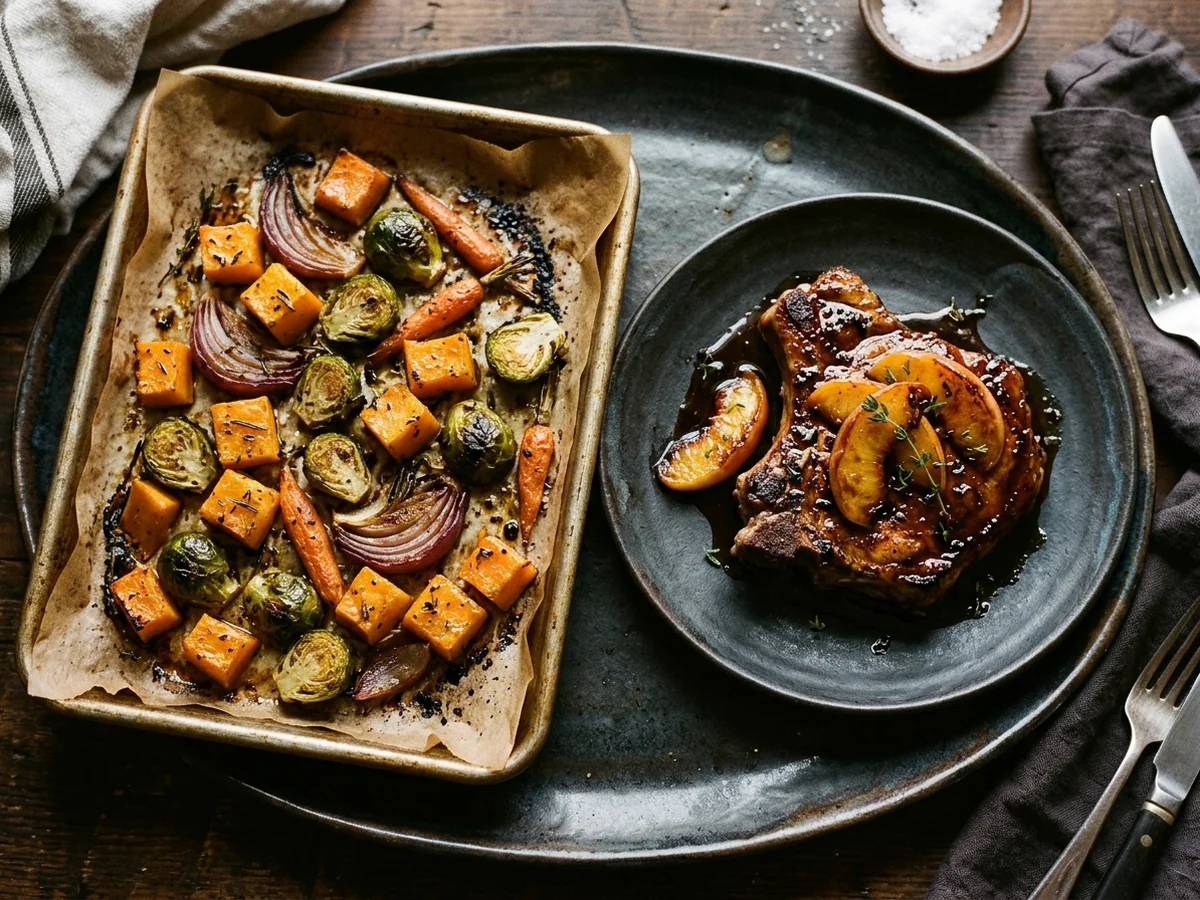
When the kitchen smells of caramelized peach and tangy blue cheese, you’ll want a side that can stand up to that bold flavor without stealing the show. Roasting a mix of seasonal veggies gives you a crisp, slightly sweet backdrop that lets the balsamic peach pork chops shine.
Start with a sheet pan and toss 1 pound of baby carrots, halved Brussels sprouts, and sliced red onion with two tablespoons of olive oil, a pinch of sea salt, and a sprinkle of fresh rosemary. The oil helps the vegetables develop a golden crust while the rosemary echoes the herb notes in the pork glaze.
Spread the veggies in a single layer and roast at 425°F for about 20 minutes, then give them a quick stir and continue cooking another 10 minutes. You’ll know they’re ready when the carrots are fork‑tender and the Brussels sprouts have crisped edges. The high heat creates a Maillard reaction that adds depth, matching the caramelized glaze on the pork.
While the vegetables roast, whisk together a quick drizzle: one tablespoon of balsamic vinegar, a teaspoon of honey, and a dash of minced garlic. Toss the hot veggies in this glaze right after they leave the oven; the warm vegetables will absorb the sweet‑sour finish, tying the whole plate together.
- Use baby carrots for even cooking and a natural sweetness.
- Choose Brussels sprouts that are about 1 inch across for quick roasting.
- Red onion adds a subtle bite that balances the blue cheese’s richness.
- Finish with a sprinkle of crumbled feta for a salty contrast.
One tip from my own kitchen: if you prefer a bit of crunch, add a handful of sliced almonds during the last five minutes of roasting. The nuts bring a pleasant texture and a nutty flavor that pairs nicely with the peach glaze.
Serve the roasted veggies alongside the pork chops, and you’ll have a complete meal that feels both elegant and comforting. The vegetables’ natural sweetness softens the blue cheese’s sharpness, while the light balsamic drizzle mirrors the glaze on the pork, creating a harmonious plate every time.
For another perspective, this detailed piece on Skillet Balsamic Peach Pork Chops with Feta and Basil. is worth a read.
FAQ
How can I keep the pork chops juicy?
Pat the pork chops dry, season with salt and pepper, then sear them in a hot cast iron skillet for 2 minutes per side. Finish cooking in a 350°F oven until the internal temperature hits 145°F; this quick sear locks in moisture while the oven finishes the heat gently.
Is it okay to use frozen peaches?
Yes, thaw frozen peaches and pat them dry before adding to the glaze. Fresh peaches give a firmer bite, but a 12‑ounce bag of frozen slices works well and saves a trip to the market.
Which cut works best for this recipe?
Bone‑in center‑cut pork chops provide the most flavor and stay tender when cooked with the balsamic peach glaze. The bone helps retain heat, preventing the meat from drying out.
How do I balance blue cheese with the sweet peaches?
Crumb a small amount of blue cheese (about 1 tablespoon) into the pan sauce after deglazing with balsamic vinegar and honey. The cheese melts into a creamy swirl that cuts the peach sweetness without overwhelming it.
What sides complement balsamic peach pork chops?
Serve the chops with roasted rosemary potatoes and a simple arugula salad tossed in olive oil and lemon. The salty potatoes and peppery greens echo the sweet and savory flavor profile while keeping the meal light.
You might also like: Creamy Garlic Butter Chicken Recipe
Key Takeaways
People think a sweet glaze will hide a dry chop, but a quick sear plus a brief finish keeps the meat juicy.
- Seasoned pork chops stay moist when you cook to an internal temperature of 145°F and let them rest 5 minutes.
- Fresh, ripe peaches are essential; they should give a slight give when pressed, not turn to mush.
- Blue cheese balances the sweetness, a crumble of gorgonzola mixed into the pan sauce tones down the sugar.
- Use a cast‑iron skillet for a perfect Maillard crust, then deglaze with balsamic vinegar, honey, and a dash of Dijon.
- For a quick alternative, try air fryer balsamic peach pork chops at 375°F for 12 minutes, flipping halfway.
Pin this guide so you can recreate restaurant‑level balsamic peach pork chops any night.