
Sichuan-Style Crispy Chili Beef Stir-Fry
Introduction
Sichuan crispy chili beef stir-fry packs a punch that rivals many restaurant dishes, yet it can be made at home for under $12. The secret? A quick flash‑fry that locks in juicy beef while a fiery sauce of dried chilies and Sichuan peppercorns creates a tongue‑tingling numbing heat.
This dish blends crisp texture, bold spice, and a hint of sweet onion, making it a go‑to for weeknight cravings or dinner‑party wow factor. In the next sections you’ll learn how to pick the right cut of beef, balance the flavors, and finish with a garnish that adds both color and crunch. Follow the steps and you’ll have a restaurant‑style plate ready in 30 minutes, perfect for anyone who loves authentic Chinese heat without the hassle.
Sichuan Crispy Chili Beef
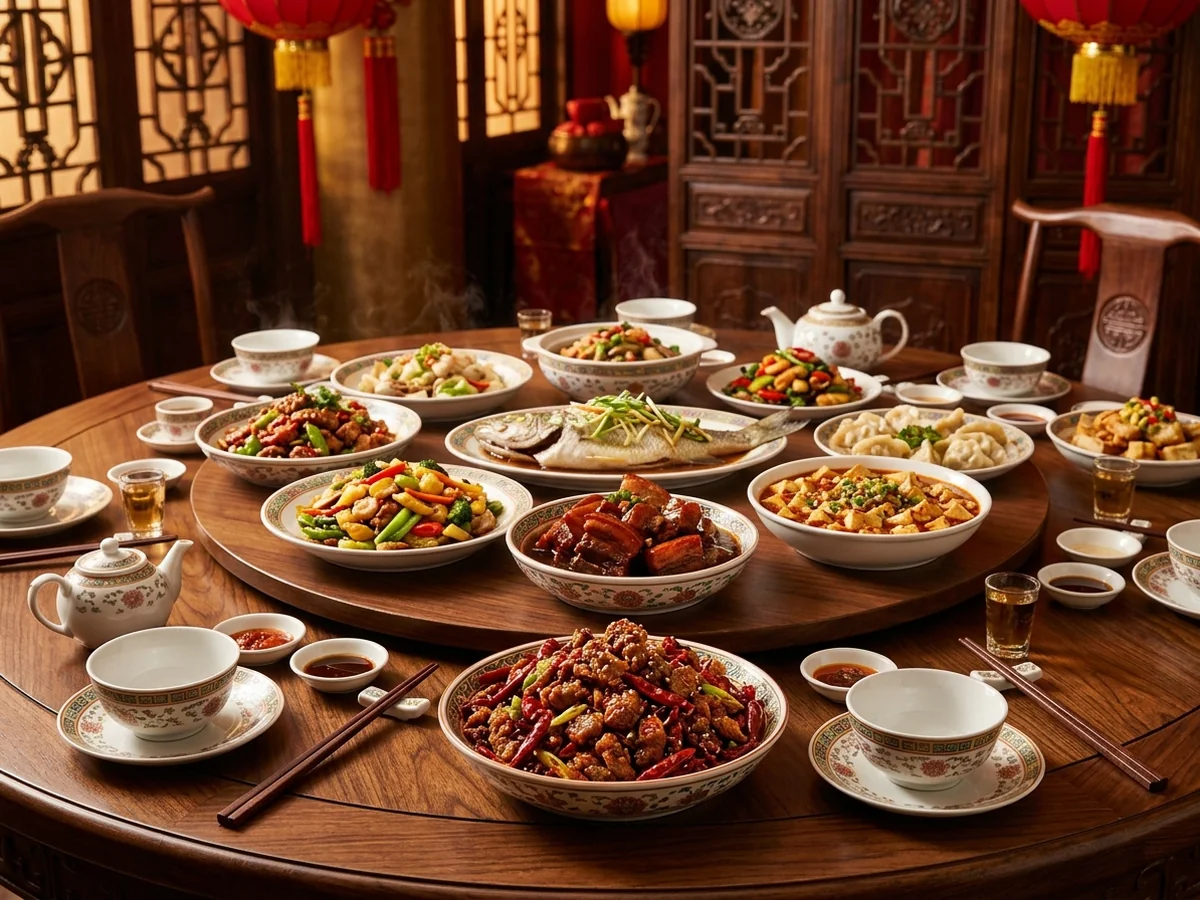
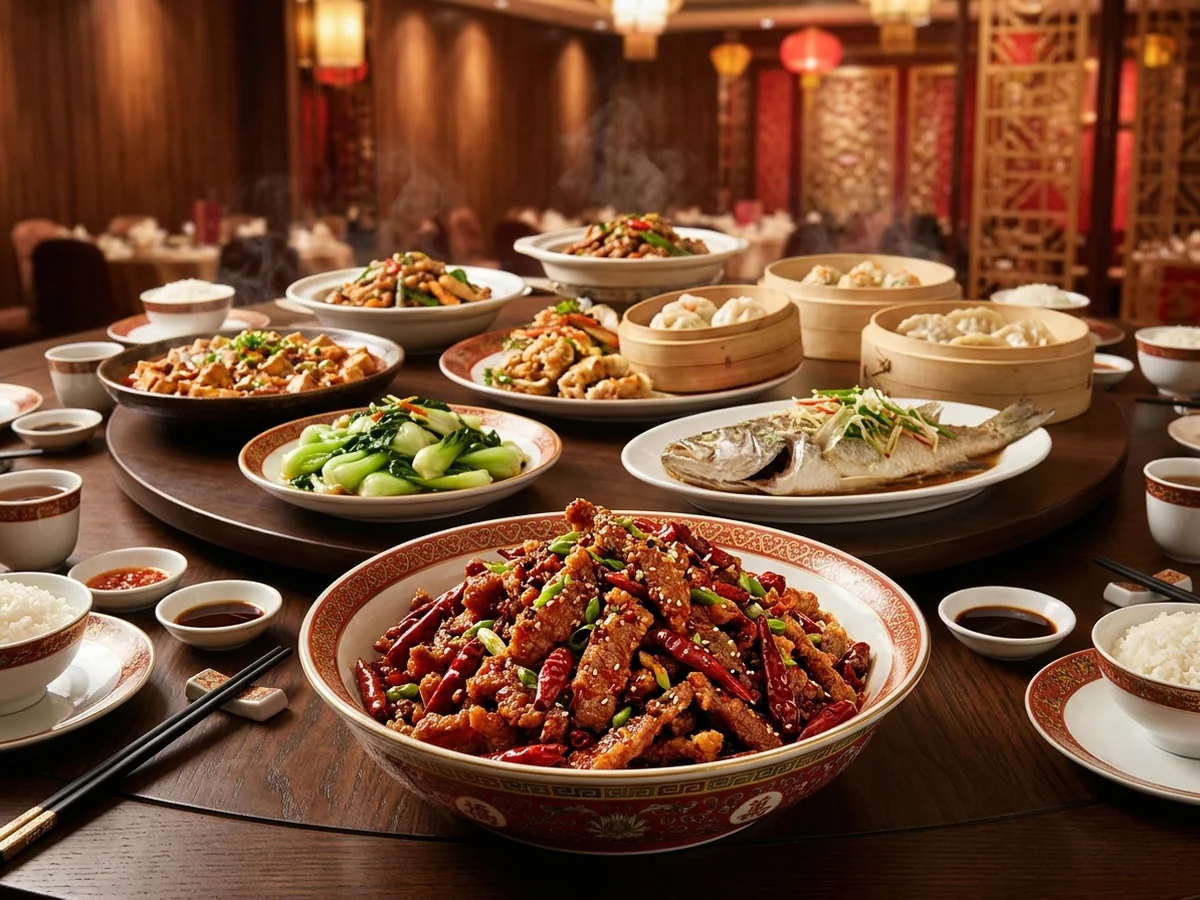
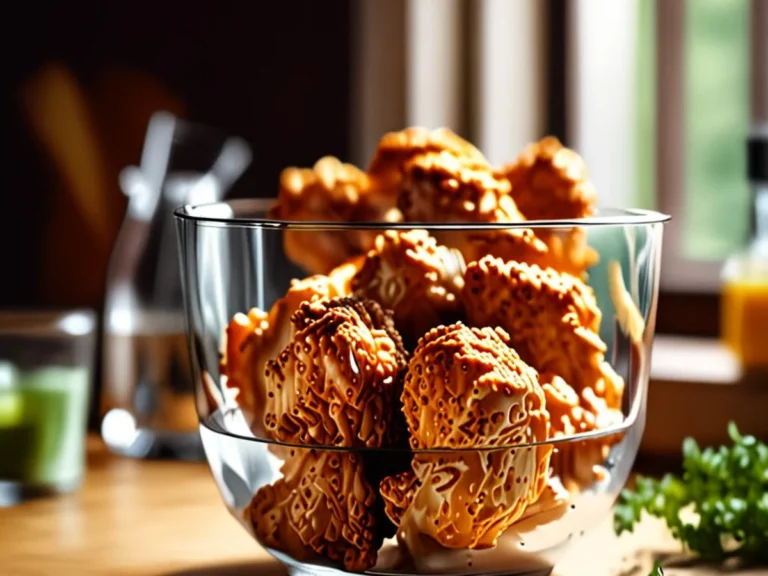
Imagine the sizzle of thin beef strips hitting a scorching wok, the aroma of toasted chilies rising instantly. That moment captures the essence of sichuan crispy chili beef stir-fry, a dish that thrills the palate with bold heat and a signature tongue‑tingling buzz.
This style belongs to the “dry‑fried” family of Sichuan cooking, where ingredients are cooked quickly over high heat with minimal liquid. The beef is first coated in a light dusting of cornstarch, then flash‑fried until the edges turn golden and crisp. That coating creates a protective barrier, locking in juiciness while giving each bite a satisfying crunch.
What truly sets it apart is the use of Sichuan peppercorns. These tiny husks release a unique numbing sensation, known as “ma,” that balances the fiery kick of dried red chilies. The contrast between “ma” and “la” (the sharp heat) is the hallmark of authentic Sichuan flavor, turning a simple stir‑fry into a sensory experience.
In my kitchen, a 250‑gram pack of beef flank works best; the lean fibers stay tender after the quick fry. A splash of soy sauce and a drizzle of black vinegar finish the dish, adding depth without drowning the crisp texture.
- Key ingredient: Sichuan peppercorns , about ½ teaspoon per serving for that signature buzz.
- Heat source: Dried red chilies , adjust quantity to match your spice tolerance.
- Texture tip: Keep the oil at 180°C (350°F) to achieve a perfect crust without greasiness.
Because the cooking time is short, usually under three minutes once the oil is hot, the beef stays juicy, and the sauce clings just enough to coat each piece. The result is a dish that looks as exciting as it tastes, with bright red chilies speckling glossy, caramelized beef.
When you serve it, garnish with a handful of fresh cilantro and a squeeze of lime. The citrus lifts the heavy spices, making the plate inviting for anyone who loves bold, layered flavor. That balance of crunch, heat, and subtle numbing is why sichuan crispy chili beef stir-fry stands out on any dinner table.
Crispy Chili Beef Tip: Marinate Beef
Ever wonder why some sichuan crispy chili beef stir-fry recipes turn out soggy instead of crunchy?
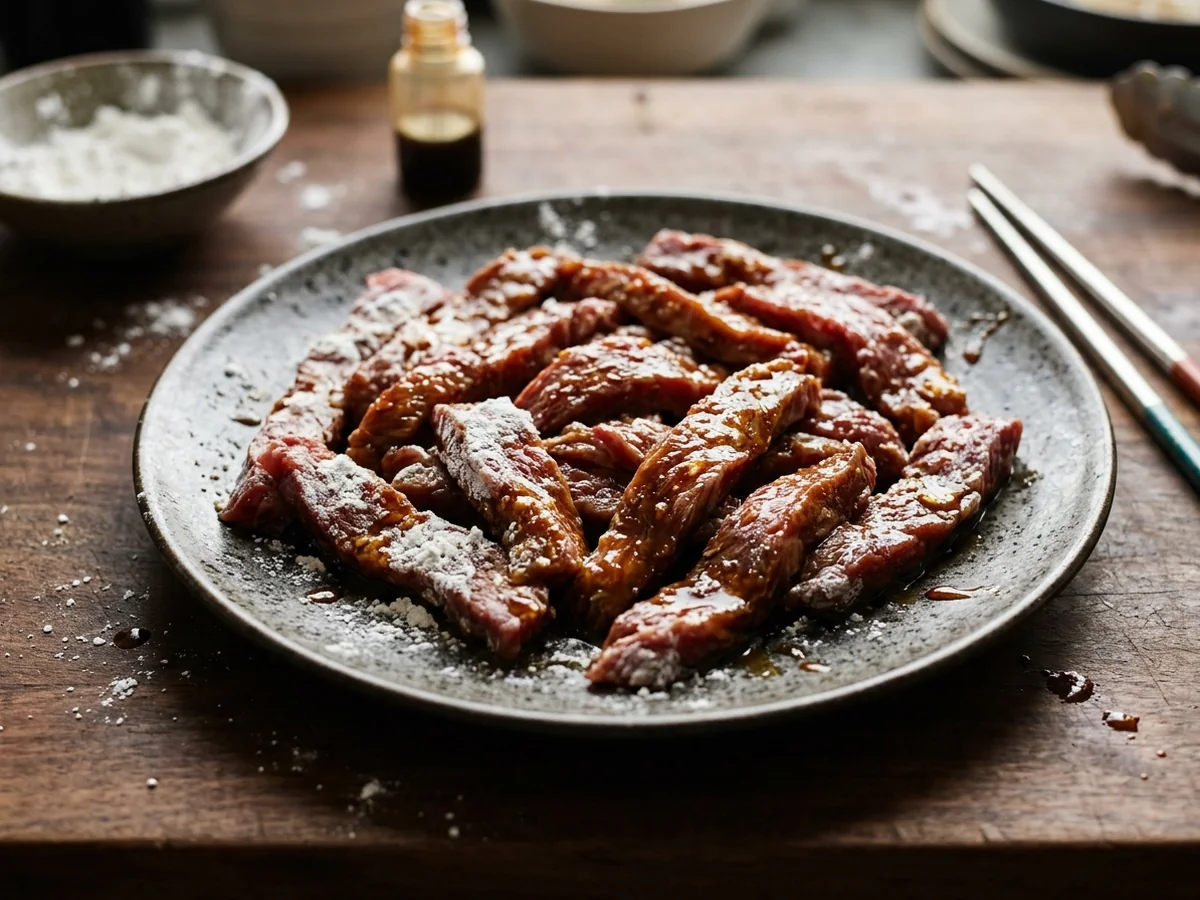
The secret lies in a quick, salty‑sweet marination that builds a thin, dry coating on the meat. Toss thin strips of flank steak with 1 tablespoon of light soy sauce, ½ teaspoon of sugar, and a pinch of ground Sichuan peppercorn. Let the mixture sit for exactly 15 minutes at room temperature. This brief soak does two things: the salt draws out excess moisture, and the sugar creates a caramelized crust when the beef hits the hot wok.
Why 15 minutes? Longer than that can start breaking down the fibers, making the beef mushy, while shorter than five minutes won’t pull enough liquid out. In my kitchen, I’ve found that a 15‑minute window gives the perfect balance of flavor and texture without any extra steps.
After marinating, pat the beef dry with a paper towel. The drier the surface, the better the flash‑fry will be. Then coat each piece lightly with cornstarch, just enough to dust the strips, about a quarter cup for a pound of meat. This fine layer turns golden and crisp in seconds, sealing in the spicy sauce later.
Here’s a quick checklist you can pin for the next time you cook:
- 15‑minute marination with soy sauce, sugar, and Sichuan peppercorn.
- Pat dry thoroughly before coating.
- Use ¼ cup cornstarch for every 1 lb of beef.
One downside to note: the short marination adds a tiny bit of prep time, but the payoff is a satisfying crunch that makes the dish stand out on any dinner table. Follow this tip, and your crispy chili beef will stay crunchy even after it’s tossed with the fiery sauce.
Prep Sichuan Beef
Myth says you can toss raw strips straight into the wok and still get that signature crunch. Reality shows that a quick marinate, a gentle pat‑dry, and a precise slice are the real shortcuts to a perfect sichuan crispy chili beef stir-fry.
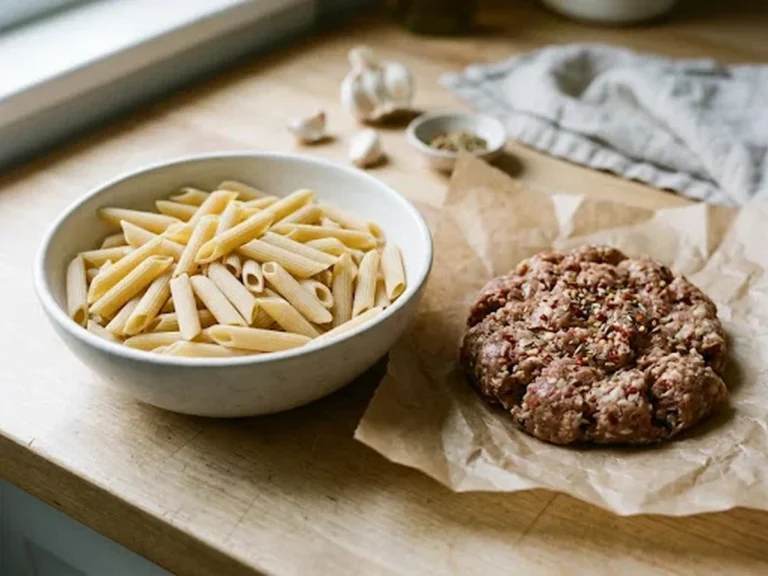
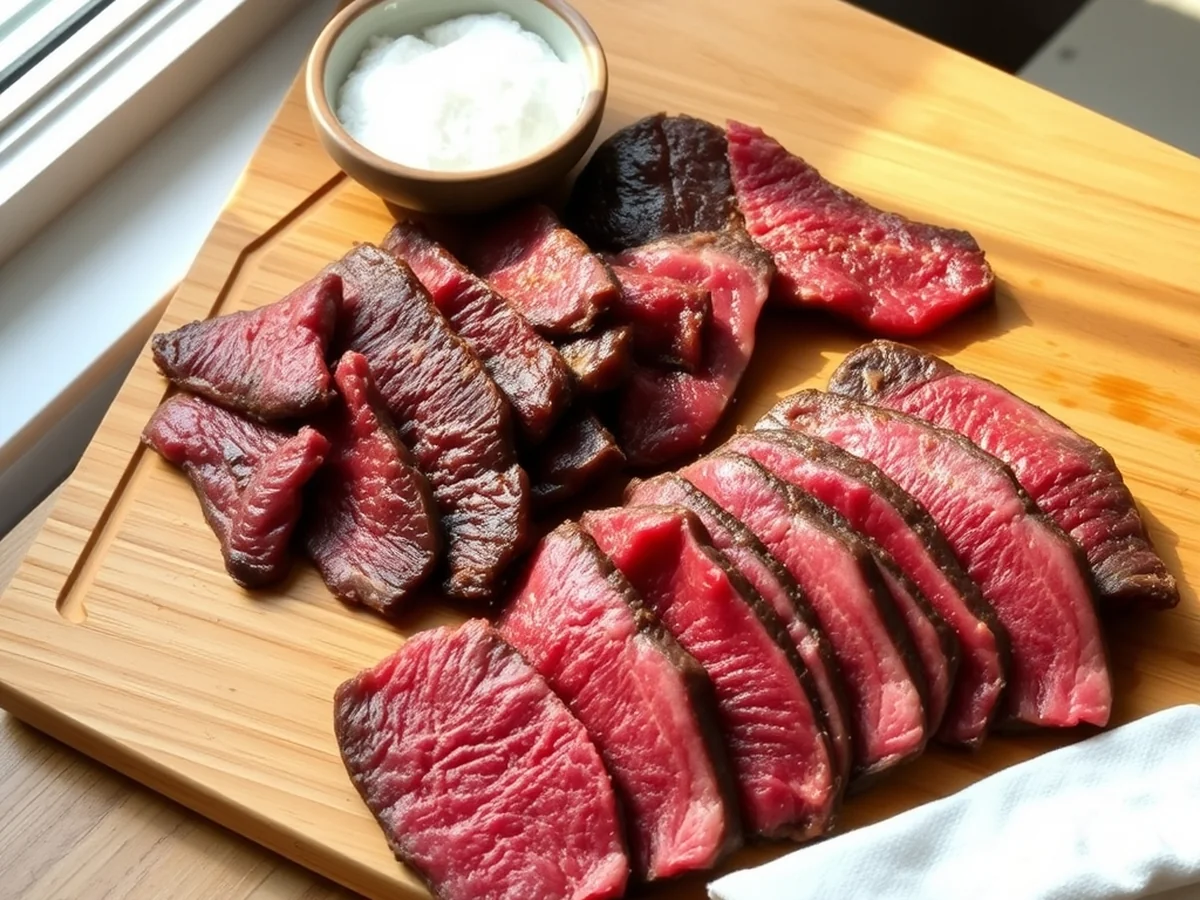
First, choose a well‑marbled cut like flank steak. Place the meat in the freezer for 15‑20 minutes; this firms the fibers and makes slicing easier. When it’s just firm enough to hold, cut across the grain into ¼‑inch strips. Thin pieces ensure they cook fast and stay tender, while the grain‑cut helps the sauce cling.
Next, the marinate. In a bowl combine 2 tbsp soy sauce, 1 tbsp Shaoxing wine, and a pinch of white pepper. Add the beef strips and toss so each piece is coated. Let it rest for 10 minutes. This short dip not only flavors the meat but also begins breaking down proteins, which prevents the strips from turning rubbery during the high‑heat sear.
- Dry the beef: Spread the marinated strips on a paper‑towel‑lined tray. Pat them gently until the surface feels almost powdery. Removing excess moisture is crucial; water creates steam that softens the exterior, ruining the crisp you need.
- Dust lightly: Sprinkle 1 tbsp cornstarch over the dried strips and toss. The starch forms a thin barrier that fries up golden and crunchy without absorbing too much oil.
- Heat a wok until a drop of water sizzles and evaporates instantly. Add 2 tbsp peanut oil, then the beef. Stir‑fry for 45 seconds, just enough to seal the surface. The beef should turn a deep mahogany, not brown fully.
After this flash‑cook, remove the beef and set it aside while you build the sauce. The brief sear locks in juices, and the cornstarch coating guarantees that when the chili oil and Sichuan peppercorns hit the pan later, the beef stays crispy and vibrant.
In my kitchen, this method costs under $12 for a family‑size batch and delivers a restaurant‑level bite every time. Skipping any of these steps, especially the drying, will leave you with soggy strips and a lost crunch, turning what should be a standout dish into a bland stir‑fry.
Making the Chili Sauce
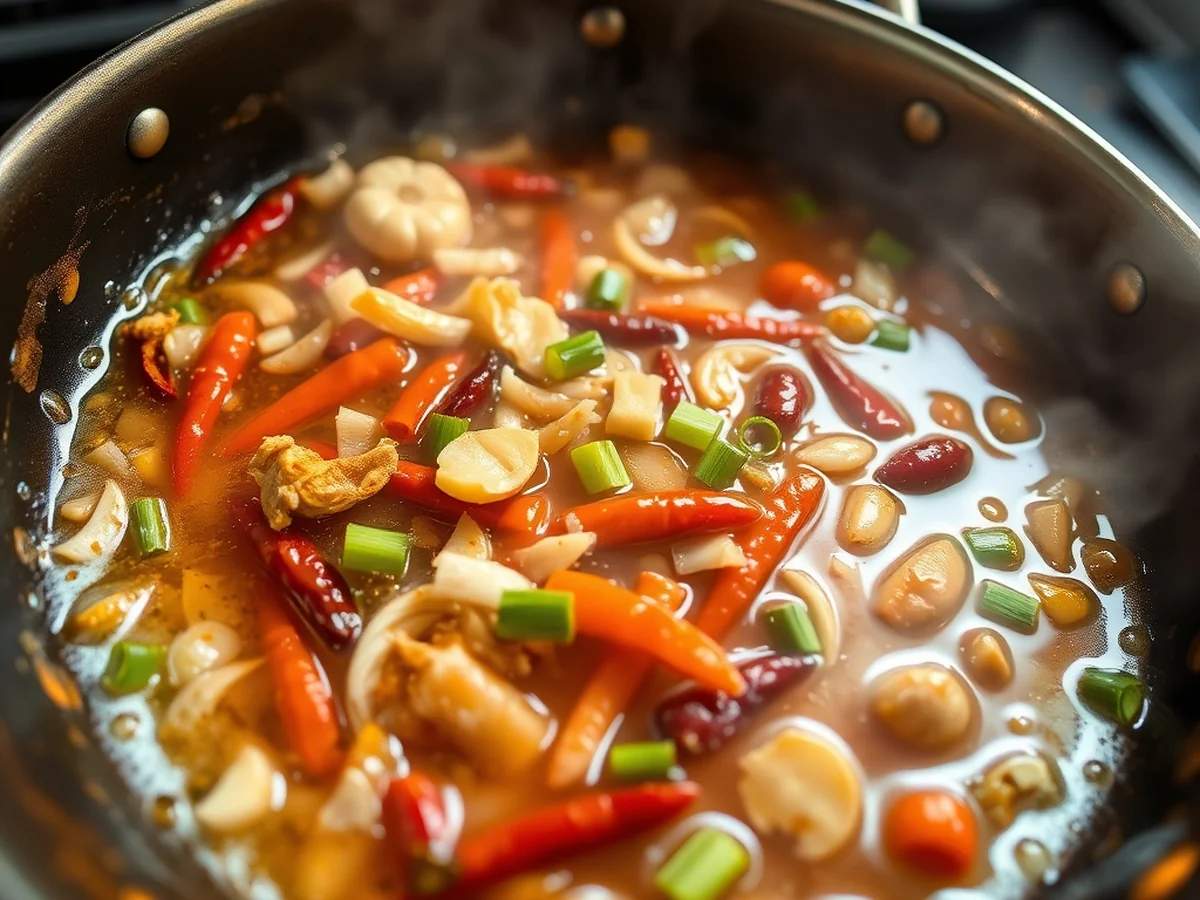
I first learned that a good sauce is the heart of any sichuan crispy chili beef stir-fry, and it all starts with the aromatics. When the fragrance hits the pan, you know the dish is on the right track.
Gather these five key aromatics and add them in the order listed. Each brings a distinct layer that balances the heat and keeps the sauce from feeling one‑dimensional.
- Sichuan peppercorns , 1 teaspoon, toasted and ground. They add a gentle numbing coolness that softens the chili’s bite.
- Garlic cloves , 3 large pieces, minced. Their sharpness lifts the overall flavor and cuts through the oil.
- Fresh ginger , 1 tablespoon, grated. It introduces a bright, peppery note that brightens the sauce.
- Red dried chilies , 5 whole, broken up. Use a mix of mild and hot varieties for depth without overwhelming the palate.
- Scallion whites , 2 tablespoons, sliced thin. They give a subtle onion sweetness that rounds out the heat.
Start by heating 2 tablespoons of neutral oil in a small saucepan over medium heat. Once the oil shimmers, toss in the toasted Sichuan peppercorns. Let them sizzle for about 20 seconds; this releases their signature tingle without burning. Add the garlic and ginger, stirring quickly so they turn fragrant but stay pale , roughly 30 seconds.
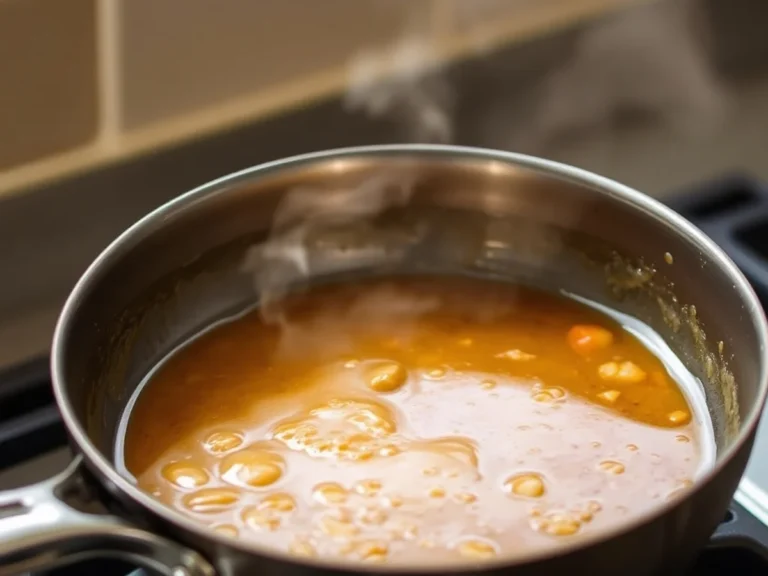
Now stir in the broken chilies. If you prefer a milder sauce, remove half after a minute; if you love heat, keep them all. Add 2 tablespoons of doubanjiang, the fermented bean paste that gives the classic reddish hue and umami backbone. Cook the mixture for another minute, allowing the paste to melt into the oil.
Balance the spice by pouring in ¼ cup of chicken stock and 1 teaspoon of sugar. The liquid tempers the heat while the sugar softens any sharp edges. Let the sauce simmer for 2 minutes, then finish with the scallion whites and a splash of 1 teaspoon rice vinegar for a hint of acidity.
Taste before you move on. If the sauce feels too hot, add a pinch more sugar; if it leans too sweet, a dash more vinegar restores harmony. This careful tweaking ensures the final sichuan crispy chili beef stir-fry delivers bold flavor without overwhelming your taste buds.
Crispy Sichuan Beef Method
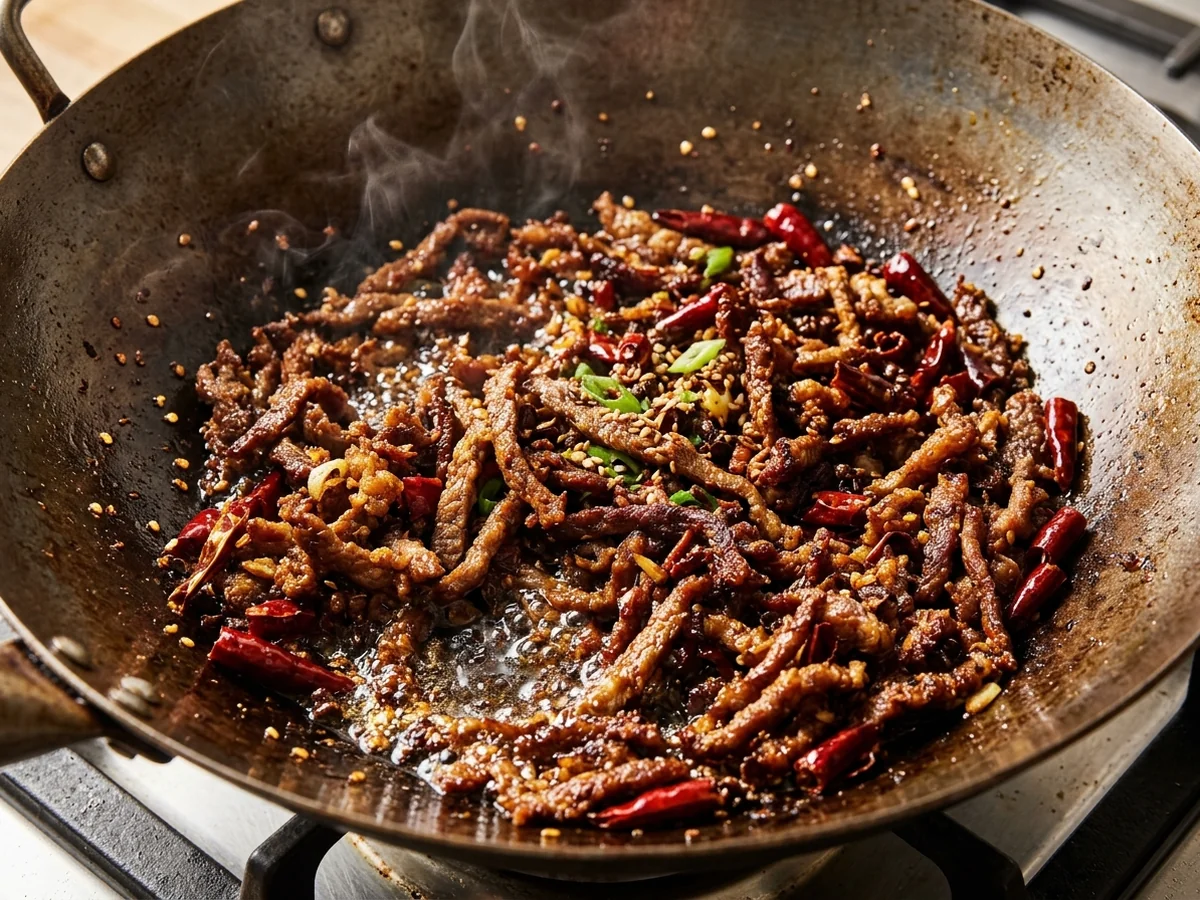
Start with a hot wok and a thin coating of oil to lock in crunch. When the oil shimmers, it’s ready; any cooler moment will steam the meat instead of searing it. Cut the beef into ½‑inch strips, toss them lightly in cornstarch, then spread them in a single layer. Let them sit for 30 seconds , this brief rest lets the starch dry, creating a crisp shell once it hits the pan.
Heat the wok to a temperature where a drop of water sizzles and evaporates instantly. Add 2 Tbsp of peanut oil and swirl. Drop the coated beef in batches; crowding drops the heat and makes the pieces soggy. Stir‑fry for about 45 seconds, then flip once. You’ll see the edges turn golden and the surface develop a fine, crackling crust. Remove the beef on a paper towel to drain excess oil, but keep the wok hot for the next step.
Now bring the flavor base to life. Toss in 1 tsp of Sichuan peppercorns and let them toast for 10 seconds , this releases their signature tingly aroma. Follow with 4‑5 dried red chilies, broken in half, and a splash of minced garlic. Stir quickly; the chilies should darken just enough to perfume the oil without burning.
Return the crispy beef to the wok, drizzle 2 Tbsp of soy sauce and a pinch of sugar, then toss everything together for another 20 seconds. The sauce clings to the crunchy coating, giving each bite a balanced heat and a subtle sweet edge. Finish with a handful of sliced scallions for a fresh snap.
- Use a wok that can reach at least 450°F; lower temps won’t produce the needed crackle.
- Pat the beef dry before coating , excess moisture prevents the crust from forming.
- Serve immediately; the longer it sits, the softer the crust becomes.
Following this high‑heat stir‑fry technique ensures your sichuan crispy chili beef stir-fry stays crunchy, flavorful, and ready to impress anyone who loves a good bite of spice and texture.
Balance Heat
As the evenings grow cooler, a warm plate of sichuan crispy chili beef stir-fry feels like a cozy hug. Yet the heat level should match your palate, not overwhelm it. Below is a quick guide to tweaking the chilies so every bite feels just right.
Start with the base recipe’s 1 tablespoon of dried red chilies. If you prefer a milder bite, halve the amount to ½ tablespoon. The chilies release their heat quickly, so reducing them early keeps the sauce bright without turning it scorching. For a medium kick, keep the full tablespoon but add a splash of water when you toast the chilies; the moisture dulls the sharp edge while preserving the smoky flavor.
If you love bold spice, increase the chilies to 1½ tablespoons. Pair this with ¼ teaspoon of Sichuan peppercorns, which add a tingling buzz that balances the heat. Be aware that extra peppercorns can make the dish feel numbing, so taste as you go. A practical tip: stir‑fry the chilies and peppercorns over medium heat for 30 seconds before adding the beef. This step unlocks their aroma without burning them.
- Fresh versus dried: Fresh red Thai chilies are about 3 times hotter than dried ones. Swap 2 fresh chilies for the dried tablespoon if you want a fresh, sharp heat.
- Oil ratio: Using 2 tablespoons of peanut oil instead of 1 tablespoon spreads the heat more evenly across the beef strips.
- Acidity balance: A splash of rice vinegar (1 teaspoon) can soften excessive heat, making the flavor rounder.
When adjusting chilies, remember that the sauce’s other components, soy sauce, ginger, and garlic, also influence perceived spiciness. If you cut the chilies but keep the soy sauce at 2 tablespoons, the salty depth will still give the dish a strong presence. Conversely, reducing soy sauce slightly (to 1 ½ tablespoons) can make the chili’s heat feel sharper.
Finally, give the stir‑fry a quick taste before serving. If the heat still feels off, a tiny pinch of sugar (about ¼ gram) can tame lingering fire without sweetening the whole dish. Adjusting chilies is a simple way to personalize your sichuan crispy chili beef stir-fry, ensuring it fits the season and your taste buds perfectly.
Serve Sichuan Chili Beef
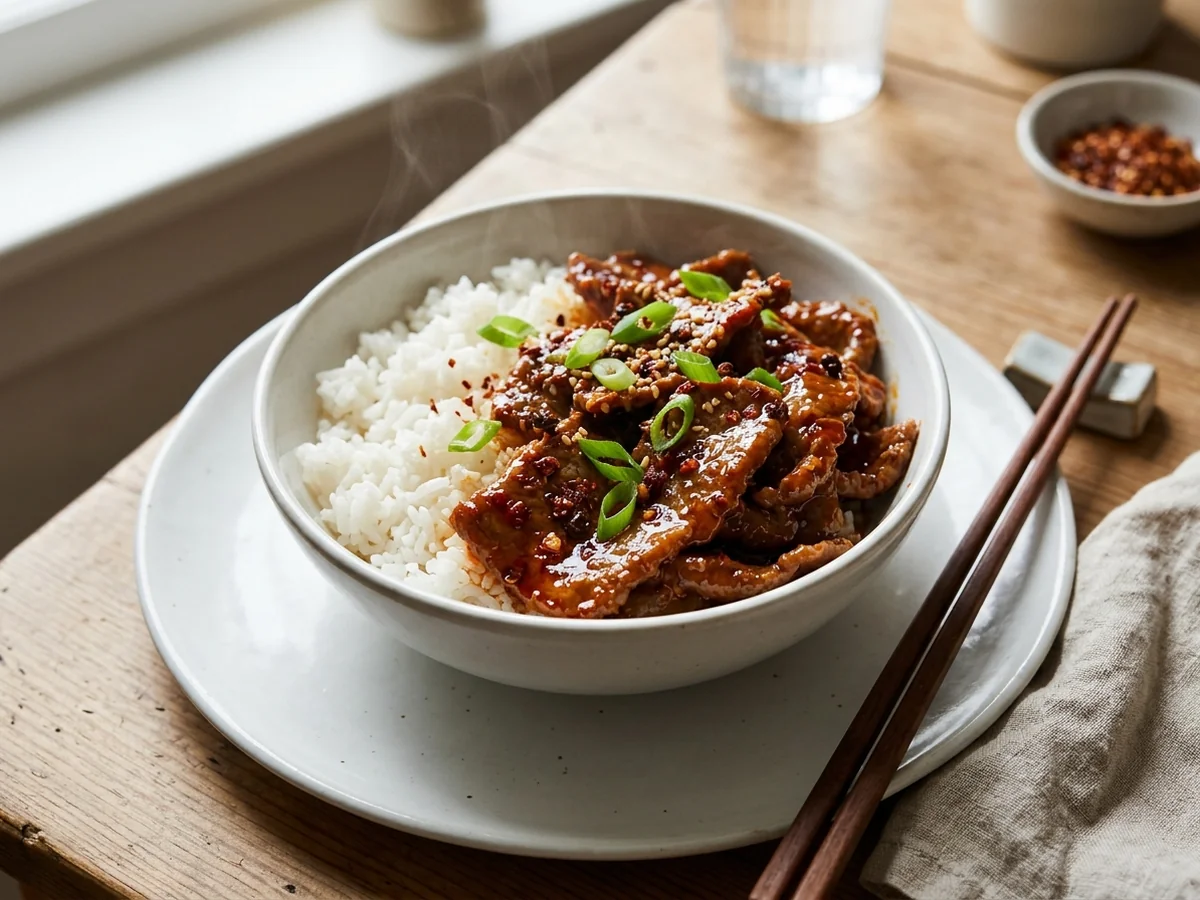
Compared with a typical takeout combo that can cost $12, a home‑cooked plate of sichuan crispy chili beef stir‑fry plus simple sides usually stays under $8 per person. That savings lets you add a few thoughtful touches without stretching the budget.
Start with a base of steamed jasmine rice. A 1‑cup serving absorbs the sauce and balances the heat, and it costs about $0.30 per cup. If you prefer a lighter option, try a small bowl of chilled cucumber salad tossed with rice‑vinegar and a pinch of sugar.
- Pickled carrots and daikon , The tang cuts through the spice and adds a crunchy contrast. You can buy a ready‑made jar for $3 or make your own in an hour.
- Quick‑sautéed bok bok greens , A handful of leaves tossed in garlic oil for two minutes gives a pop of color and a fresh note.
- Roasted peanuts , A sprinkle of crushed peanuts on top adds texture and a nutty finish that many diners love.
For garnish, a drizzle of sesame oil and a few sliced scallions brighten the dish instantly. The oil adds a glossy sheen, while the green onions lend a subtle bite. If you enjoy extra heat, scatter a couple of dried red chilies; just remember a little goes a long way.
Plating matters as much as flavor. Use a wide, shallow bowl so the beef can spread out and the sauce stays visible. Place the rice in the center, then arrange the beef in a fan shape around it. Scatter the pickled vegetables and bok bok greens on the rim, and finish with the peanuts, scallions, and a light drizzle of sesame oil. This layout looks inviting on a wooden board or a matte black plate, making it perfect for a pin‑worthy photo.
Don’t forget a cold beverage. A glass of lightly sweetened green tea or a crisp lager helps tame the peppery kick. With these sides, garnishes, and plating ideas, your sichuan crispy chili beef stir‑fry becomes a complete, restaurant‑style experience you can serve any night of the week.
Sichuan Crispy Chili Beef
Did you know that a single serving of sichuan crispy chili beef stir-fry can deliver over 600 mg of capsaicin, the compound that gives Sichuan food its signature heat? That punch of flavor is why the dish sits at the heart of a traditional Sichuan menu, balancing the region’s love for bold spices with crisp textures.
In a classic banquet, this stir‑fry follows lighter starters like cold cucumber salad and precedes richer soups such as mapo tofu. The beef’s crunchy coating provides a satisfying contrast to the silky tofu, while the chili oil ties the courses together with a consistent, tongue‑tingling heat.
When you serve the dish alongside dan dan noodles, the shared use of Sichuan peppercorns creates a harmonious flavor bridge. Guests can enjoy the numbing “ma” sensation from the peppercorns on the beef, then experience the same tingling in the noodle broth, reinforcing the cuisine’s signature “mala” profile.
Because the beef is thinly sliced, a quick 2‑minute fry at 180 °C (350 °F) locks in moisture and forms that coveted golden crust. This speed fits perfectly into a multi‑course feast where timing matters; while the beef rests, the kitchen can finish a steaming bowl of hot and sour soup without any rush.
- Protein boost: 25 g per 150‑gram serving, ideal for a balanced meal.
- Spice level: 7 on a 1‑10 scale, making it approachable yet authentic.
- Cost: around $9 per plate at a mid‑range Sichuan restaurant, reflecting quality ingredients and skilled wok work.
Pairing suggestions further embed the stir‑fry into the menu. A side of jasmine rice absorbs the fiery sauce, while a small plate of pickled mustard greens offers a cooling counterpoint. For drinks, a light barley tea cuts the heat without overwhelming the palate.
Overall, sichuan crispy chili beef stir-fry isn’t just a standout main; it acts as a connective thread that links appetizers, soups, and noodles, creating a cohesive dining experience that showcases the depth and excitement of Sichuan cuisine.
FAQ
Can I use flank steak instead of sirloin for the Sichuan crispy chili beef stir-fry?
Yes, flank steak works well because it’s thin and absorbs the sauce quickly. Just slice it against the grain to keep each bite tender.
How spicy is the dish and can I tone it down?
The heat comes from dried red chilies and Sichuan peppercorns, giving a lively tingle. If you prefer milder, reduce the chilies to 8 pieces and skip the peppercorns.
What’s the best oil for achieving that crisp texture?
Use a neutral oil with a high smoke point, such as peanut oil. Heating 2 cups of oil to 350°F lets the beef fry fast and stay crunchy.
Do I need to marinate the beef long before cooking?
A short 15‑minute soak in soy sauce, a splash of rice vinegar, and a pinch of cornstarch is enough. The brief time coats the meat, helping it crisp without getting soggy.
Can I make this dish ahead of time and reheat it?
It’s best served fresh; the crisp coating softens after a few hours. If you must store it, keep the sauce separate and re‑fry the beef for 30 seconds before mixing.
You might also like: Creamy Garlic Butter Chicken Recipe
Key Takeaways
Looking for a quick way to nail that restaurant‑style heat at home?
- Prep time under 30 minutes , slice 8 oz of flank steak thinly and marinate for just 10 minutes.
- Bold Sichuan flavor comes from toasted Sichuan peppercorns and a splash of doubanjiang.
- Crispy texture is achieved by coating the beef in cornstarch before a hot‑oil flash fry.
- Balanced heat , add 2 teaspoons of chili oil for heat without overwhelming the dish.
- Simple sauce , combine soy sauce, rice vinegar, and a pinch of sugar for a glossy finish.
- Save this cheat sheet to Pinterest so you can pull out the steps whenever a craving hits.