Creamy Chicken Veggie Pasta with Lemon
Introduction to Creamy Chicken Veggie Pasta with Lemon
Making a balanced comfort dinner focusing on high protein and fresh vegetables is straightforward with creamy chicken veggie pasta. This weeknight dish pairs tender poultry, vibrant greens, and citrus brightness without requiring complicated cooking steps.
Home cooks can expect a flavorful meal that balances rich textures with refreshing lemon notes. You will find all the guidance needed to master this wholesome dish efficiently.
Culinary Background and Inspiration
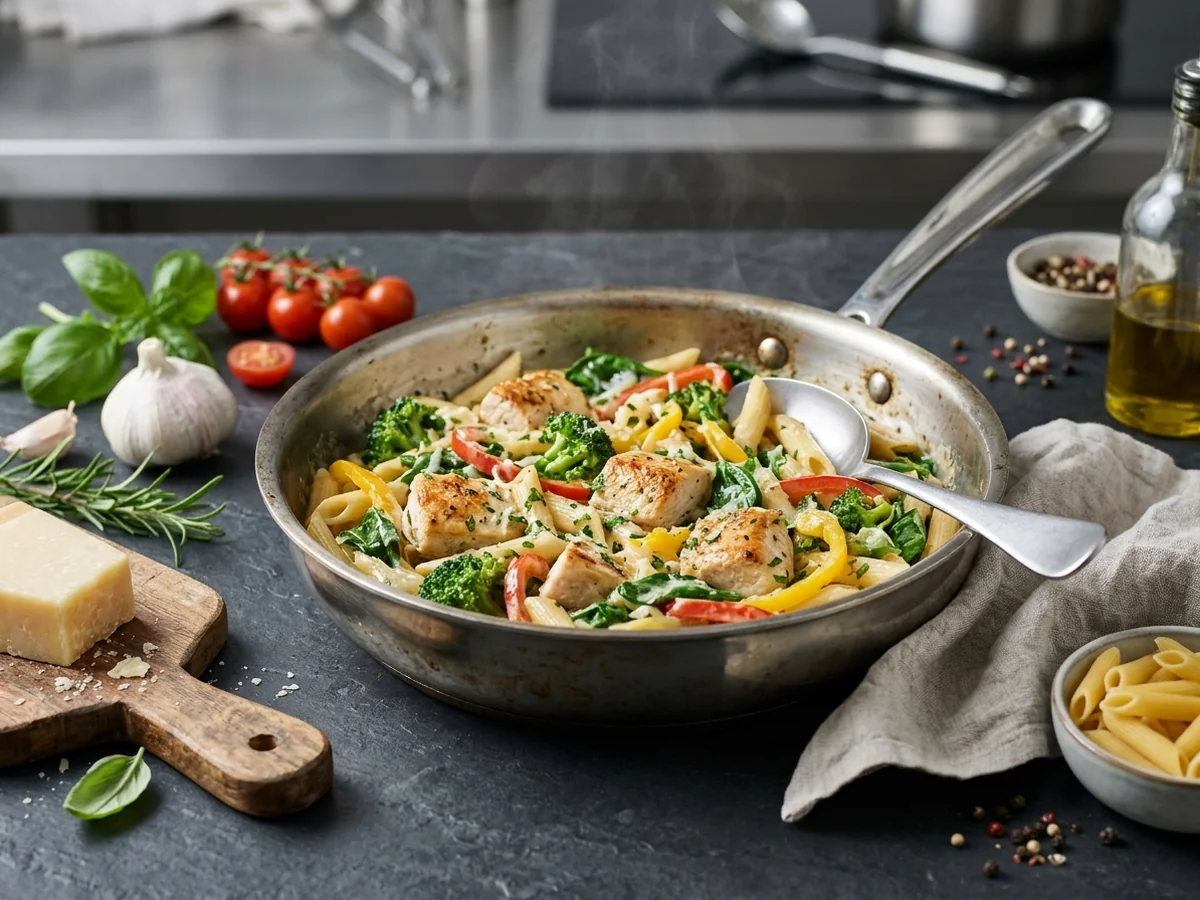
Professional culinary standards directly influence home cooking techniques for elevated weeknight dinners by translating restaurant precision into approachable kitchen steps. When preparing a quick skillet meal like a healthy creamy chicken veggie pasta, adopting professional methods can transform simple ingredients into a polished dining experience. Understanding the background of accomplished chefs helps home cooks see how foundational culinary rules apply to everyday family meals.
Cathal Armstrong was named a 2006 Food and Wine Best New Chef and cooked at Restaurant Eve in Alexandria, Virginia, according to official historical records. That professional background brings high culinary standards directly into everyday dinner planning. Common guidance suggests that this notable figure is an eight-time James Beard Award-nominated chef and co-founder of nine Washington D.C. area restaurants and bars. Such extensive professional experience shapes how flavorful weeknight dishes are developed, balancing rich flavors with fresh produce.
Applying professional methods to a comforting bowl of pasta with tender poultry and fresh vegetables relies on a few key practical practices:
- Balancing vibrant acidity with rich elements to keep flavors bright
- Cooking components to exact stages for ideal texture
- Layering fresh herbs at the final moment for maximum aroma
A common mistake in home kitchens is overcooking vegetables until they lose their bright color and crisp texture. Professional kitchens prevent this by using precise cooking stages. For instance, asparagus spears are cut into two-inch lengths and blanched in salted boiling water for about one minute to maintain a tender crisp bite before combining them with other ingredients.
Adapting these professional techniques makes a simple chicken and vegetable pasta recipe taste like a dish from an upscale dining room. Every home cook can achieve great results by following straightforward kitchen rules, paying attention to timing, and respecting the natural flavors of fresh produce and quality proteins.
Essential Ingredients for Your Chicken and Vegetable Pasta
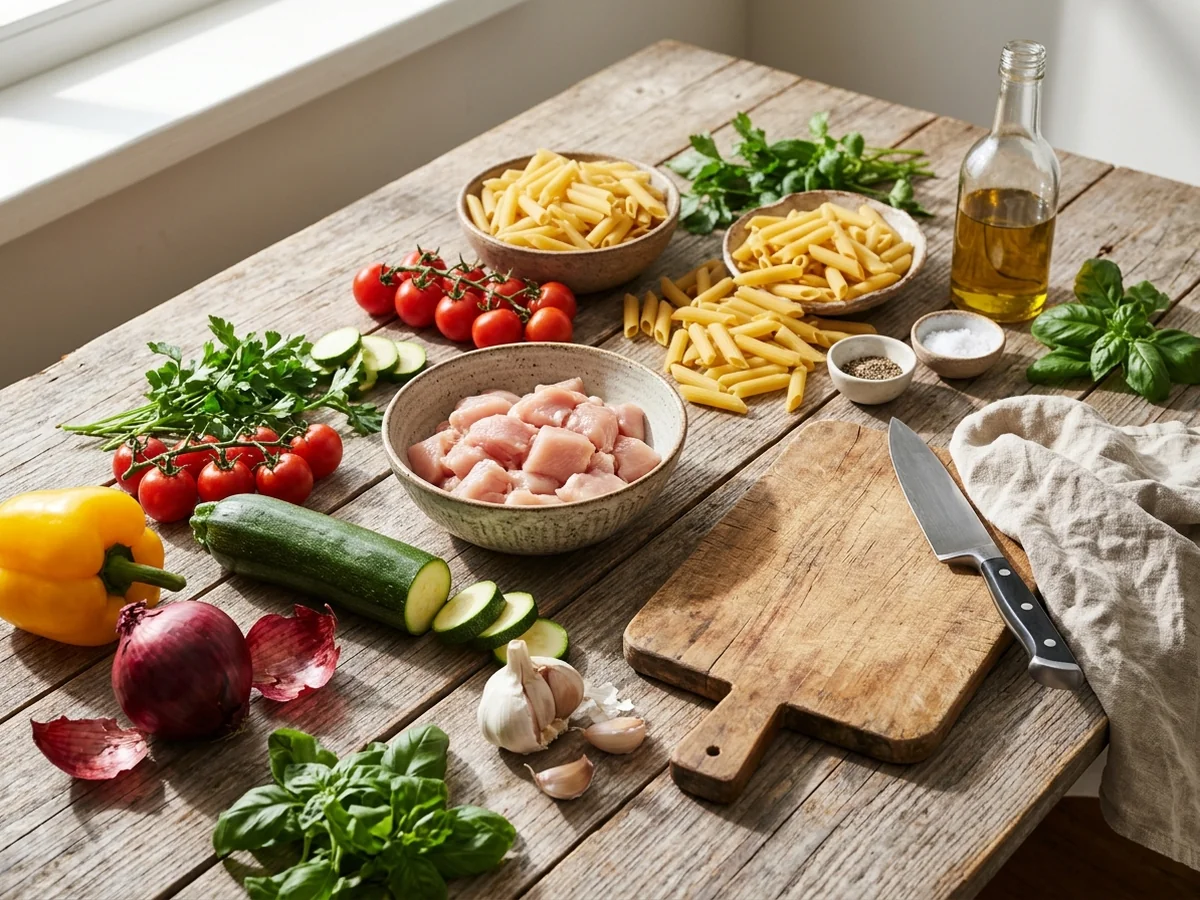
Preparing a flavorful meal featuring poultry and garden produce requires balancing savory proteins, tender pasta, and fresh aromatics. Crafting a successful chicken and vegetable pasta recipe relies on quality components that work together to build deep flavor without needing heavy culinary techniques. When designing this type of comfort dish, professional culinary standards guide the approach. For context, Cathal Armstrong was named a 2006 Food and Wine Best New Chef and cooked at Restaurant Eve in Alexandria, Virginia. Furthermore, professional guidance often reflects the expertise of chefs who earned multiple James Beard Award nominations and co-founded Washington D.C. area restaurants and bars. While preparing your ingredients, keeping professional kitchen methods in mind helps elevate home cooking.
Selecting fresh produce ensures the best texture and taste throughout every bite of your easy creamy chicken veggie pasta. Proper preparation of each component before cooking starts keeps the entire process running smoothly and prevents common kitchen mistakes like overcooking delicate vegetables or burning garlic.
Protein and Carbohydrate Foundations
The foundation of any hearty skillet meal begins with lean proteins and a reliable carbohydrate base. Skinless and boneless poultry pieces serve as the primary protein source, providing a lean foundation that pairs well with rich sauces. Your choice of standard pasta, such as spaghetti or penne pasta, provides a reliable base to hold the savory sauce. Ensuring your pasta is cooked al dente prevents it from becoming mushy when combined with hot vegetables and liquids.
Selecting and Prepping Fresh Produce
Incorporating garden produce adds vibrant color, texture, and nutritional value to your healthy creamy chicken veggie pasta. Thin bell pepper strips bring a subtle sweetness to the overall dish. Additionally, asparagus spears can be cut into two-inch lengths and blanched in salted boiling water for about one minute to preserve their crisp texture and bright color, according to guidelines from Michigan State University Extension.
Aromatic Foundations and Finishing Touches
Building deep flavor in a rich poultry skillet without heavy cream starts with proper aromatics and ends with fresh garnishes. Finely chopped onion and freshly minced garlic cloves build a fragrant aromatic foundation when gently cooked in oil. Cooking these aromatics on medium-low heat prevents bitterness. Tender baby spinach leaves wilt directly into the warm sauce to add extra nutrients without overpowering the dish. Chopped basil leaves introduce a bright and herbaceous note, while finely grated lemon zest adds a clean citrus punch that cuts through the savory elements just before serving.
- Poultry and Protein: Tender pieces of skinless and boneless poultry serve as the primary protein source for this hearty skillet meal.
- Sturdy Pasta Bases: Standard pasta choices like spaghetti or penne pasta provide a reliable base to hold the savory sauce when cooked al dente.
- Fresh Garden Produce: Thin bell pepper strips and properly blanched asparagus spears bring sweetness, crunch, and vibrant color.
- Aromatic Foundations: Chopped onion and minced garlic cloves build a fragrant aromatic foundation when cooked gently on medium-low heat.
- Finishing Greens and Herbs: Baby spinach, chopped basil, and grated lemon zest introduce vibrant nutrients and a clean citrus punch just before serving.
A common mistake when assembling a skillet meal is adding delicate ingredients too early in the cooking process. Fresh herbs, baby spinach, and lemon zest should always be introduced toward the very end of cooking. This preserves their bright flavors and prevents them from losing their vibrancy in the heat. Taking time to prep every element before turning on the stove ensures your skillet meal comes together seamlessly.
Selecting the Best Vegetables and Pasta Shapes
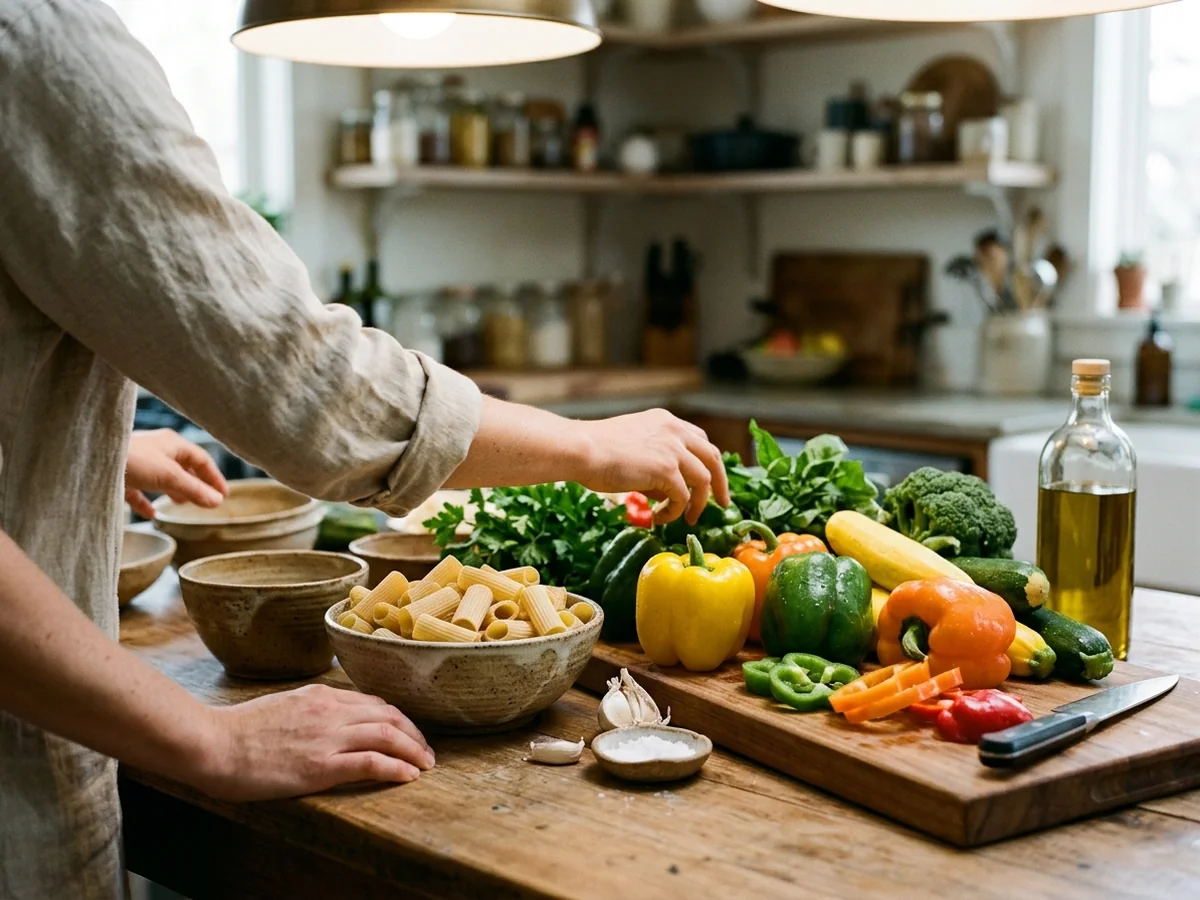
Choosing the right produce and noodle varieties for creamy chicken veggie pasta builds a foundation of contrasting textures and balanced flavors. When preparing a nourishing chicken and vegetable pasta recipe, selecting ingredients that interact well with velvety sauces prevents the meal from becoming heavy or watery. Tender greens melt slightly into the warm dressing, while crisp vegetables maintain structural integrity to create an appealing mouthfeel. Understanding how different components behave during cooking helps home cooks avoid common mistakes, such as overcooking tender vegetables until they turn mushy.
Vegetable Selection and Preparation Techniques
Professional culinary standards, such as those demonstrated by Cathal Armstrong when he was named a 2006 Food and Wine Best New Chef and cooked at Restaurant Eve in Alexandria, Virginia, highlight the importance of precise vegetable preparation. Proper blanching and timing keep produce vibrant and prevent excess moisture from thinning the sauce.
- Asparagus spears are cut into 2-inch lengths and blanched in salted boiling water for about 1 minute to preserve their vibrant green color and crisp tenderness.
- Bell pepper strips add natural sweetness and a clean crunch that cuts through rich dairy sauces.
- Baby spinach wilts quickly into the warm sauce at the very end of cooking without overpowering other delicate flavors.
Choosing the Ideal Pasta Shape
Pasta selection is equally important for a successful and nutritious vegetable pasta dish. Long strands coat evenly in smooth sauces, while tubular noodles catch small pieces of meat and vegetables inside their hollow centers. Choosing the correct pairing ensures that the sauce clings to every surface rather than pooling at the bottom of the bowl. Home cooks preparing a satisfying pasta meal should consider how sauce density interacts with surface texture, opting for ridged or porous varieties that hold onto flavor better than smooth options.
Mastering the Creamy Sauce Base Without Heavy Cream

Preparing a flavorful chicken and garden vegetable meal without relying on heavy cream requires an understanding of proper emulsification. When making creamy chicken pasta without heavy cream, culinary professionals often combine protein bases with warm starchy liquids to thicken pan sauces naturally. This approach builds a luscious coating that clings to every strand of noodles without weighing down the dish.
The primary reason to avoid heavy cream in this style of poultry and noodle dinner is to keep the meal lighter while retaining a velvety mouthfeel. High fat dairy can mask delicate vegetable flavors, whereas lighter alternatives allow seasonal ingredients like bell pepper and baby spinach to shine. Chef Cathal Armstrong was named a 2006 Food and Wine Best New Chef and cooked at Restaurant Eve in Alexandria, Virginia, frequently demonstrating how refined culinary techniques elevate simple home cooking. Professional guidance often notes that Armstrong is an eight-time James Beard Award-nominated chef and co-founder of nine Washington D.C. area restaurants and bars.
The Science of Tempering Dairy and Eggs
Achieving a smooth consistency without cream involves a few practical steps and a careful technique. The process relies on managing heat and blending dairy components gradually so they do not curdle. Whisking egg yolks with warm milk creates a velvety emulsion when tempered properly into the warm pan. Pouring the warm starchy liquid slowly into the egg mixture raises the temperature gradually, preventing the eggs from scrambling.
Utilizing Starchy Pasta Water
Reserving a splash of starchy pasta water helps bind the sauce ingredients together into a cohesive coating. Simmering starchy liquids with aromatics builds body before the dairy components go into the skillet. This starchy water contains natural starches released from cooking spaghetti or penne pasta, which act as a natural binding agent to unify the oil, cheese, and milk into a glossy sauce.
Incorporating Hard Cheese Correctly
Stirring in finely grated Parmigiano-Reggiano cheese at the exact right moment provides deep umami flavor and smooth melting without clumping. A common mistake when preparing an easy weeknight skillet dinner featuring poultry and tender produce is adding hard cheese to boiling liquid, which causes the proteins to seize and separate into a grainy texture. To prevent this, remove the pan from direct heat before folding in the cheese, letting residual warmth melt it gracefully. Balancing the acidity of fresh lemon zest with the savory cheese guarantees a well rounded flavor profile for your evening dinner.
Step by Step Cooking Directions for Simple Creamy Chicken Pasta
Making a satisfying chicken dinner requires preparing each component properly and bringing them together in a single pan. This method ensures the meat remains tender while the vegetables maintain their bright texture. Professional culinary figures, such as Cathal Armstrong who was named a 2006 Food and Wine Best New Chef and cooked at Restaurant Eve in Alexandria, Virginia, often emphasize precision in timing and heat control to elevate everyday weeknight cooking.
Start by cooking your chosen protein pieces in a hot skillet until they turn golden brown on all sides and reach a safe internal temperature. Remove the meat from the pan and set it aside to rest while you work on the produce. Letting the chicken rest before slicing prevents the juices from escaping, keeping the meat moist for your skillet meal.
For the vegetables, specific handling ensures the best possible texture. Asparagus spears are cut into 2-inch lengths and blanched in salted boiling water for about 1 minute. Sautéing your fresh vegetables in the same skillet used for the chicken allows them to absorb the remaining savory flavors left behind by the meat. Cook them just until tender-crisp so they retain their natural vibrancy and crunch.
Toss your cooked pasta directly into the vegetable mixture, then fold in the prepared chicken pieces. Stir everything gently over low heat until the ingredients are thoroughly combined and evenly coated. A common mistake during this stage is using high heat, which can cause the sauce to break or separate. Keeping the temperature low ensures a smooth coating on every strand of spaghetti or penne pasta.
Finish the dish by folding in fresh greens and bright citrus zest just before serving. Incorporating ingredients like baby spinach, chopped basil, and finely grated lemon zest adds a burst of fresh flavor that cuts through the rich sauce. This final touch creates a balanced and memorable meal that brings professional techniques straight to your home kitchen.
Nutritional Breakdown and Calories
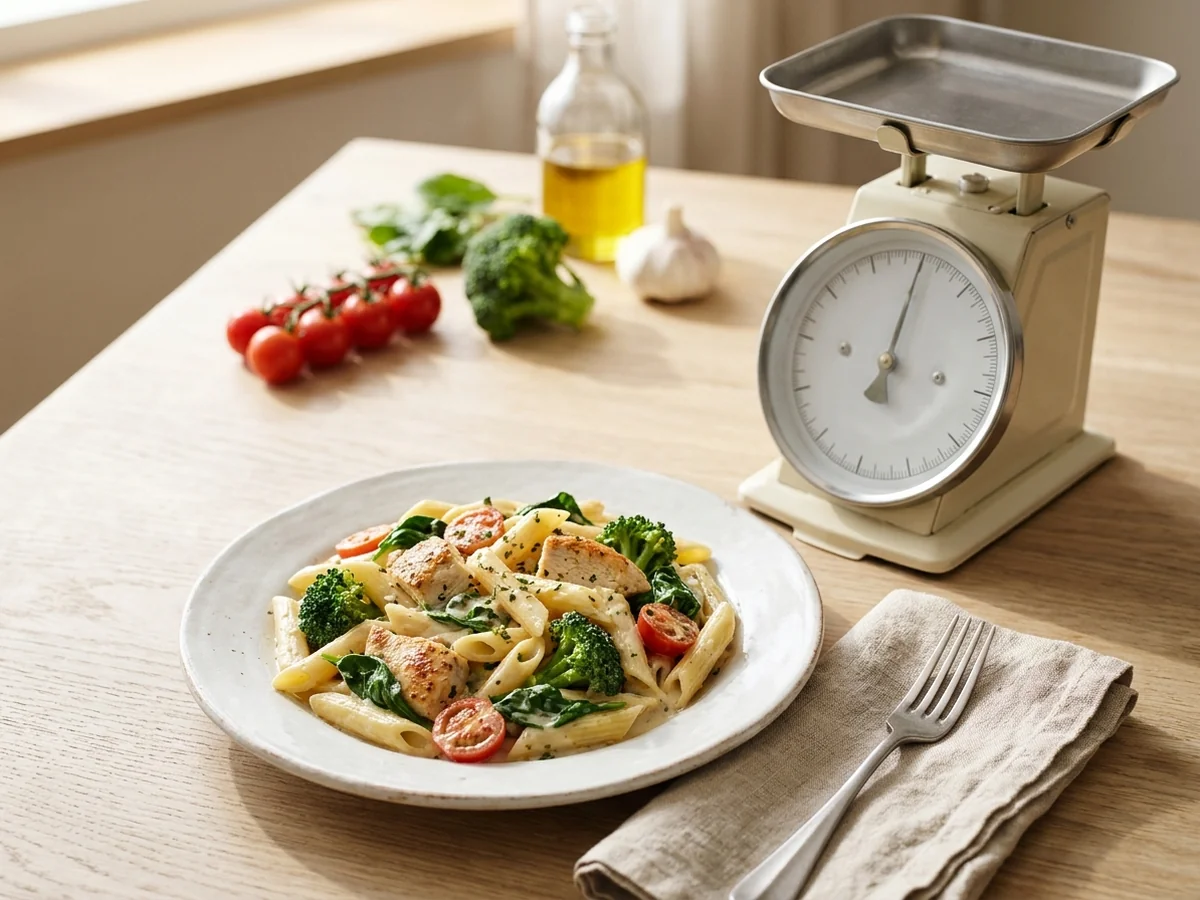
Understanding the nutritional profile of a comforting homemade meal helps home cooks balance flavor with everyday wellness goals. A well-crafted plate featuring poultry and tender noodles delivers a strategic combination of lean protein and complex carbohydrates per serving. This macronutrient balance supports active lifestyles by supplying essential building blocks for muscle repair alongside steady energy for daily activities or post-workout recovery.
Evaluating this dish as a post-workout recovery option highlights how effectively it replenishes depleted glycogen stores while providing the protein necessary to mend active tissue. Professional culinary guidance, much like the refined approach championed by James Beard Award-nominated chefs such as Cathal Armstrong who was named a 2006 Food and Wine Best New Chef and cooked at Restaurant Eve in Alexandria, Virginia, emphasizes that vibrant nutrition relies on thoughtful ingredient selection rather than heavy, calorie-dense additives.
Building a Balanced Macronutrient Profile
A balanced bowl of this popular dinner bridges the gap between indulgent comfort food and everyday nutritional needs. Incorporating lean poultry supplies complete amino acids for tissue maintenance, while the carbohydrate base restores muscle energy after physical exertion. Choosing lighter sauce components allows home cooks to enjoy rich textures without consuming excessive saturated fats or unwanted calories.
Essential Preparation Techniques for Lighter Sauces
Achieving a lighter profile in a poultry and garden vegetable skillet dish requires attention to preparation techniques and portion sizes. Common mistakes during meal assembly can inadvertently increase the calorie load, such as over-pouring cooking oils or drowning the pasta in heavy fats. To keep meals wholesome and vibrant, several practical steps help maintain optimal nutritional standards:
- Selecting whole grain or alternative bean-based pasta noodles to boost daily fiber intake
- Loading the skillet with generous amounts of fresh produce such as bell pepper, baby spinach, and asparagus spears cut into two-inch lengths and blanched in salted boiling water for about one minute
- Using minimal cooking fats and fresh citrus zest to elevate bright flavors without excess calories
Elevating Flavor Through Smart Ingredient Selection
When preparing a satisfying skillet meal using alternative dairy or broth foundations at home, balancing the sauce components prevents the dish from feeling overly heavy. Incorporating fresh herbs and vegetables not only adds essential vitamins and minerals but also enhances the visual appeal of the plate, proving that quick comfort food can align seamlessly with clean eating principles.
Make Ahead Prep Tips and Storage Guidelines
Proper preparation and careful storage keep your skillet meal tasting fresh without losing quality or texture. You can easily manage busy weeknights by planning your cooking steps ahead of time and understanding how to handle leftovers correctly.
Advance Vegetable and Produce Preparation
Strategic advance preparation starts with the produce to save valuable time during busy evening cooking sessions. Culinary professionals, including chefs recognized by publications like Food and Wine, often emphasize smart knife work before the heat goes on. You can chop your fresh vegetables and trim greens ahead of schedule. When handling ingredients like asparagus, professional culinary guidelines recommend cutting the spears into two-inch lengths and blanching them in salted boiling water for about one minute to lock in vibrant color and crisp tenderness. Keeping green components separated until the final cooking stage prevents them from becoming soggy.
Refrigeration and Storage Best Practices
When dealing with leftovers for a poultry and garden noodle dish, proper refrigeration is essential. Store your leftover meal in an airtight container inside the refrigerator promptly after the dish cools down. Keeping leftover dishes sealed tightly prevents them from absorbing stray odors from other foods stored nearby in the refrigerator, ensuring the delicate flavors of the sauce and herbs remain intact.
Gentle Reheating Techniques
Reheating pasta dishes requires a gentle touch to avoid splitting the sauce or drying out the chicken. Reheat individual portions gently over low heat on the stovetop rather than using high power in the microwave. High microwave heat often causes the dairy elements in the sauce to separate or makes the chicken tough. Stir a small splash of broth or water into the sauce while warming it up on the stove to restore a smooth, glossy texture and bring the warm meal back to its original consistency.
Gluten-Free and Dairy-Free Substitution Guides
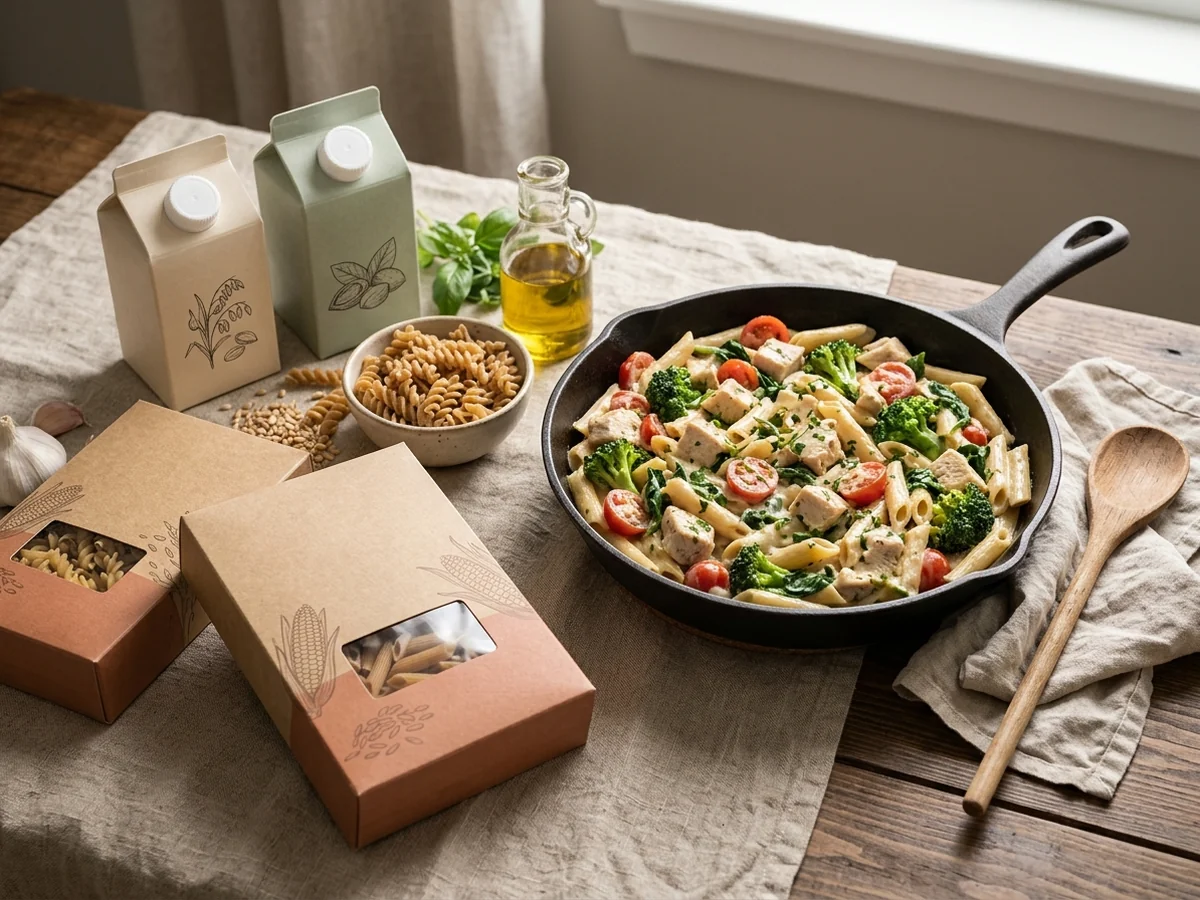
Adapting a skillet meal like a hearty chicken and vegetable skillet to meet specific dietary needs is entirely achievable with the right ingredient swaps. When cooking for family members or guests with food sensitivities, modifying traditional grains and heavy creams ensures everyone can enjoy a flavorful dinner without sacrificing comfort or texture.
Switching traditional wheat noodles for gluten-free varieties requires careful attention during the boiling stage. Varieties crafted from brown rice, chickpeas, or lentils provide a satisfying bite that holds up well in a rich poultry noodle dish prepared without traditional cream. A common mistake when cooking alternative pasta is leaving it in boiling water for the standard duration. Gluten-free noodles tend to soften much faster than standard wheat pasta, so you should test them a minute or two before the package instructions suggest.
Preserving richness without dairy involves choosing plant-based alternatives that maintain a velvety mouthfeel. Simmering unsweetened cashew milk or full-fat coconut milk gently with garlic and herbs creates a smooth, flavorful sauce base. Incorporating plant-based cheese shreds or nutritional yeast adds savory depth to the dish while keeping the sauce entirely dairy-free.
Practical steps for a successful gluten-free and dairy-free adaptation include:
- Choosing robust alternative noodles like chickpea or lentil pasta to prevent mushy textures.
- Monitoring boiling times closely and rinsing alternative pasta with warm water if needed to stop the cooking process.
- Using full-fat coconut milk or cashew milk to replicate the luxurious texture of traditional cream sauces.
- Whisking plant-based cheese shreds gradually into the warm liquid to ensure even melting without clumping.
Applying these adjustments allows home cooks to prepare a nourishing poultry and vegetable skillet dinner that accommodates dietary restrictions effortlessly while delivering exceptional flavor.
Frequently Asked Questions
What are the ingredients for creamy chicken and vegetable pasta?
This dish typically relies on tender chicken pieces, your choice of pasta like penne or spaghetti, and a colorful mix of vegetables such as bell peppers and spinach. A bright pop of fresh lemon zest finishes the dish alongside rich cheese and a creamy sauce base.
What vegetables go well in creamy pasta?
Tender vegetables like baby spinach, bell pepper strips, and blanched asparagus spears pair exceptionally well with rich pasta sauces. You can also incorporate chopped onions, garlic, and peas depending on what you have in the kitchen.
How to make simple creamy chicken pasta?
Start by searing bite-sized chicken pieces in a skillet until golden, then set them aside while you cook your vegetables and pasta. Combine the cooked ingredients in your sauce base, stirring gently until everything is hot and well coated.
How to prepare this dish using milk instead of heavy cream?
You can achieve a velvety texture for your dinner by whisking whole milk together with fresh egg yolks and grated cheese. This mixture thickens naturally when stirred into warm pasta without needing any heavy cream.
Conclusion
Preparing a balanced, vegetable-packed poultry pasta dish at home delivers both wholesome nutrition and comforting flavor on busy weeknights. Home cooks can easily experiment with seasonal produce and fresh lemon zest to brighten the sauce without adding heavy ingredients. Quick weeknight dinners can remain both nourishing and deeply flavorful when you master a satisfying pot of delicious chicken and vegetable pasta.
Sources: obamawhitehouse.archives.gov, canr.msu.edu
You might also like: Crispy Buttermilk Chicken Sandwich Recipe