Lemon Butter Salmon with Roasted Potatoes and Broccoli
Introduction
You can easily prepare a balanced dinner by making lemon butter salmon with roasted potatoes on a single sheet pan. This lemon butter salmon with roasted potatoes delivers a bright, savory flavor profile while keeping your kitchen cleanup minimal.
This article covers the essential steps for achieving perfectly tender vegetables and succulent fish in one go. You will learn the optimal oven temperature for a simultaneous roast and find guidance on safe food handling practices. We also include tips on ingredient selection, such as why baby Yukon Gold potatoes are a common choice for roasting, and provide clear instructions for reaching the recommended internal temperature for your meal. By following these methods, you can consistently serve a nutritious, high-protein dinner that suits a busy weeknight schedule.
Efficiency and Balance in Sheet Pan Cooking
Sheet pan meals are designed to streamline your weeknight routine by consolidating protein and vegetables onto a single tray, which minimizes cleanup and saves time. This method allows the oven to handle the bulk of the work, providing a nutrient-dense dinner with minimal active preparation. When crafting a lemon butter salmon with roasted potatoes, the goal is to achieve harmony between ingredients so that everything finishes cooking simultaneously.
Selecting Ingredients for Uniform Roasting
Balancing your meal begins with ingredient selection. Atlantic salmon provides high quality protein and healthy fats, while hardy vegetables add fiber. To ensure even results when learning how to roast potatoes with salmon, consistency is key. Baby Yukon Gold potatoes are commonly recommended for this technique because their uniform size allows them to cook through at a similar rate to the fish fillets. Cutting your potatoes into small, even pieces ensures they develop a golden exterior and tender center without requiring extra time in the oven.
Temperature and Preparation Standards
Achieving the best results requires a controlled environment. According to the National Oceanic and Atmospheric Administration, a standard oven temperature for roasting salmon and vegetables simultaneously is 400 degrees Fahrenheit. This steady heat is effective for browning vegetables while keeping the fish moist.
When preparing your meal, adhere to these safety and quality guidelines:
- Cut potatoes into uniform bite-sized pieces to match the cooking time of the salmon.
- Arrange vegetables in a single layer around the salmon fillets to facilitate consistent heat circulation.
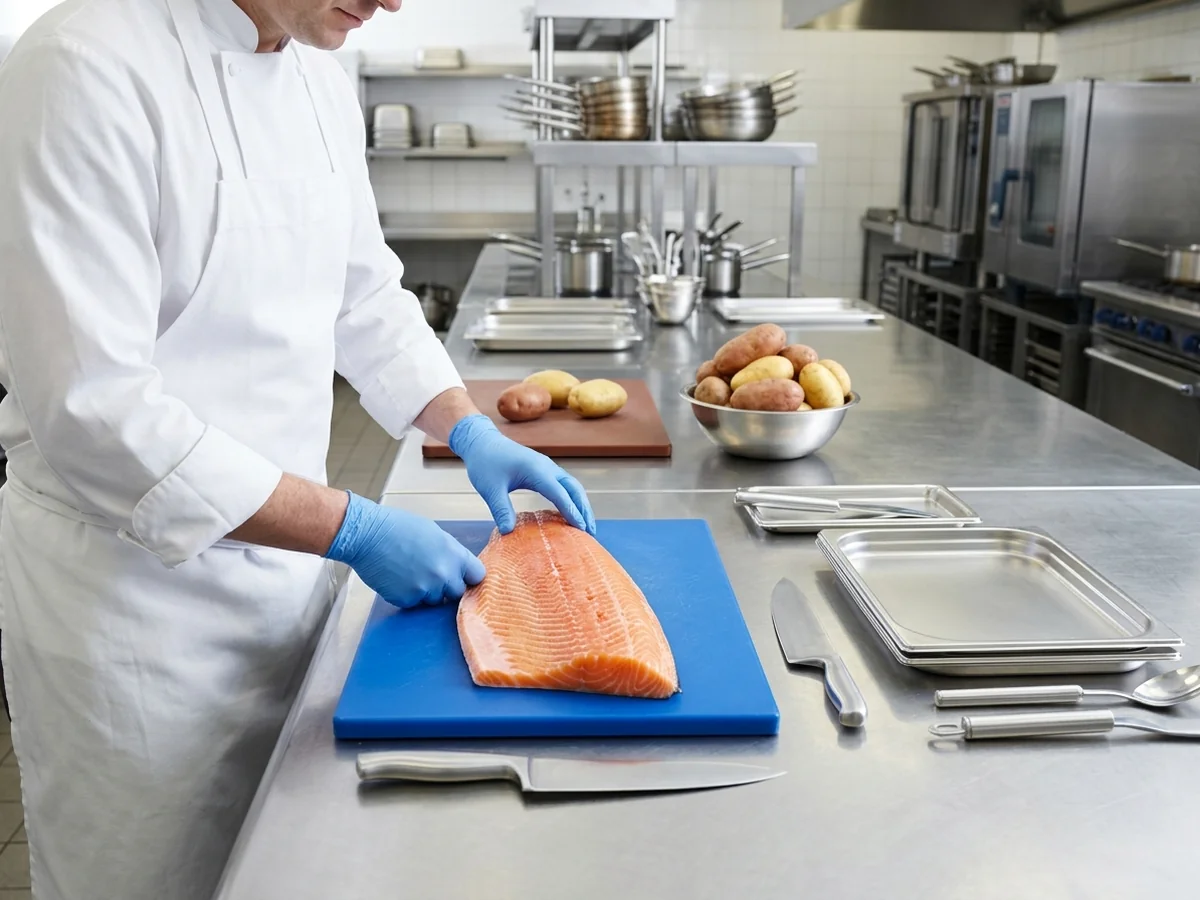
- Do not rinse your raw fish before cooking. The USDA Food Safety and Inspection Service confirms that rinsing raw fish can spread bacteria around the sink and kitchen surroundings, increasing the risk of cross-contamination.
Ensuring Food Safety and Quality
Precision is essential for food safety. You must ensure the fish reaches an internal food temperature of 145 degrees Fahrenheit, as recommended by the USDA Food Safety and Inspection Service. Relying on visual cues is often insufficient; using a food thermometer is the only reliable way to verify the salmon cooking temperature 145F.
This method is also well-suited for meal prep. Once your meal is served, FoodSafety.gov notes that you can maintain quality by keeping any leftovers in the refrigerator for a maximum of 3 days. By following these foundational practices, you can confidently prepare a balanced dinner that maximizes efficiency without sacrificing quality or safety.
Ingredients for Salmon and Potatoes
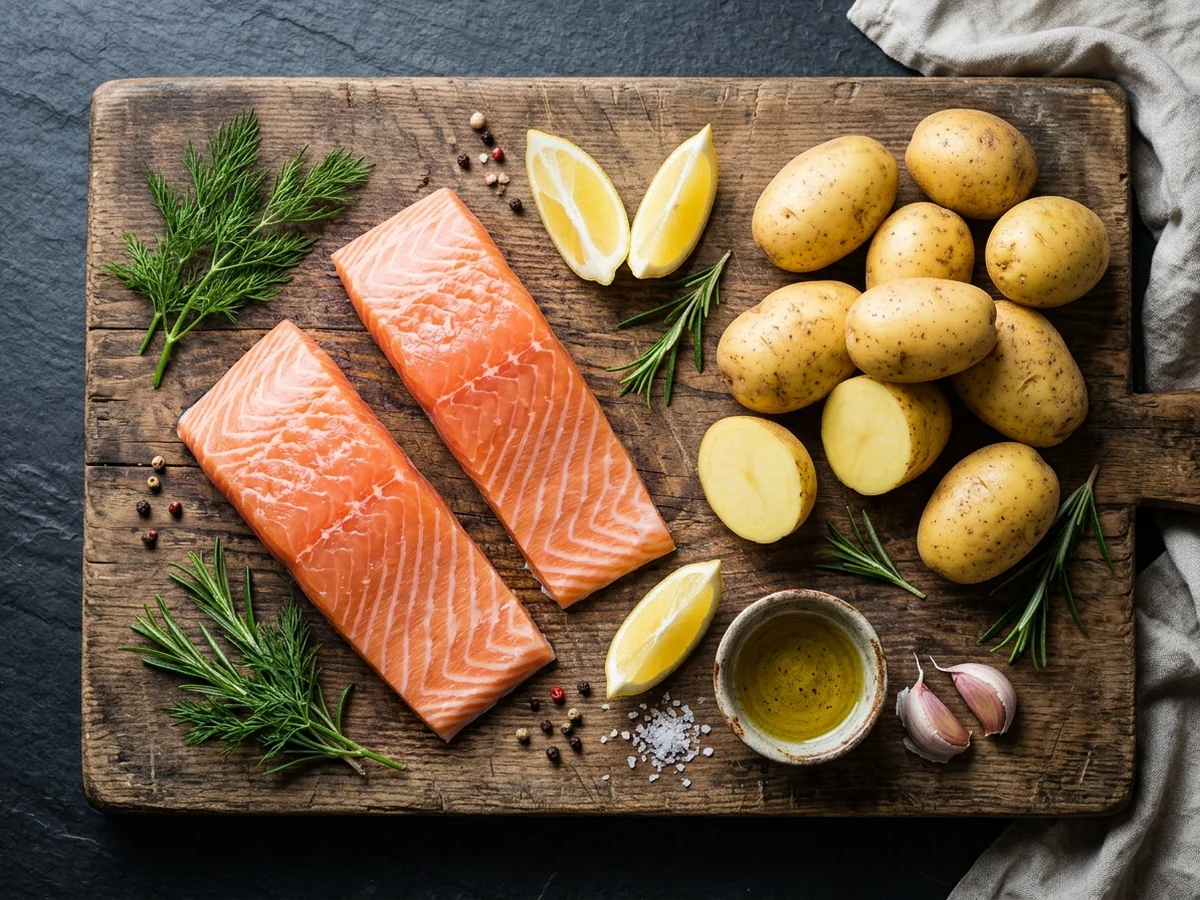
Creating a successful lemon butter salmon with roasted potatoes requires selecting high-quality ingredients that harmonize in both flavor and cooking time. When preparing an easy sheet pan salmon and potatoes meal, the goal is to have every component reach the ideal state of tenderness and char simultaneously. Using fresh, properly prepped produce ensures your weeknight dinner remains both efficient and flavorful.
Selecting Your Produce and Protein
For the protein, choose thick, uniform Atlantic salmon fillets. Consistency in thickness is critical because it ensures the fish cooks evenly across the entire surface of your sheet pan. If your fillets vary significantly in size, the thinner portions may overcook while the thicker parts remain raw.
Regarding your starch, baby Yukon Gold potatoes are commonly recommended for sheet pan roasting. Their small size and thin skin make them ideal for roasting without the need for extensive peeling or chopping. Simply halving them is usually sufficient to help them reach a tender consistency when roasted in a 400 degree Fahrenheit oven. When choosing the best vegetables to pair with salmon, look for hardy options that can withstand high heat. Broccoli florets, asparagus, and green beans are excellent choices because they maintain a pleasant texture while absorbing the flavors of the lemon butter.
Safe Handling Practices
Food safety is a fundamental component of any kitchen routine. When preparing your meal, it is essential to follow established guidelines to prevent cross-contamination. Specifically, you should avoid rinsing your raw fish under the faucet. According to the USDA Food Safety and Inspection Service, rinsing raw fish can spread bacteria around the sink and kitchen surroundings. Instead, pat the fillets dry with a clean paper towel before seasoning to ensure a better sear.
Monitoring Cooking Progress
Achieving the right texture requires attention to detail during the prep phase. Aim for consistent, bite-sized pieces for all produce to ensure they cook through at the same rate as the protein. Monitoring your results is easy when you keep the salmon cooking temperature 145F in mind. The recommended internal food temperature for cooked salmon is 145 degrees Fahrenheit, as confirmed by the USDA Food Safety and Inspection Service. Using a digital meat thermometer is the most reliable way to verify that your meal is ready to serve. If you have leftovers, you can keep the cooked salmon and vegetables in the refrigerator for two to three days while maintaining quality and food safety standards.
Roasting Salmon and Potatoes Perfectly
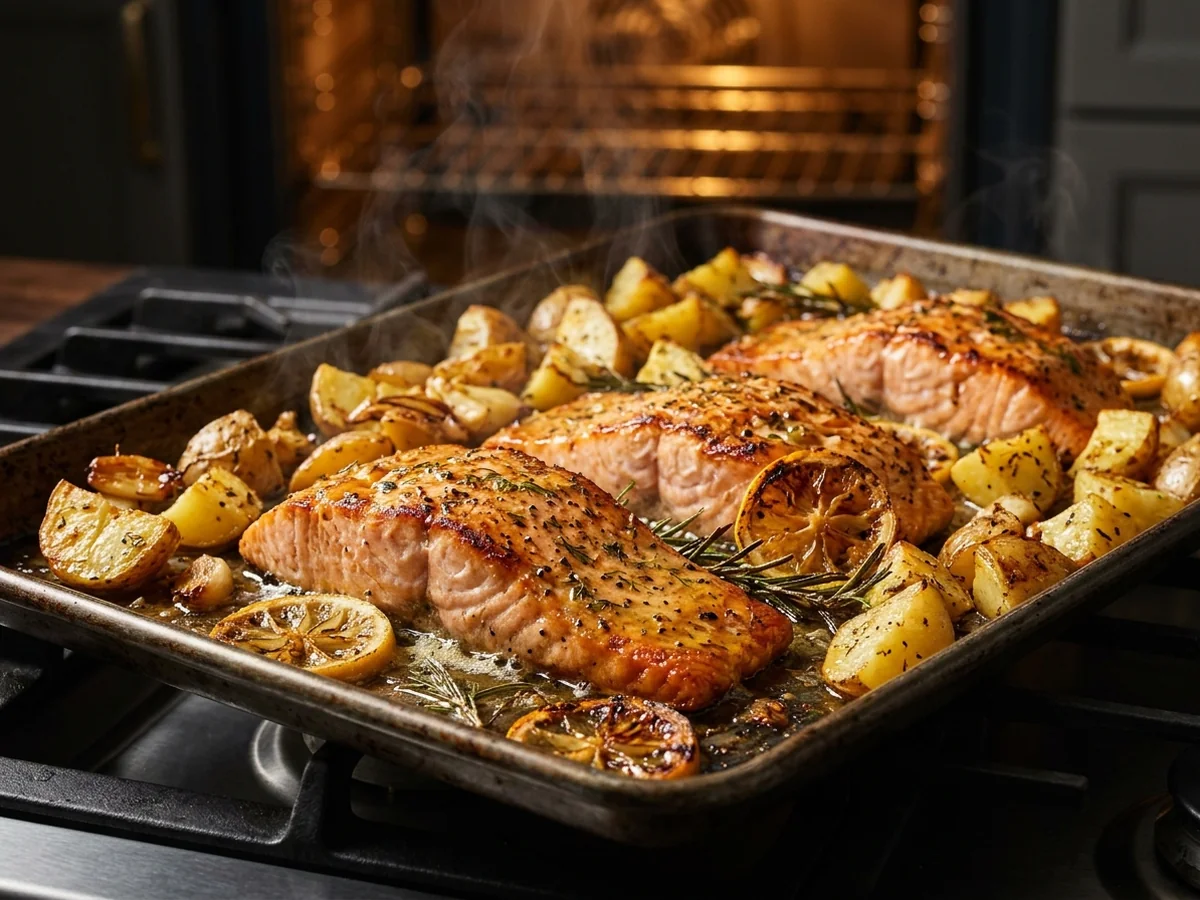
Achieving a restaurant-quality meal at home often relies on managing heat and timing. A standard oven temperature for roasting salmon and vegetables simultaneously is 400 degrees Fahrenheit. This temperature provides enough intensity to achieve a golden, caramelized exterior on starchy vegetables while keeping an Atlantic salmon fillet succulent and moist.
Mastering the Sheet Pan Timeline
The primary challenge when learning how to roast potatoes with salmon is that the two ingredients cook at different rates. To ensure both are ready at the same time, it is common practice to use baby Yukon Gold potatoes. Their small, uniform size allows them to roast through without requiring excessive chopping. Start by roasting the seasoned potatoes on their own for 15 to 20 minutes. Once they have begun to soften, move them to one side of the sheet pan to create space for your fish. Adding the salmon during this second phase prevents the delicate protein from drying out or overcooking while the potatoes finish.
Essential Food Safety Practices
When preparing an easy sheet pan salmon and potatoes meal, prioritize safety by following official guidelines. The USDA Food Safety and Inspection Service specifies that the recommended internal temperature for cooked salmon is 145 degrees Fahrenheit. You should verify this using a food thermometer inserted into the thickest part of the fillet. Furthermore, do not rinse raw fish before seasoning. According to the USDA Food Safety and Inspection Service, rinsing raw fish can spread bacteria around the sink and kitchen surroundings, increasing the risk of cross-contamination. Simply pat the fillet dry with a paper towel and apply your lemon butter salmon recipe seasonings directly to the surface.
Storage and Cleanup Efficiency
Using a single sheet pan reduces cleanup and allows the natural fats and juices from the fish to season the vegetables, creating a more cohesive flavor profile. If you have leftovers, store the cooked salmon and vegetables in the refrigerator. Based on cold food storage guidelines, these items remain safe to consume for up to 3 days. When reheating, use a low oven temperature or a gentle microwave setting to maintain the texture of the fish.
Consistent ingredient size remains the most effective tool for success. By cutting your potatoes into uniform, bite-sized pieces, you ensure that every morsel reaches the desired level of tenderness simultaneously. For those seeking variety, adding other vegetables like asparagus or green beans alongside the potatoes is a common way to round out the meal, provided they are added during the final 10 minutes of the roasting process to prevent them from becoming too soft.
Handling Salmon and Produce Safely
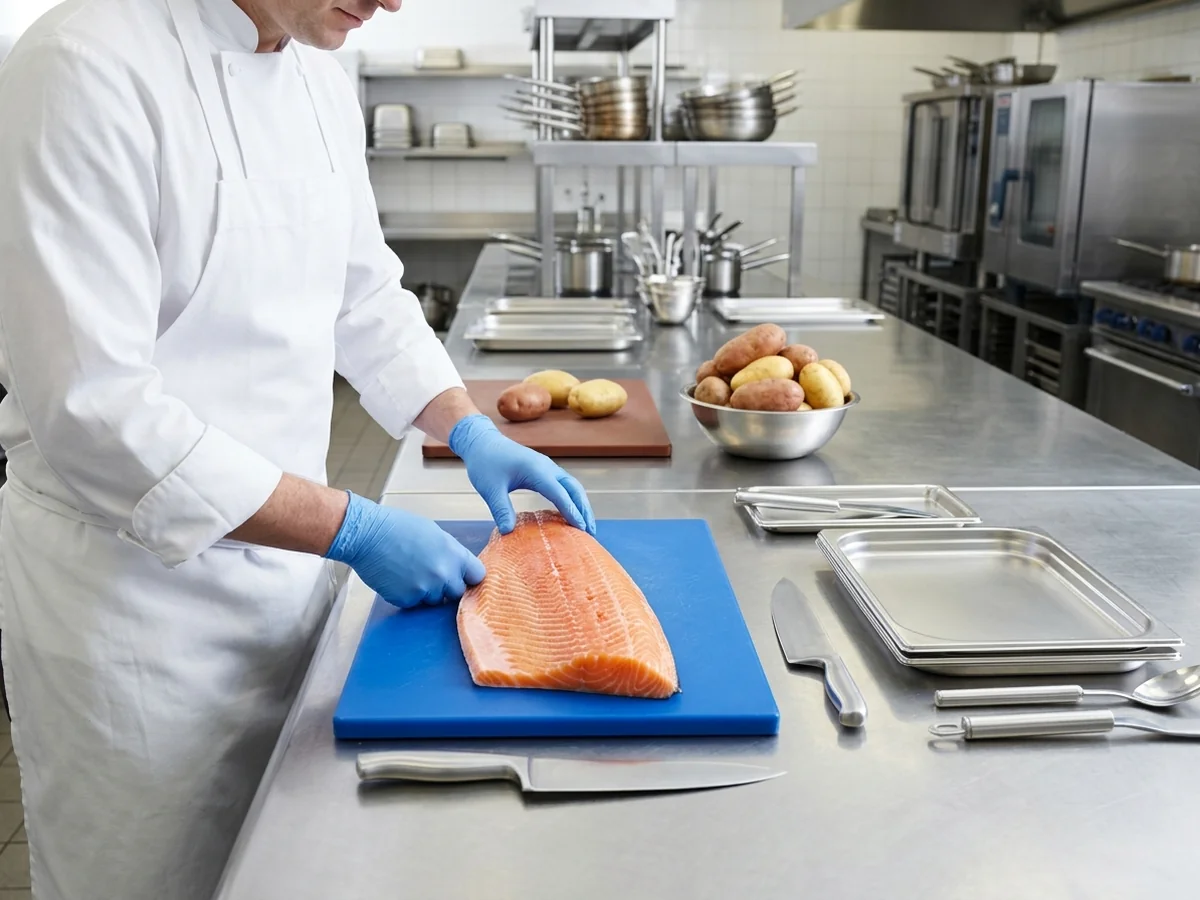
Preparing a meal like lemon butter salmon with roasted potatoes requires more than just culinary skill, it demands careful attention to food safety. When you work with raw fish and fresh vegetables on a sheet pan, preventing cross contamination is the first step toward a successful dinner. Proper handling ensures that your easy sheet pan salmon and potatoes remains safe for everyone at your table.
The Risks of Rinsing
One common mistake in the kitchen is rinsing raw fish under the faucet. According to the USDA Food Safety and Inspection Service, you should never rinse raw fish before cooking. Rinsing raw fish can spread bacteria around the sink and kitchen surroundings. By skipping this step, you keep your preparation area cleaner and safer.
Managing Temperatures for Safety
Reliability is key when determining if your meal is ready to serve. While some cooks rely on visual cues like the color or flake of the fish, these methods are often inaccurate. A digital food thermometer provides the only objective way to verify safety. The recommended internal temperature for cooked salmon is 145 degrees Fahrenheit. You should insert the probe into the thickest part of the fillet to ensure the salmon cooking temperature 145F has been reached throughout the entire piece.
When preparing your lemon butter salmon recipe, you will typically roast your ingredients at 400 degrees Fahrenheit. This temperature is effective for cooking both the Atlantic salmon and vegetables simultaneously. If you are preparing Yukon Gold potatoes, which are popular for this method due to their consistent size and texture, ensure they are cut into uniform pieces so they reach tenderness at the same time the fish reaches its safe internal temperature.
Storage and Handling Best Practices
Once your meal is complete, proper storage is essential to maintain quality. If you have leftovers, they should be moved to the refrigerator within two hours of cooking to prevent the growth of harmful bacteria. Cooked salmon and vegetables retain their quality for up to 72 hours when kept in an airtight container in the refrigerator. After this period, any remaining portions should be discarded.
To keep your kitchen environment organized, follow these foundational habits:
- Wash your hands thoroughly with soap and water immediately after touching raw salmon.
- Use a dedicated cutting board for raw fish to avoid contact with ready to eat vegetables.
- Sanitize all surfaces and utensils that came into contact with raw ingredients using hot, soapy water.
- Use a digital food thermometer to confirm the internal food temperature rather than guessing based on cooking time alone.
Refining Your Lemon Butter Sauce
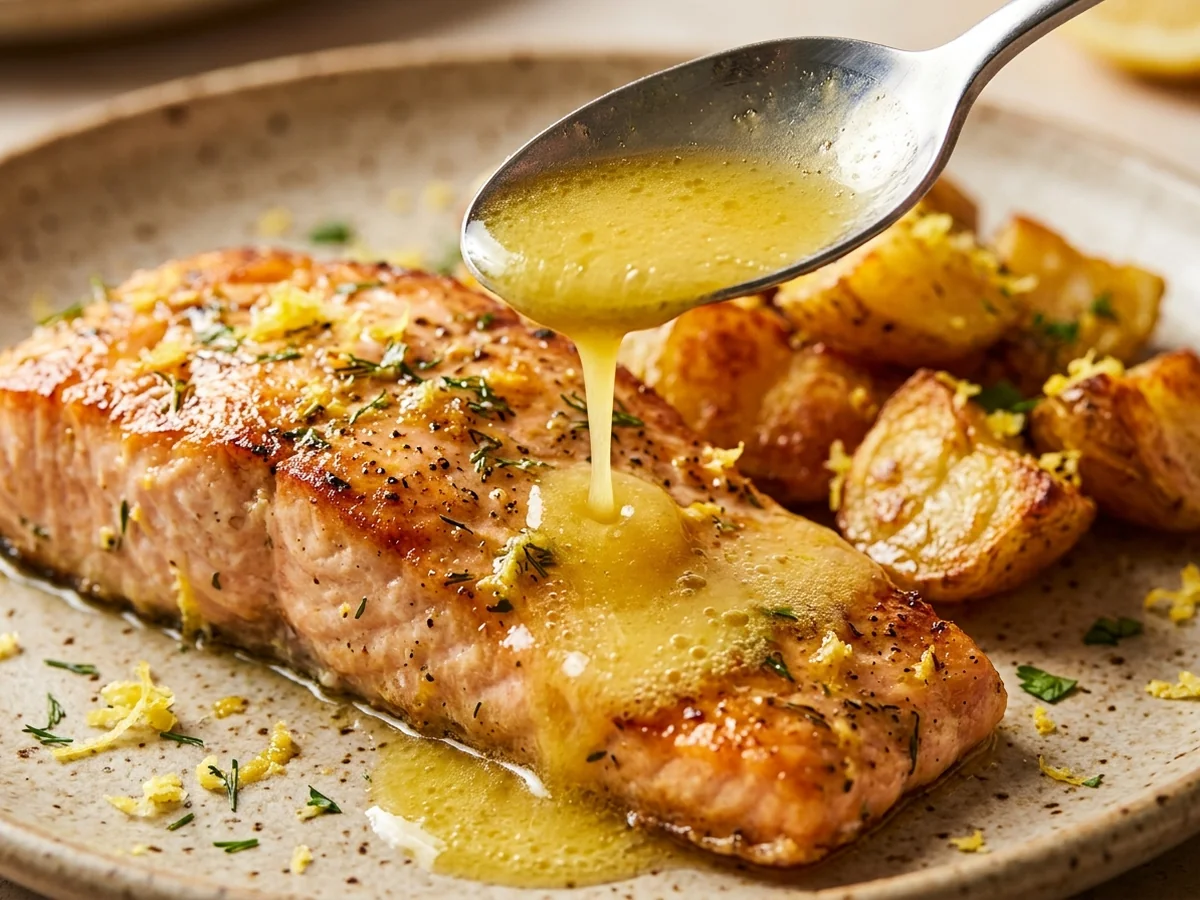
The secret to a balanced lemon butter salmon recipe lies in how you layer your citrus components. Citrus zest contains concentrated essential oils that hold up remarkably well to the heat of a 400 degree Fahrenheit oven. By incorporating zest into your seasoning rub before roasting, you infuse the fish with aromatic brightness that permeates the flesh.
Conversely, lemon juice is highly acidic and volatile. Adding it at the start can cause delicate proteins to break down too quickly or introduce unwanted bitterness. For the best flavor, reserve your juice and whisk it into your butter sauce only after the pan has been removed from the heat.
Mastering the Emulsion
An effective butter sauce should cling to your salmon and vegetables rather than pooling at the bottom of the sheet pan. To achieve this, you must create a stable emulsion. Start with cold, cubed butter and whisk it into your warm lemon reduction one piece at a time. This gradual addition allows the fat droplets to suspend evenly in the liquid.
If the sauce appears greasy or begins to separate, pull the pan off the heat entirely and whisk in a small splash of cold water. This minor temperature adjustment often helps the sauce come back together into a smooth, creamy consistency.
Dairy-Free and Ingredient Swaps
If you prefer a dairy-free approach, high quality plant-based butter sticks can be used as a direct substitute, as they are formulated to melt and emulsify similarly to traditional butter. Alternatively, you can create stable, flavorful bases using these methods:
- Extra virgin olive oil combined with a touch of Dijon mustard to create a creamy, stable vinaigrette.
- Refined coconut oil, which provides a neutral, high-heat stable base that carries citrus flavors effectively.
- Ghee or clarified butter, which removes milk solids to provide a clean, rich flavor profile.
Safety and Quality Standards
When preparing your meal, the USDA Food Safety and Inspection Service provides clear guidance to protect your kitchen environment. Never rinse your raw fish in the sink, as this practice can spread bacteria across your kitchen surfaces.
When roasting your meal, always ensure the salmon reaches an internal food temperature of 145 degrees Fahrenheit to confirm it is fully cooked. You can keep any leftover salmon and vegetables in your refrigerator for up to 3 days while maintaining food quality. For those looking to master the timing of this meal, baby Yukon Gold potatoes are typically recommended for sheet pan roasting because their small size ensures they become tender at the same rate as the fish.
Fixing Dry Salmon or Potatoes
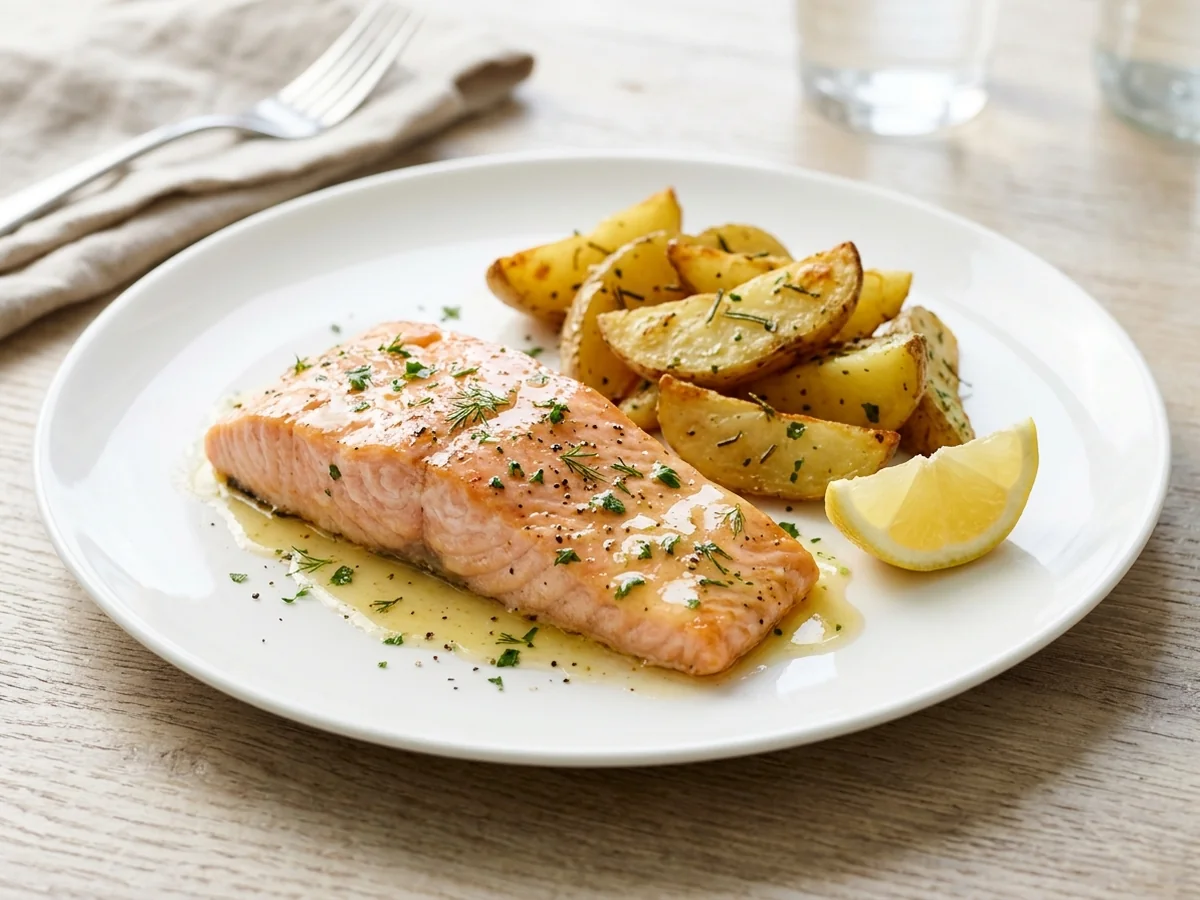
Achieving a balanced sheet pan meal requires careful attention to both ingredient preparation and thermal management. When you pair Atlantic salmon with potatoes, the primary challenge is that the fish cooks significantly faster than the starches. To ensure your lemon butter salmon with roasted potatoes reaches the table perfectly cooked, consider these practical techniques for managing moisture and texture.
The most common mistake is overcrowding the sheet pan. When ingredients are packed too tightly, they release steam rather than roasting, which creates a soggy texture and prevents the potatoes from developing a crisp exterior. Always leave space between your pieces to allow hot air to circulate freely. For the potatoes, Yukon Gold varieties are typically recommended for their creamy texture and consistent performance in the oven. To ensure they finish at the same time as the fish, cut them into small, uniform pieces. If your potato chunks are too large, they will remain firm while the salmon overcooks and dries out.
Temperature control is equally critical. A standard oven temperature for roasting salmon and vegetables simultaneously is 400 degrees Fahrenheit, which provides enough heat to brown the edges of the potatoes while keeping the fish succulent. To verify the salmon is ready, use a food thermometer to check that it reaches an internal temperature of 145 degrees Fahrenheit, as specified by the USDA Food Safety and Inspection Service. Relying on this internal food temperature is more accurate than judging by time alone.
Beyond cooking mechanics, keep these food safety and quality tips in mind:
- Do not rinse your raw fish before cooking. The USDA Food Safety and Inspection Service notes that rinsing raw fish can spread bacteria around your sink and kitchen surroundings, increasing the risk of cross-contamination.
- Add delicate aromatics, such as fresh herbs or citrus zest, during the final minutes of roasting or immediately after removing the pan from the oven. Applying these at the start often leads to burned leaves and a loss of bright, fresh flavor.
- If you have leftovers, place the salmon and vegetables in a sealed container and keep them refrigerated for up to 3 days to maintain quality.
By focusing on uniform vegetable sizing and prioritizing accurate internal temperature checks, you can avoid the common pitfalls that lead to uneven results. These steps help maintain the integrity of your ingredients, ensuring your sheet pan dinner remains a reliable, high-protein staple.
Storing Lemon Butter Salmon
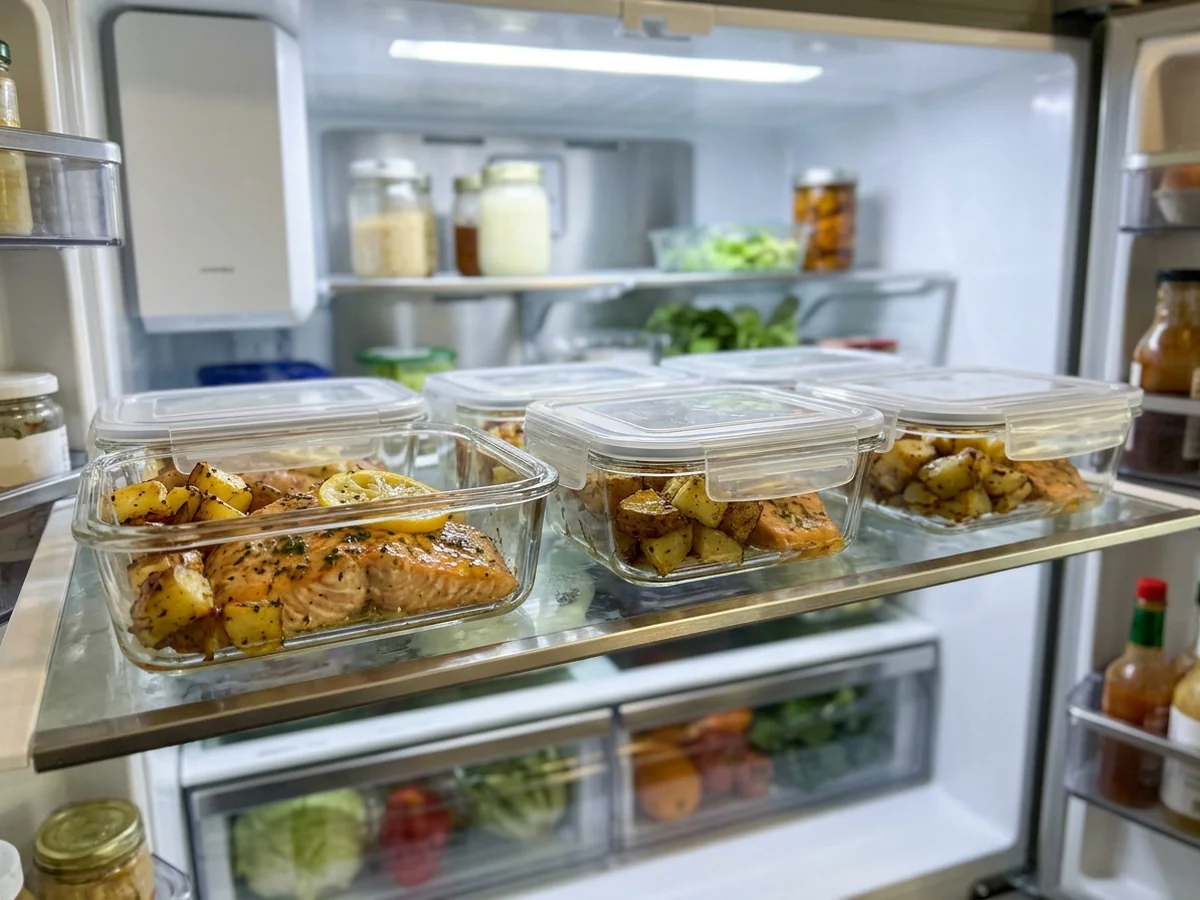
Proper storage is essential for maintaining the quality and safety of your citrus-infused fish and potatoes. According to FoodSafety.gov, cooked salmon and vegetables can be safely stored in the refrigerator for two to three days. To ensure the best results, transfer your leftovers to an airtight container as soon as the food has cooled to room temperature. Using a sealed container is a practical step that prevents the salmon from drying out and stops it from absorbing other odors present in your refrigerator.
A common mistake when handling leftovers is leaving food out at room temperature for too long. For safety, avoid leaving your cooked meal on the counter for more than two hours. If your kitchen is particularly warm, it is best to refrigerate the meal even sooner. Remember that food safety begins during preparation: you should never rinse raw fish, as this practice can spread harmful bacteria around your sink and kitchen surroundings.
When you are ready to enjoy your leftovers, the goal is to warm the food gently without overcooking the delicate protein. Using high heat will quickly turn the fillet tough and rubbery. To reheat your cooked salmon and vegetable meal effectively, follow these steps:
- Preheat your oven to a low setting, such as 275 degrees Fahrenheit.
- Arrange the salmon and vegetables on a baking sheet and cover them loosely with aluminum foil. This helps trap moisture and prevents the edges of the fish from becoming dry.
- Warm the meal until it is heated through. For food safety, ensure the internal food temperature reaches 145 degrees Fahrenheit.
- If you prefer using a microwave, use half power and short intervals, checking the fish frequently.
- Add a small splash of water or broth to your container before reheating. This creates a bit of steam, which helps preserve the tender texture of the fish and keeps the vegetables from becoming dehydrated.
FAQ
How do you safely handle raw salmon before cooking?
You should never rinse raw fish under running water, as this practice can spread bacteria throughout your kitchen and sink area. Always wash your hands thoroughly with soap and warm water immediately after handling the raw fillets to ensure proper food safety.
What is the recommended internal temperature for cooked salmon?
According to the USDA Food Safety and Inspection Service, the recommended internal temperature for cooked salmon is 145 degrees Fahrenheit. Using a reliable meat thermometer inserted into the thickest part of the fillet is the best way to verify it is safe to eat.
How long can you safely store leftover fish and potato meals?
You can safely keep cooked salmon and vegetables in your refrigerator for 2 to 3 days. Ensure the leftovers are placed in an airtight container as soon as they have cooled to maintain quality and safety.
What are the best vegetables to pair with salmon on a sheet pan?
Broccoli florets are an excellent choice for a sheet pan meal because they roast quickly at the same temperature as the fish. It is common practice to use baby Yukon Gold potatoes as they provide a consistent size that roasts evenly alongside the salmon.
At what temperature should you roast salmon and vegetables simultaneously?
A standard oven temperature for roasting salmon and vegetables at the same time is 400 degrees Fahrenheit. This setting allows the vegetables to become tender while ensuring the fish cooks through without drying out.
Conclusion
The final step in ensuring a successful meal is verifying that the fish reaches an internal temperature of 145 degrees Fahrenheit, as recommended by the USDA Food Safety and Inspection Service. Once you confirm the seafood is cooked through and the vegetables are tender, your sheet pan dinner is ready to serve. If you have leftovers, store them in the refrigerator promptly, where they will remain fresh for 2 to 3 days.
Sources: fsis.usda.gov, foodsafety.gov, fisheries.noaa.gov
You might also like: Steak Fajitas Recipe: Sizzling Mexican Dinner