Garlic Butter Chicken Bites with Creamy Parmesan Pasta
Introduction
Making garlic butter chicken bites with parmesan pasta provides a comforting dinner solution that combines tender skillet meat with rich noodles. Home cooks searching for an easy meal will find clear instructions for preparing this dish efficiently.
This guide covers the complete ingredient list, step-by-step cooking instructions, and proper temperature guidelines. Readers will also discover food safety storage timelines, helpful substitution options, and practical troubleshooting tips for achieving a smooth cream sauce.
Why Garlic Butter Chicken Bites with Parmesan Pasta Belong on Your Dinner Table
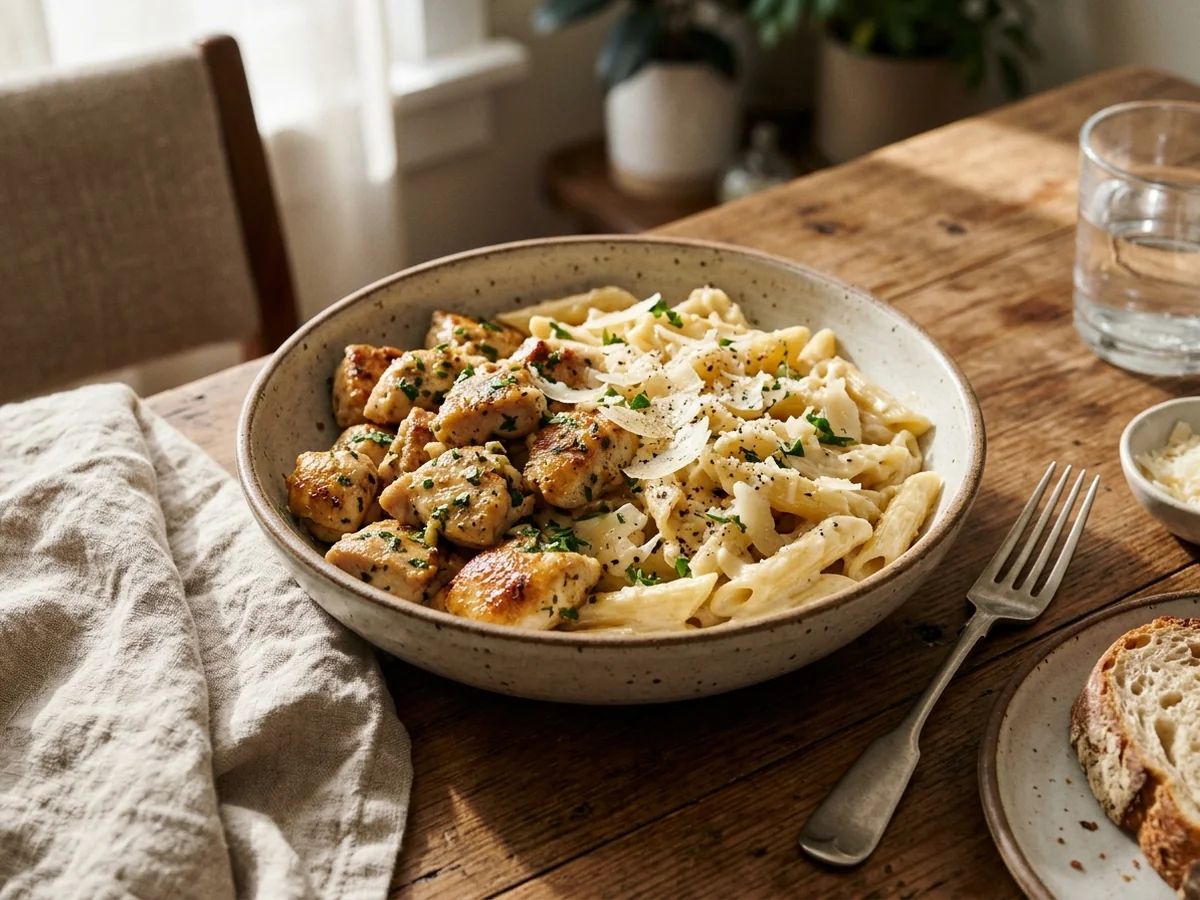
This comforting meal belongs on your dinner schedule because it combines tender protein and rich pasta in a streamlined cooking process, creating an easy chicken and pasta dinner that simplifies busy weeknights. Home cooks and busy individuals appreciate how standard grocery staples turn into a satisfying meal without demanding hours of cleanup or advanced culinary skills. It delivers high protein and reliable comfort, making it a dependable choice when you want a great dinner without dinner stress.
Mastering the Skillet Technique
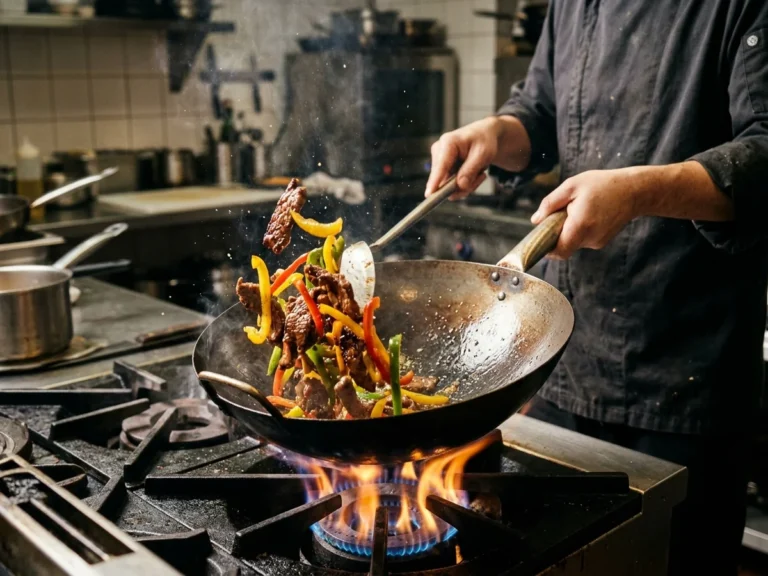
Simple skillet techniques make the entire cooking process approachable. Browning bite sized pieces of boneless skinless chicken breasts develops savory flavor quickly, while the pan handles the rich sauce creation without extra pots or complicated equipment. Using a cast iron skillet helps achieve an even sear on the meat before the noodles and sauce come together. A common mistake to avoid is overcrowding the skillet when searing the meat, which can cause steaming instead of browning. Cook the pieces in batches if necessary to maintain proper pan heat and build maximum flavor for your garlic butter chicken bites skillet.
Achieving Doneness and Food Safety
Practical steps help ensure success every time you cook this dish. Start by preparing your ingredients and keeping your cooking tools ready near the stove. To ensure the meat is fully cooked while retaining its juiciness, use an instant read food thermometer to check the center of the pieces. According to guidelines from the USDA Food Safety and Inspection Service regarding safe internal temperatures, poultry must reach a safe minimum internal temperature before consumption. Following this standard guarantees that your meal is both safe and tender.
Balancing Rich Textures and Flavors
Expect a deeply satisfying contrast of textures and robust flavors from every plate. Tender poultry pairs smoothly with a velvety parmesan cheese sauce for pasta and perfectly cooked noodles. Whether you are following a creamy garlic parmesan pasta recipe or adapting the ingredients to fit your family preferences, this comforting skillet meal brings restaurant quality flavor right into your home kitchen with minimal effort. Incorporating quality ingredients like heavy cream and freshly grated parmigiano reggiano elevates the dish, while careful heat control prevents the sauce from breaking.
Essential Ingredients for Your Skillet and Pasta Dinner
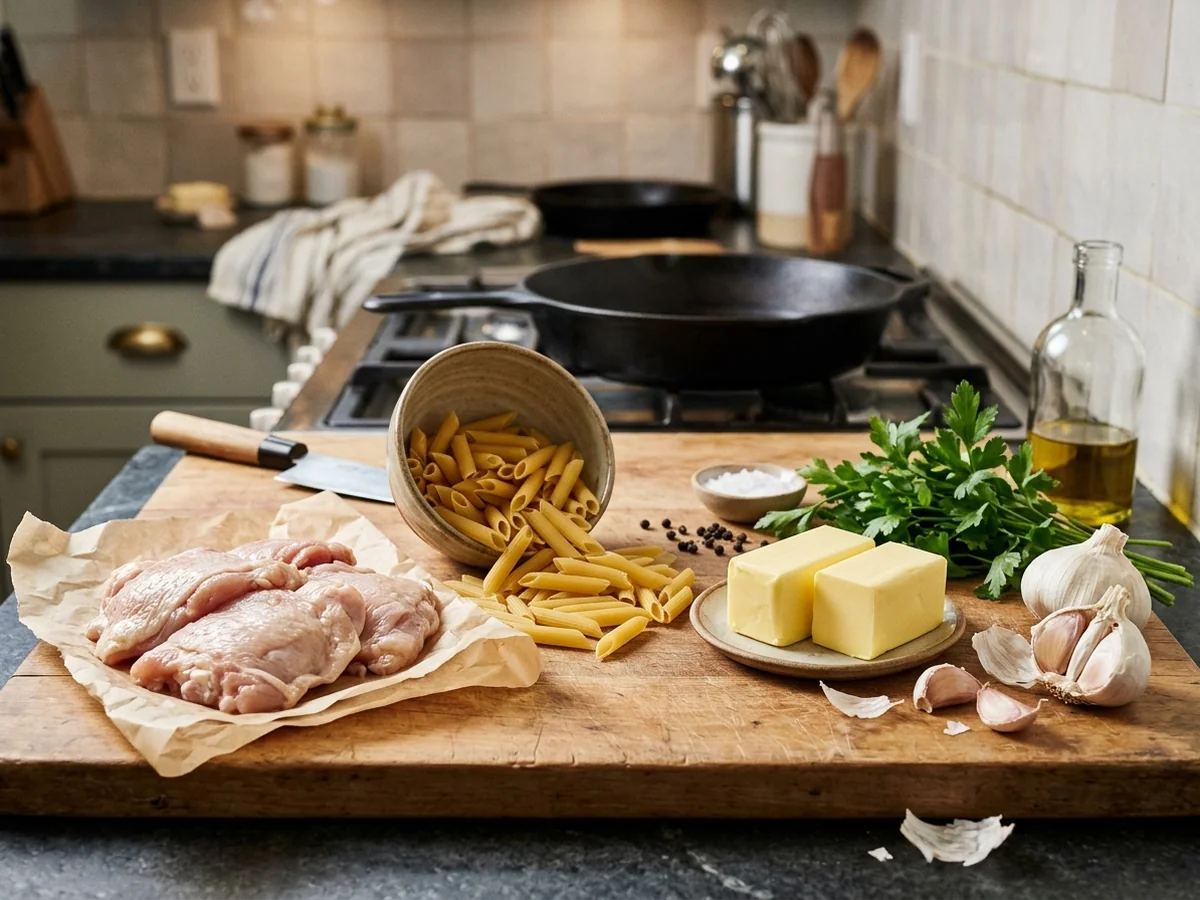
Creating a satisfying garlic butter chicken bites skillet relies on balancing fresh proteins, quality dairy, and reliable pantry staples. Every component works together to build a rich flavor profile and a smooth texture for both the meat and the noodles, making it a great option for an easy chicken and pasta dinner.
Gathering your components beforehand ensures a smooth cooking process and helps you avoid common mistakes like curdled sauces or unevenly cooked meat. For home cooks and busy individuals looking for quick family meals, understanding the specific role of each item makes a noticeable difference in the final dish.
Core Protein and Dairy Components
The foundation of any garlic butter chicken bites with parmesan pasta starts with the primary ingredients. Selecting boneless skinless chicken breasts guarantees even cooking times and tender bites throughout the dish. Cutting the meat into uniform pieces ensures every morsel finishes cooking at the same rate in your cast iron skillet. Pairing the meat with heavy cream provides the rich foundation needed for a velvety pan sauce. Heavy cream holds up well to heat, helping you build a luscious parmesan cheese sauce for pasta without separating.
Selecting Cheese and Noodles
For the cheese element, grating fresh parmigiano reggiano adds authentic nutty depth and melts smoothly into the warm noodles. You should avoid pre-shredded varieties, which often contain anti-caking agents that prevent a smooth melt. Choosing sturdy quality pasta shapes helps capture and hold the rich sauce on every single piece, completing your creamy garlic parmesan pasta recipe.
Avoiding Common Sauce Pitfalls
A frequent error during preparation is adding cold dairy straight into a scorching hot pan, which can break the emulsion and create a grainy texture. Letting your ingredients come to room temperature and lowering the heat before stirring in the cream and cheese ensures a glossy finish every single time. Checking the internal temperature of the chicken with an instant read food thermometer before adding the dairy prevents overcooking while keeping the meat juicy and safe to eat according to guidelines from the USDA Food Safety and Inspection Service.
Choosing the Best Cuts and Equipment for Perfect Texture
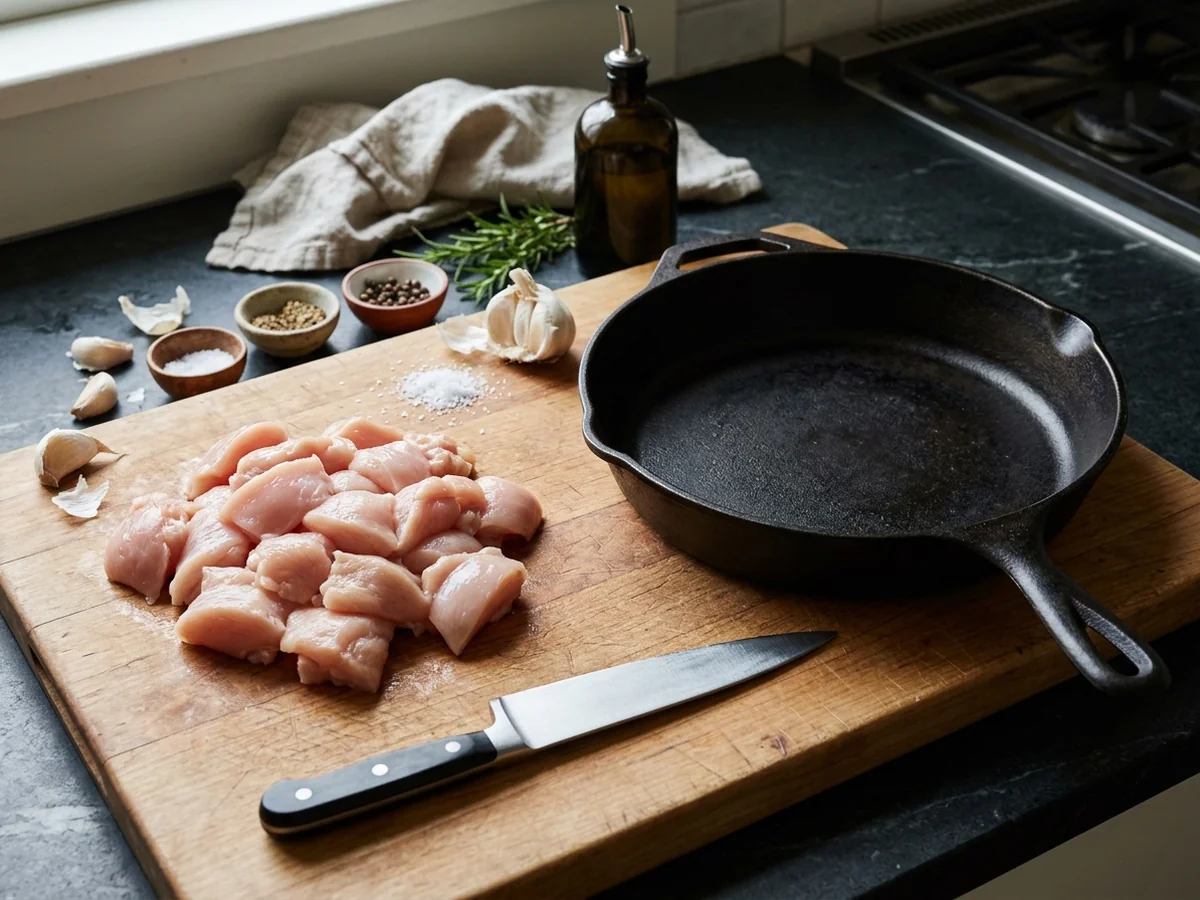
Creating a satisfying garlic butter chicken bites skillet starts with selecting the right protein and preparing it correctly. Boneless skinless chicken breasts work best for bite sized pieces because they cook quickly, stay tender, and absorb savory seasonings evenly. When slicing the meat, aim for uniform cubes so every single piece finishes cooking at the exact same rate. Uneven sizes lead to overcooked, dry pieces alongside undercooked centers.
Proper meat preparation makes a significant difference in achieving the ideal texture before the food ever touches the heat. Always pat the chicken pieces completely dry with paper towels to remove excess surface moisture. Surface moisture causes meat to steam rather than sear, preventing that coveted golden crust. Removing moisture allows the hot pan to form a crisp exterior while locking in natural juices.
Using the right cookware is just as important as the ingredient selection. Cooking in a cast iron skillet creates an optimal golden crust while keeping the interior juicy. Heavy bottomed pans retain heat exceptionally well, which prevents temperature drops when cold meat hits the surface. This steady heat distribution helps build a rich, savory sear without requiring complex culinary techniques.
Home cooks often encounter a few common mistakes when prepping this easy chicken and pasta dinner. Overcrowding the pan is the most frequent error, as packing too many pieces together traps steam and creates a soggy texture. Cooking the meat in batches solves this issue entirely. Another common pitfall is skipping the resting phase before mixing the protein with the creamy garlic parmesan pasta recipe elements. Allowing the meat to rest briefly helps retain moisture, ensuring every bite remains tender and flavorful.
Step by Step Cooking Instructions for the Ultimate Skillet Meal
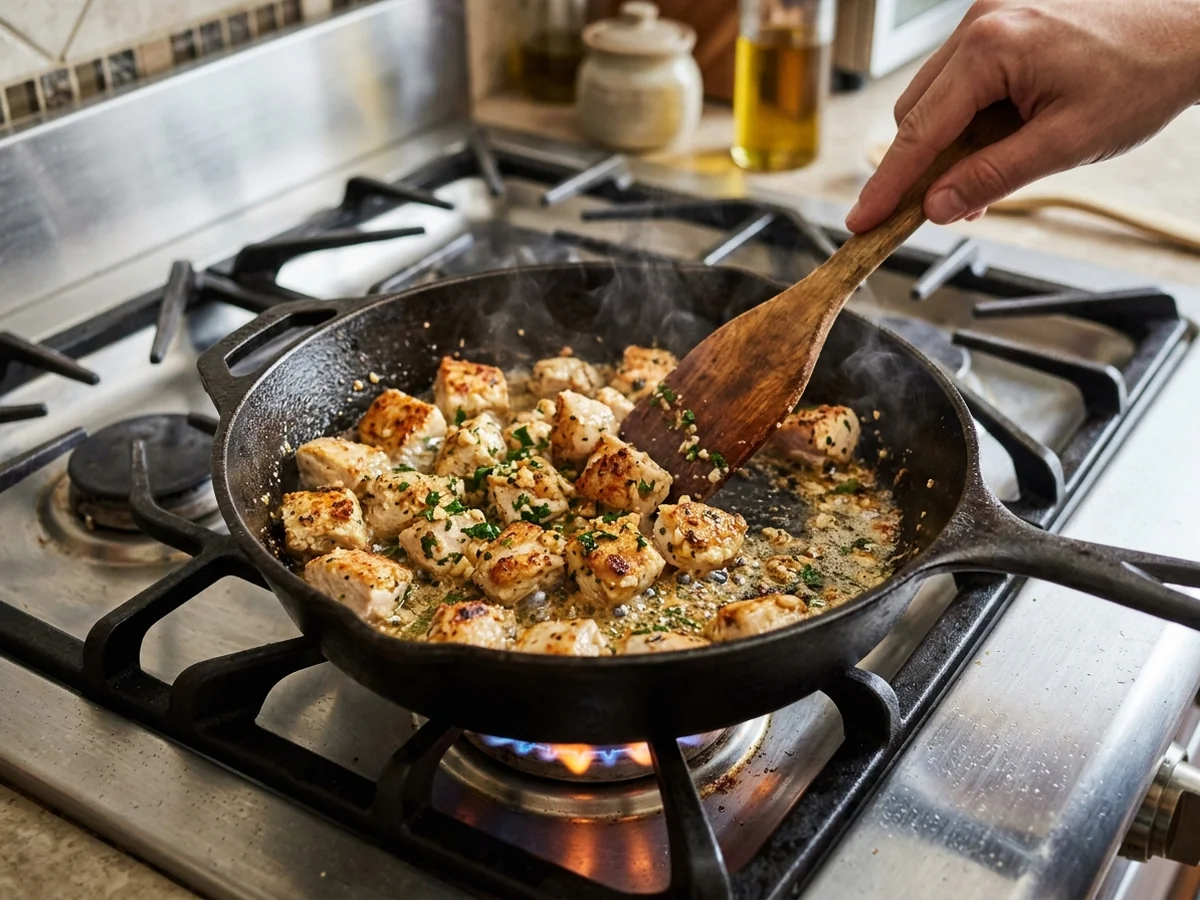
Mastering this savory skillet meal comes down to controlling your heat and timing each component properly. Whether you are preparing tender pan-seared poultry pieces for a busy weeknight or planning a cozy weekend meal, keeping everything moving in a heavy cast iron skillet ensures maximum flavor without drying out the meat.
- Preheat a wide skillet over medium-high heat with a high-smoke-point oil until it shimmers. Proper preheating is essential for developing a deep golden crust on your boneless skinless chicken breasts without overcooking the center.
- Add the bite-sized pieces in a single layer. Avoid overcrowding the pan, which traps moisture and causes the meat to steam instead of sear. Cook undisturbed for a few minutes until a rich crust forms, then flip.
- Check the internal doneness using an instant read food thermometer to ensure safety and tenderness, verifying the meat reaches the appropriate standard recommended by the USDA Food Safety and Inspection Service. Transfer the cooked pieces to a clean plate and leave the flavorful browned bits in the pan.
- Melt butter in the remaining pan drippings over medium heat, stirring in minced garlic and aromatics. Watch closely so the garlic turns fragrant and lightly golden without burning, which creates a bitter taste.
- Pour in liquids like heavy cream and broth, scraping the bottom of the pan to release all those tasty browned bits into the simmering liquid. This builds the foundation of your parmesan cheese sauce for pasta.
- Toss your cooked pasta directly into the bubbling pan along with freshly grated parmigiano reggiano. Stir continuously until the cheese melts and the sauce thickens into a glossy, velvety coating.
- Return the golden meat pieces back to the skillet, gently tossing everything together so every single bite absorbs the rich flavors right before serving.
Avoiding common mistakes will help you achieve restaurant-quality results every time. One frequent error is adding cheese to boiling liquid, which causes the fats to separate and results in a grainy texture. Always lower your heat before stirring in the dairy and cheese. Another pitfall is overcrowding the skillet during the initial sear, which prevents that desirable golden crust from forming. Taking your time with each phase guarantees a satisfying texture and a rich, balanced flavor profile.
Mastering the Creamy Parmesan Sauce and Preventing Sauce Separation
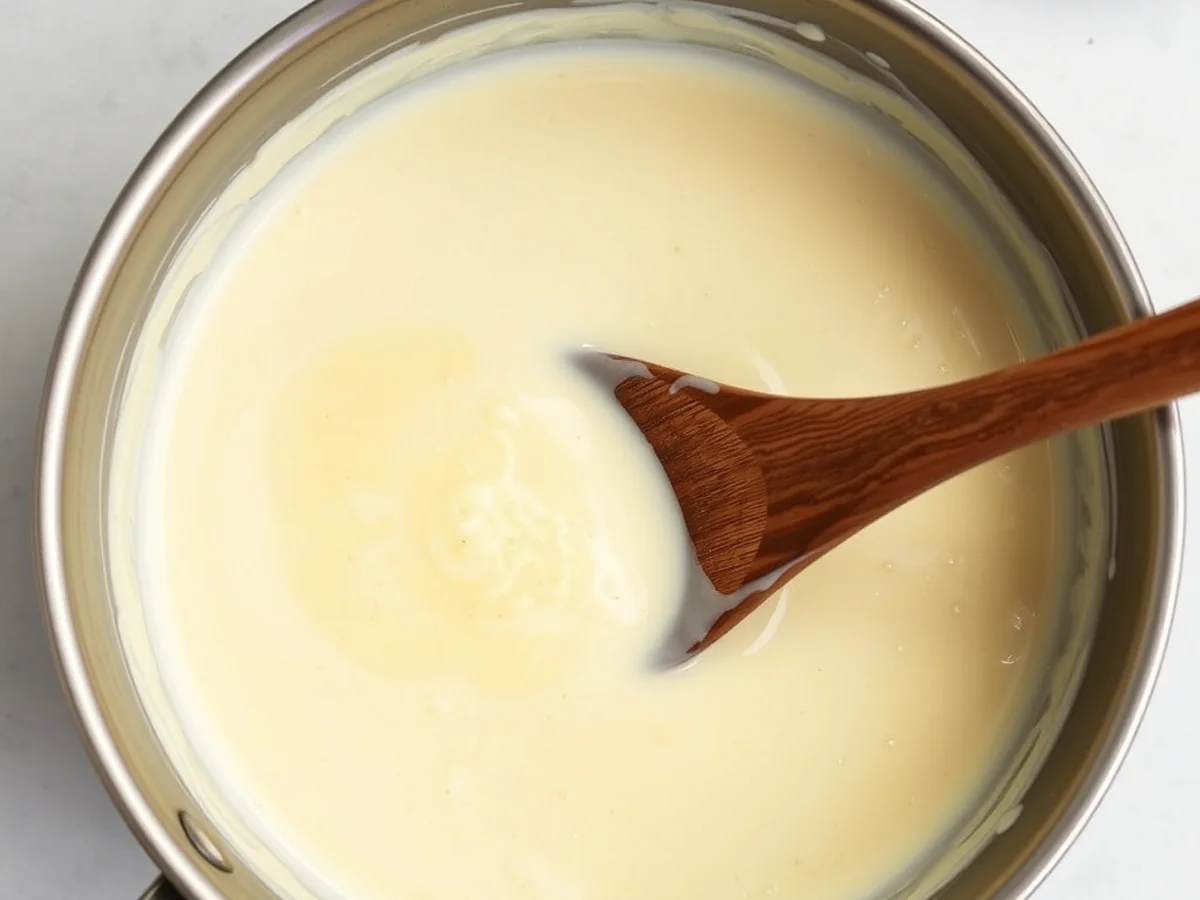
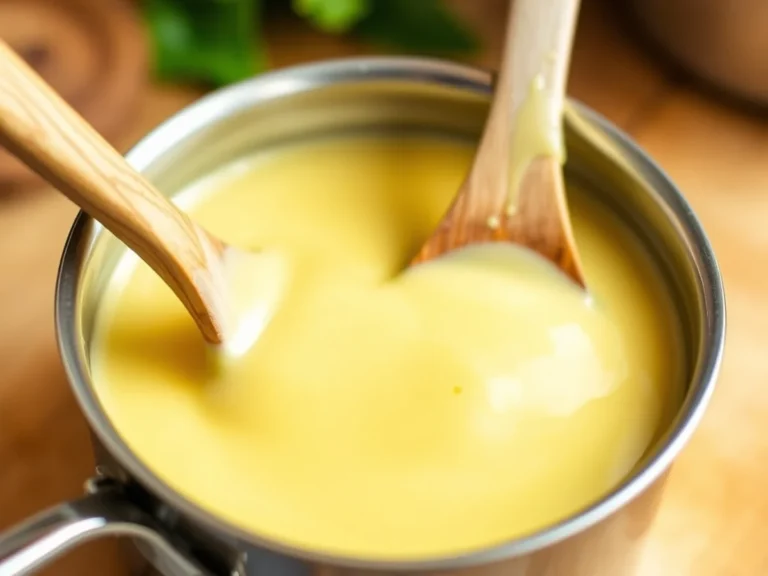
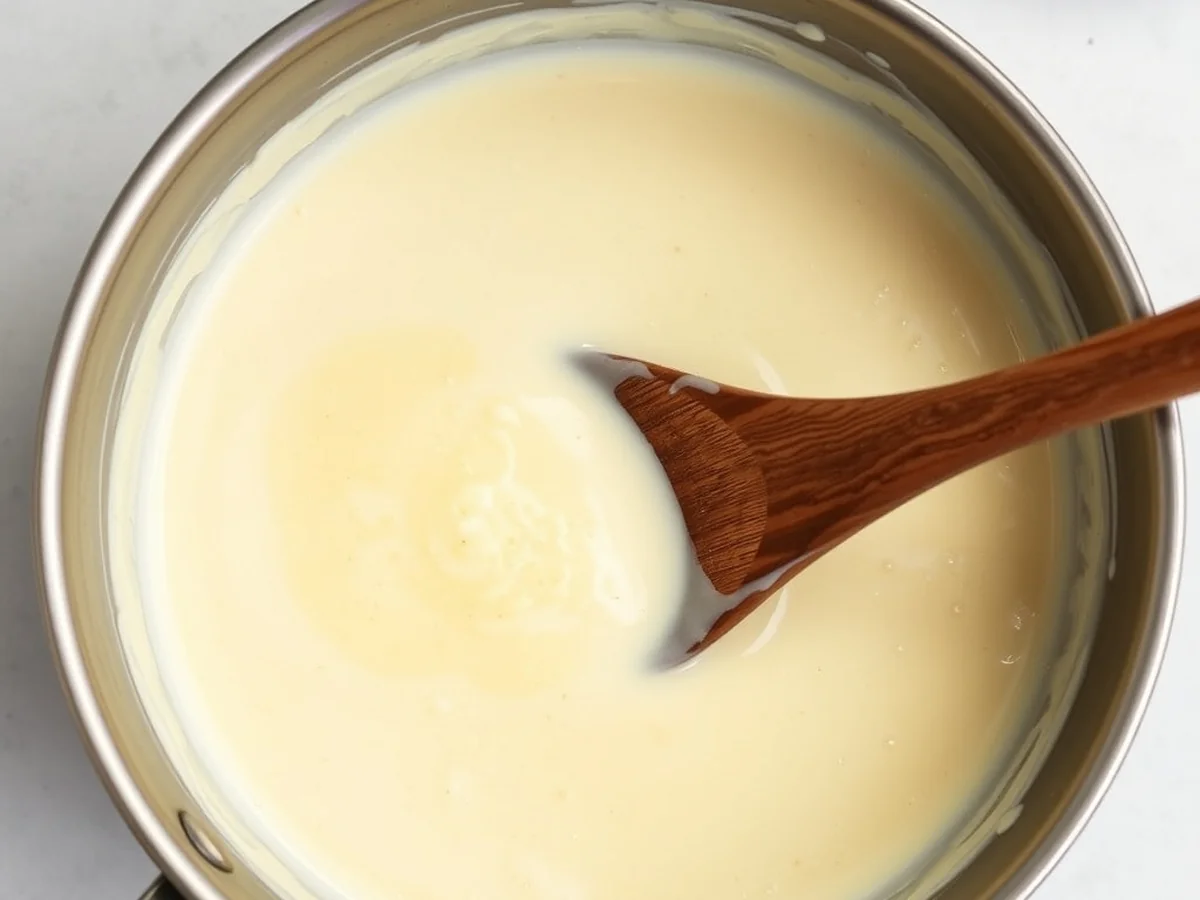
Preventing a homemade cheese sauce from clumping or breaking requires careful temperature control and gradual mixing. High heat can cause dairy fats to separate and proteins to tighten into grainy lumps, ruining the smooth texture of your skillet meal. Mastering this step ensures a velvety finish every single time.
Maintain low heat when stirring grated cheese into the warm skillet. Turning the burner down prevents the heavy cream from scorching and stops the dairy fats from separating into an oily layer. Always stir continuously in a circular motion until the cheese melts completely into the liquid base.
Fixing a thick or separated sauce is simple when using the starchy liquid left over from boiling the noodles. Pouring a small splash of this hot water into the pan helps bind the ingredients back into a smooth emulsion. Starchy pasta water acts as a natural stabilizer, bridging the gap between fats and liquids.
Common mistakes to avoid when preparing a rich skillet dinner include:
- Using pre-shredded bagged cheese, which contains anti-caking agents that prevent smooth melting.
- Adding cheese to the pan while the burner is set to medium or high heat.
- Rushing the incorporation of dairy products instead of adding them gradually.
Taking your time with the dairy and adjusting the burner temperature will yield a restaurant quality result when making comforting poultry and noodle dishes at home.
Cooking Times, Temperature Guidelines, and Food Safety Standards

Getting the timing right when you prepare this skillet meal is essential for keeping the meat tender and juicy. Boneless skinless chicken breasts cut into bite sized pieces typically cook quickly in a hot cast iron skillet, often taking just several minutes per side over medium high heat. Searing the meat develops a rich golden crust while sealing in natural savory juices, which transforms a simple weeknight meal into a comforting dish.
Relying solely on visual cues can lead to undercooked or overcooked poultry because the outside often browns faster than the center cooks through. To ensure both great texture and safety, verify doneness using an instant read food thermometer. Insert the probe directly into the thickest part of the meat without letting it touch the bottom of the pan to get an accurate reading.
Following proper guidelines from the USDA Food Safety and Inspection Service protects family members from foodborne illness when preparing poultry. Applying these standards correctly ensures your homemade pasta dinner remains both delicious and completely safe to eat.
Keep these practical steps in mind to avoid common cooking mistakes:
- Cut the meat into uniform pieces so everything finishes cooking at the same time.
- Avoid overcrowding the skillet, which causes the chicken to steam rather than sear properly.
- Let the meat rest briefly after cooking to allow the juices to redistribute evenly throughout each piece.
Customizing Your Dish with Dietary Substitutions
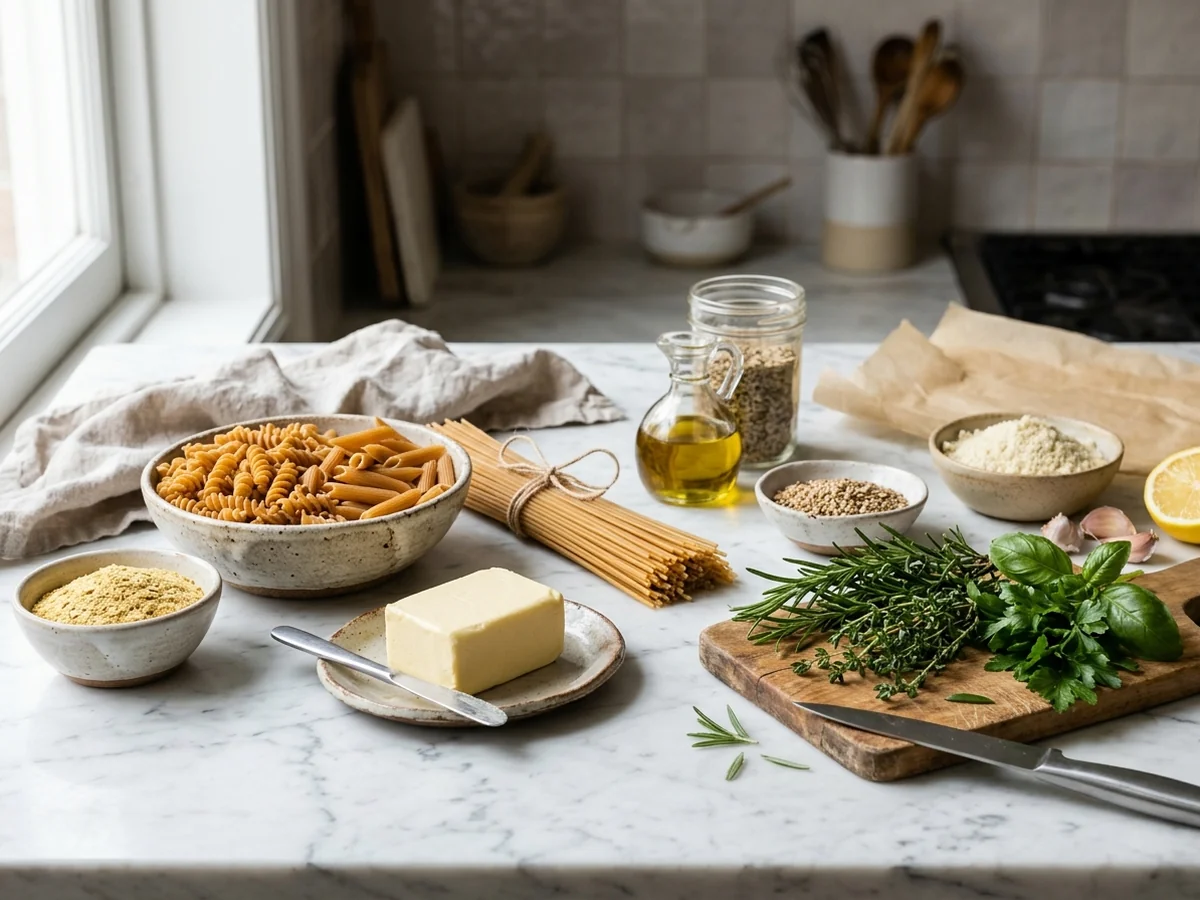
You can easily adapt this savory skillet meal to fit various dietary needs by swapping out core ingredients like wheat pasta, heavy dairy, and cooking fats. Making these adjustments ensures everyone at the table can enjoy a quick poultry and noodle meal without missing out on rich flavors and comforting textures. Understanding why certain adjustments work helps you maintain the right consistency in your savory skillet dish.
When altering a rich garlic and cheese pasta meal for different dietary requirements, the main challenge is preserving that velvety sauce consistency without relying on traditional dairy. A common mistake is adding plant based milk straight to a hot pan without a stabilizer, which often causes the sauce to separate or curdle. To prevent this, gently whisk your dairy free alternatives over medium low heat and incorporate starches gradually.
- Swapping traditional wheat noodles for certified gluten free pasta varieties made from brown rice, chickpeas, or lentils keeps the dish safe for celiac households and adds alternative textures.
- Using plant based milk alternatives alongside unsweetened almond cream or cashew cream replicates the rich texture of heavy dairy in your homemade cheese sauce for noodles.
- Replacing traditional dairy butter with olive oil, avocado oil, or plant based margarine provides alternative fats for searing the poultry and building the sauce base.
- Tossing in fresh spinach, steamed broccoli florets, or roasted bell pepper strips works wonders to boost the fiber content and color of your skillet meal.
- Stirring in nutritional yeast instead of aged cheese adds a rich and savory flavor profile to dairy free sauce variations without altering the cooking time.
Meal Prep, Storage Timelines, and Reheating Best Practices
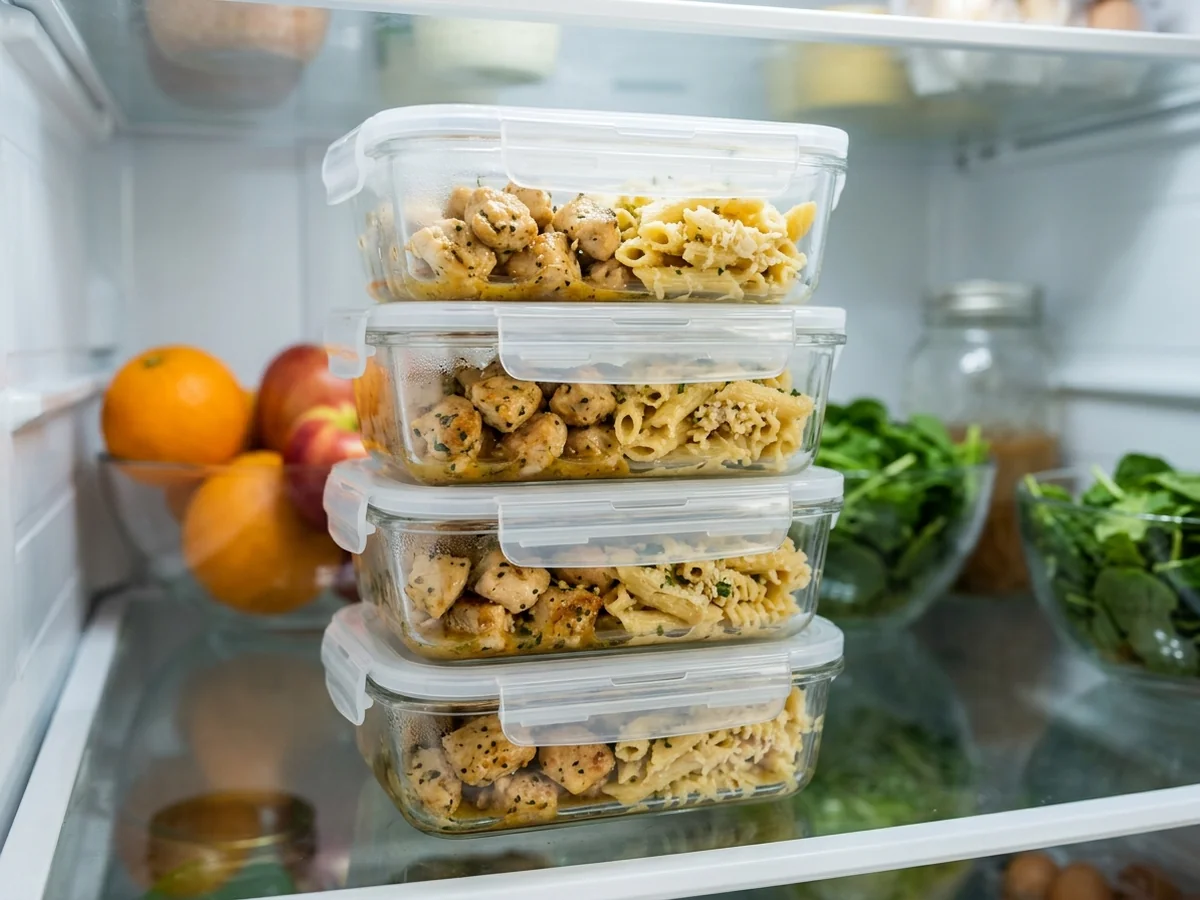
Managing busy weeknight cooking schedules becomes much simpler when you prep components ahead of time and follow proper food safety guidelines for storage and reheating. Keeping cooked meals fresh requires airtight containers and prompt refrigeration after dinner. Safe food handling practices help prevent bacterial growth in leftover poultry and dairy dishes, ensuring your meals remain safe and flavorful for later enjoyment.
Storage Timelines and Safe Handling
You should store cooked meals in the refrigerator in a timely manner after serving. Dividing food into shallow airtight containers helps the ingredients cool down quickly and stay fresh for the duration of their safe storage window. When you are ready to plan ahead for a comforting weeknight meal featuring tender poultry and pasta, keeping the protein and the noodles stored correctly makes assembly effortless.
Perishable leftovers should not sit at room temperature for extended periods. Promptly transfer your skillet meal to the refrigerator within two hours of cooking. Proper storage protects the boneless skinless chicken breasts and the creamy garlic parmesan sauce from spoilage while maintaining optimal taste and texture.
Reviving Creamy Pasta and Chicken in a Skillet
Reheating creamy pasta dishes safely requires low heat to prevent the dairy sauce from breaking and the meat from drying out. If you notice the heavy cream sauce tightening up in the fridge, adding a splash of milk or water to the skillet before warming brings back a smooth texture. Stirring gently over medium-low heat helps the dish warm evenly without overcooking your pan seared meat and noodles.
Common Pitfalls to Avoid
Common mistakes to avoid during meal prep and reheating include:
- Leaving cooked poultry and cream sauces at room temperature for too long after serving.
- Using high heat to reheat dairy based sauces, which causes the fats to separate and the parmigiano reggiano to grain up.
- Storing leftovers in deep, crowded containers that slow down the cooling process.
Following these practical storage and reheating steps guarantees that your comforting skillet meals taste just as delicious on day two as they did right off the stove.
Nutritional Breakdown and Serving Suggestions
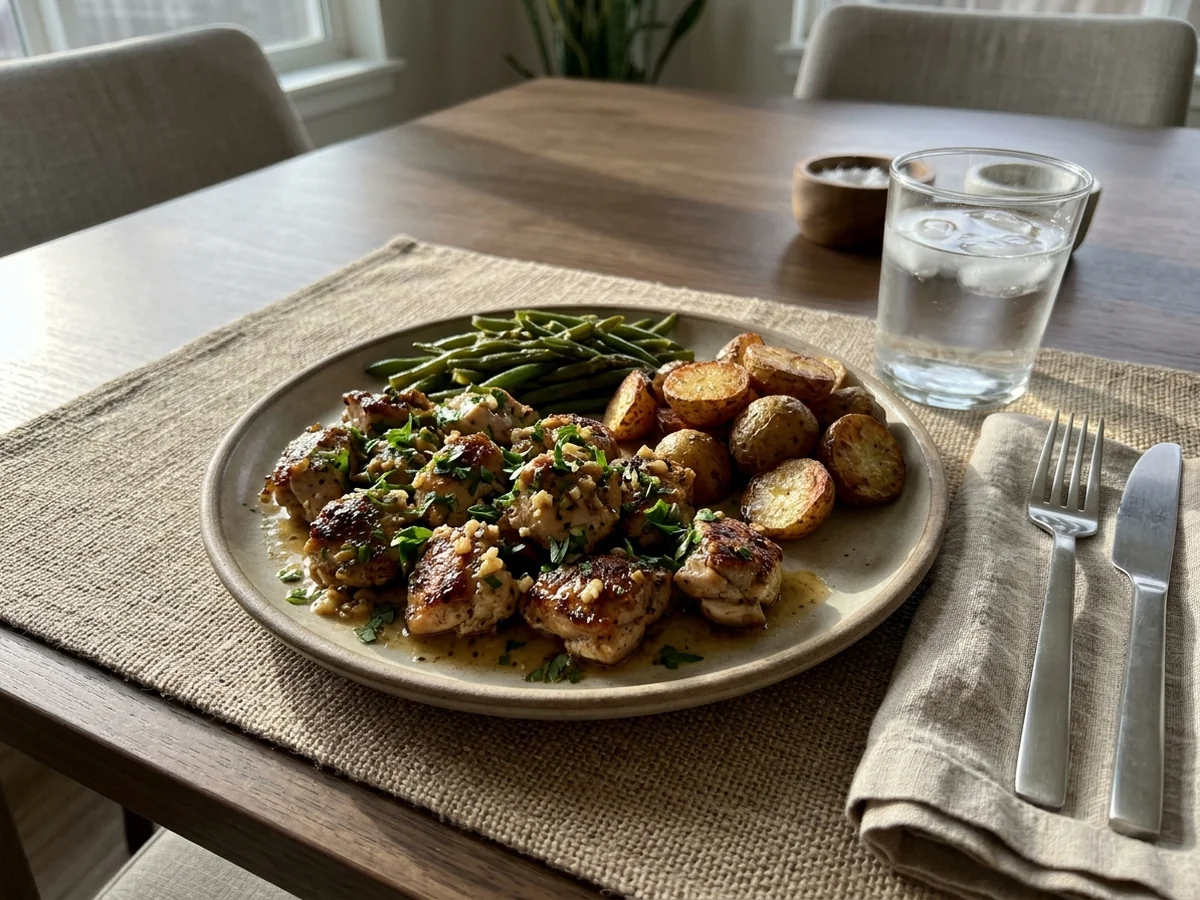
Balancing a rich meal involves understanding general nutritional attributes per portion and pairing the dish thoughtfully. Healthy meal planning becomes straightforward when you account for the protein from boneless skinless chicken breasts and the dairy elements found in a homemade noodle dish coated in cheese. Because this comforting combination pairs savory poultry with a rich dairy sauce, rounding out the plate with lighter accompaniments creates a satisfying experience.
| Meal Component | General Profile | Role in Meal Planning |
|---|---|---|
| Chicken Bites | High protein | Provides satiety and muscle maintenance |
| Parmesan Pasta | Carbohydrates and dairy | Delivers energy and rich comfort flavor |
| Side Vegetables | Fiber and vitamins | Adds volume and balances the richness |
Practical steps for building a balanced plate focus on portion management and flavor contrasts. A common mistake is serving heavy, butter based sides alongside an already rich cheese sauce, which can easily overwhelm the palate. Instead, pair the dish with crisp green salads dressed in a sharp vinaigrette or bright roasted vegetables like asparagus and broccoli. These fresh elements cut through the heaviness of the dairy and add necessary fiber.
When preparing this dish for family style dining, serve the cast iron skillet directly down the center of the table alongside a large bowl of greens. This allows everyone to balance high protein bites and comforting carbohydrates with fresh produce. Thoughtful meal composition ensures that weeknight comfort food remains both enjoyable and well rounded for any household.
Frequently Asked Questions About Garlic Butter Chicken Bites and Pasta
How do you make garlic butter chicken bites with parmesan pasta in a single pan?
You can prepare garlic butter chicken bites with parmesan pasta in a single pan by cooking the pasta first, setting it aside, and using the same skillet to sear the meat and build the sauce. Searing the pieces in melted butter creates a rich base, while the pasta gets tossed directly into the pan to absorb the flavors at the end.
What cuts of chicken work best for chicken bites to achieve optimal tenderness?
Boneless skinless chicken breasts or chicken thighs yield the best texture for this dish. Breasts offer a lean profile and cook very quickly, whereas thighs provide extra moisture and rich flavor that helps prevent dryness during searing.
How long does it take to cook chicken bites in a skillet from start to finish?
Cooking chicken bites in a skillet typically takes about ten to fifteen minutes from start to finish. The small pieces brown rapidly over medium-high heat, requiring only a few minutes per side to reach safe doneness.
Can I use pre-shredded cheese for the pasta sauce?
Pre-shredded cheese often contains anti-caking additives that prevent it from melting smoothly into a creamy sauce. Freshly grated cheese melts much more evenly and creates a smoother texture.
What is the safest way to check if the meat is fully cooked?
Using an instant read food thermometer inserted into the thickest piece is the most reliable method to verify doneness. According to the USDA Food Safety and Inspection Service, poultry must reach a safe minimum internal temperature to ensure safety.
How do I prevent the cream sauce from separating?
Keeping the heat at a low simmer after adding dairy prevents the sauce from breaking or curdling. Stirring the mixture continuously helps the ingredients combine into a smooth coating for the noodles.
Conclusion
This comforting combination brings savory poultry together with rich noodles for a simple skillet meal that satisfies any appetite. Try the pan method for your next busy evening meal to get dinner on the table with minimal cleanup. Preparing tender meat pieces with cheese noodles takes the guesswork out of weeknight cooking while delivering maximum flavor.
You might also like: Cheesy Sausage Penne in Garlic Parmesan Creamy Tomato Sauce